The UK autonomous driving firm Wayve is permitting its staff to cash in some of their earned stock. The $85 million employee share buyback is orchestrated by both current and fresh backers, reflecting the company's most recent $8.5 billion worth. The company reached its $8.5 billion valuation in February after raising $1.2 billion in a Series D round led by Eclipse, Balderton, and SoftBank Vision Fund 2. Additional investors included Uber, Microsoft, Nvidia, Ontario Teachers' Pension Plan, and Baillie Gifford.
Wayve has conducted such a liquidity event once before. It carried out an earlier tender offer in May 2024, concurrent with its $1.05 billion Series C raise.
Wayve's move reflects a broader pattern among AI companies. Instead of holding out for a long-awaited IPO or acquisition, many startups now provide these buyback programs to keep talent from leaving for rivals or founding new ventures right after their equity becomes exercisable. Firms like Decagon, ElevenLabs, Linear, and Clay have all recently offered similar employee stock sales.
Get your free investing masterclass bonus when you join Market Briefs, our free daily newsletter
Clay, for instance, has executed two such tender offers within just the past nine months. The reason these young firms can offer liquidity is that investors are keen to acquire additional shares in these rapidly expanding businesses, often paying above market price in anticipation of future value growth.
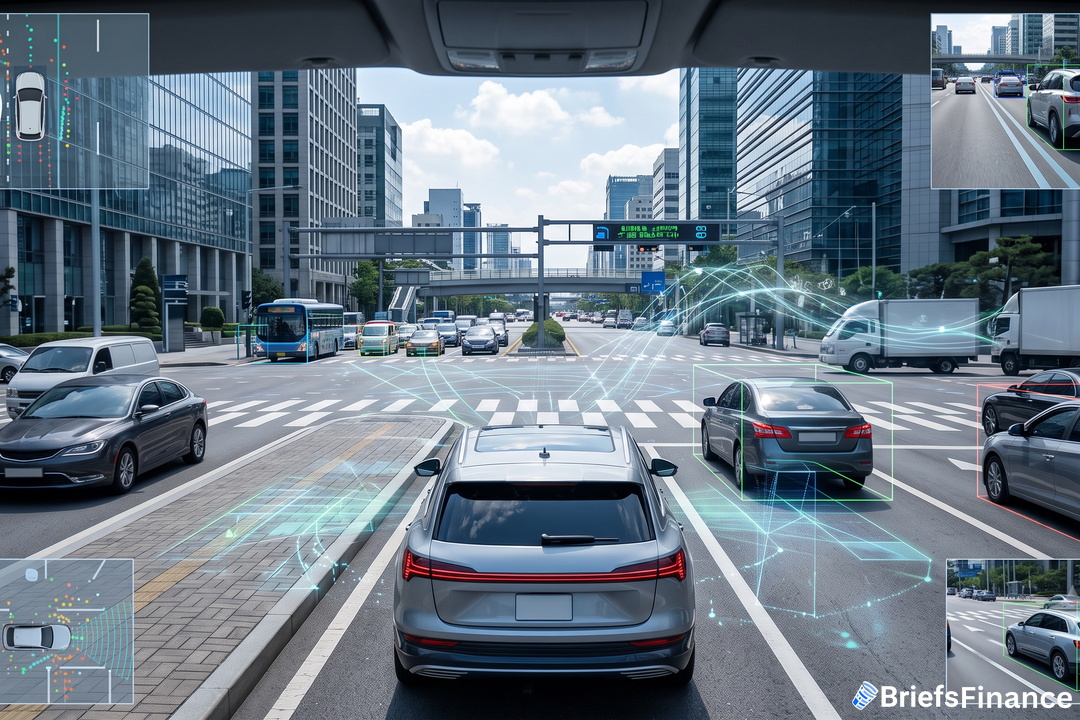
Wayve's self-driving technology is based on a self-taught method. Rather than depending on pre-constructed, high-definition maps that many autonomous systems employ, the company's software is a comprehensive neural network that acquires driving skills solely from data, akin to how humans learn by practice, according to its founders. Seeking to develop a universal AI driver capable of operating in any nation, vehicle, and road environment, the startup has grown its workforce to 1,200 employees, more than doubling in size over the last twelve months.
The $8.5 billion valuation places Wayve among the most valuable private autonomous driving companies globally, competing with firms like Waymo and Cruise. Its end-to-end learning approach differentiates it from rivals that rely on detailed mapping and rule-based systems. With Uber as a robotaxi partner and Nissan as an automotive integration partner, Wayve is positioned to address both the ride-hailing and original equipment manufacturer markets.
Wayve aims to debut robotaxi trials alongside Uber in the coming months. Additionally, the company has plans to embed its AI technology into Nissan's upcoming driver-assistance features, with a target start date of 2027.
Subscribe to Market Briefs, our free daily newsletter, and claim your bonus investing masterclass