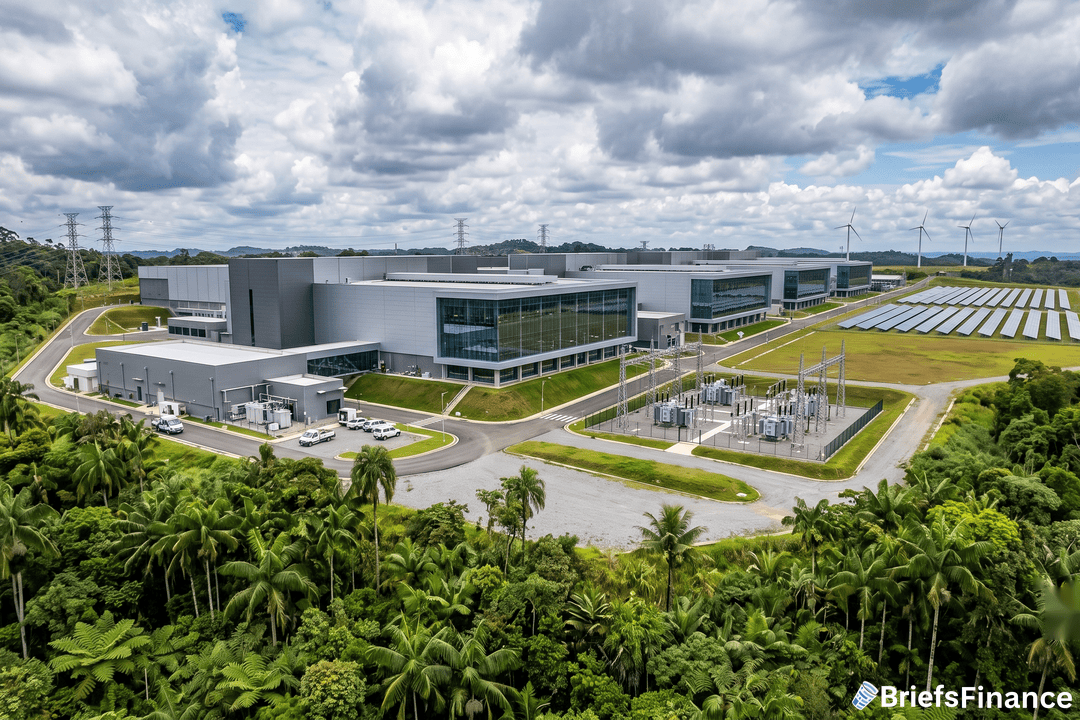
Brazil wants to keep its data at home. Right now, about two-thirds of the country's data is processed abroad. Now a Chinese tech giant is building a massive data center that could change that - but it also brings new risks.
Why Brazil? Renewable Energy and Undersea Cables
Brazil generates almost 90% of all electricity from renewable sources - hydroelectric, solar, and wind. That's a huge draw for data centers, which consume enormous power.
The location in Ceará state also sits near Fortaleza, where undersea cables connect Brazil to North America, Europe and Africa. "Brazil has all the attributes to become a data center hub," said Rodrigo Borges, who represents Aurora Energy Research in Brazil, a UK consulting firm.
The state offers a free-trade zone that avoids steep tariffs on imports of computer gear. That saves ByteDance money. The move also aligns with the goal of Brazil's leader, Luiz Inácio Lula da Silva, to deepen ties with China.
Get your free investing masterclass bonus when you join Market Briefs, our free daily newsletter
Currently, China is Brazil's biggest trade partner, importing nearly $100 billion in commodities such as beef, soybeans, sugar, iron ore, and crude oil in the past year. Additionally, the American Enterprise Institute reports that Brazil received the most Chinese foreign investment in 2025.
Other Players Jump In
ByteDance is not alone. Chinese competitor Alibaba Group Holding Ltd. intends to lease capacity in a planned data center cluster in São Paulo, according to anonymous sources familiar with the still-private plans. Brazilian company Ascenty, with 40 data centers either running or being built across Latin America, is putting $1.2 billion into these facilities. US-backed companies such as Scala Data Centers and Elea Data Centers are also developing large-scale initiatives in Brazil.
Brazil's total data center capacity is expected to more than quadruple, to over 4 gigawatts by the early 2030s, according to Aurora Energy Research.
Eduardo Menossi, who founded Grupo EBM, a São Paulo-based data center engineering firm, commented: "The Chinese will take on certain risks. An American is more conservative." He added: "So what's left as a Plan B for an American company? Brazil becomes a strategic region."
Luis Fernandes, who serves as Brazil's deputy minister for science, technology and innovation, said that the country's main vulnerability lies in digital sovereignty. "It's our main national vulnerability: digital sovereignty."
What to Watch
The first data hall should go live by late 2027. But Brazil faces hurdles. A legislative proposal to reduce import duties on servers and related hardware remains stuck in Congress, and a battery storage auction required to support variable wind and solar power has been postponed to December.
Trade tensions between the US and Brazil remain. Former US President Donald Trump imposed a 50% tariff on Brazilian goods in retaliation for the legal action taken against his ally, ex-President Jair Bolsonaro. However, a February Supreme Court decision invalidated those tariffs, though the White House has indicated further duties could be introduced.
Local officials are optimistic. Fábio Feijó, economic development secretary for Ceará, said: "When the first data hall is ready, it will bring others. The whole world is watching."
Subscribe to Market Briefs, our free daily newsletter, and claim your bonus investing masterclass