A Costly Problem
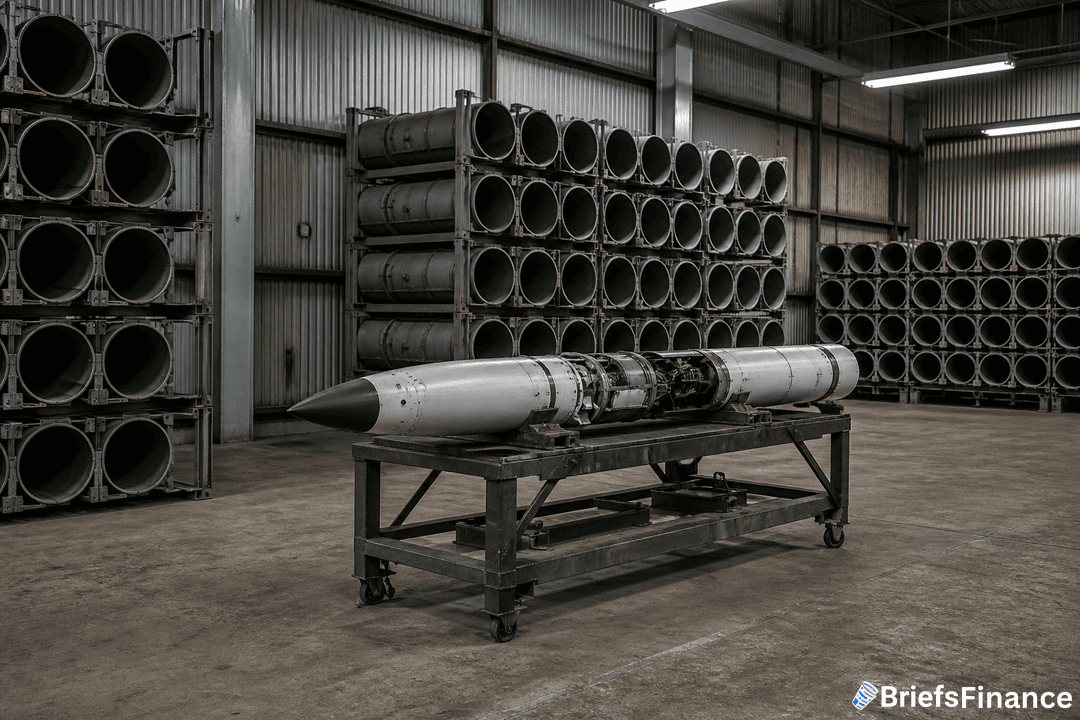
The U.S. military has a missile problem. The best interceptors cost more than $4 million each and take years to build, while the drones they are meant to stop cost about $30,000.
At the Space and Missile Defense Symposium on August 14, 2026, in Huntsville, Alabama, the Pentagon's top contractors presented their answer: cheaper, faster, and far less fancy weapons.
"We are looking to flip the script on some products," said Jim Bryan, Boeing's executive director of integrated air and missile defense. "We build a lot of exquisite products, and exquisite products tend to be expensive. We're working hard for affordable."
The military knows it cannot keep using its most advanced weapons on cheap threats. "This may be one of the defining problems of modern warfare," said Army Brig. Gen. RJ Mikesh, a weapons procurement official. "Not every target requires the most exquisite mission and not every threat should be defeated with our most expensive interceptor."
Cheaper Ideas, New Designs
Boeing is working on an "ultra low-cost" seeker, the part of a missile that detects and tracks a target. Seekers normally make up nearly 30% of a missile's cost, but Boeing's version, using commercial parts, should bring that down to around 10%. The company has tested it on a rocket and an aircraft and plans an intercept attempt next year.
Just as high missile costs force smarter defense spending, our free Always Be Buying eBook shows how steady investing builds wealth on any income.
Lockheed Martin, which makes the PAC-3, unveiled a new missile last month called ACE, short for Patriot Advanced Capability-3 Adapted Capability Effector. It delivers about two-thirds of the capability, depending on the threat and range. The first flight is expected in early 2028, with production readiness about 18 months later.
Northrop Grumman introduced Raid Hunter, a 50mm guided gun-based air defense system. Kenn Todorov, Northrop's vice president for missile defense solutions, said it is designed to bring down mixed raids of drones and cruise missiles at a lower cost per kill.
Raytheon, which makes the Patriot, has agreed with Voyager Technologies to use cheaper propulsion for its Standard Missile-3 and is expanding production of the Coyote counter-drone missile. Raytheon's Bob Kelley, senior director of land and air defense solutions, said the goal is "flattening the cost curve to prevent using" advanced interceptors "to go after $100,000 or $50,000 enemy drones that are coming in at you all the time."
The Long Road Ahead
The Pentagon has told major contractors to adapt or die. Congress has not yet acted on the Pentagon's emergency funding request.
Lockheed's Jason Reynolds pushed back on the idea that big firms are slow. "People like to think Lockheed is not agile, we're not capable, we take forever, we're old school," he said. "ACE was born and designed and developed in, like, months."
The Cost of Protection
For ordinary people, this race to cut costs is about more than defense contracts. If the military can build effective weapons for a fraction of the price, it could mean better protection without an endless stream of budget increases.
The threat is real, and it is cheap. The same drones are showing up in conflicts from the Middle East to Ukraine. The question is whether American industry can innovate quickly enough to keep up.
When stockpiles run low, the lesson is to invest consistently over time, so get the free Always Be Buying eBook to start your own system.