Free NewsletterPro Login

Warning: Undefined variable $stocks in /var/www/briefs.co/htdocs/wp-content/plugins/oxygen/component-framework/components/classes/code-block.class.php(133) : eval()'d code on line 448

Warning: foreach() argument must be of type array|object, null given in /var/www/briefs.co/htdocs/wp-content/plugins/oxygen/component-framework/components/classes/code-block.class.php(133) : eval()'d code on line 448

Warning: Undefined variable $funds in /var/www/briefs.co/htdocs/wp-content/plugins/oxygen/component-framework/components/classes/code-block.class.php(133) : eval()'d code on line 472

Warning: foreach() argument must be of type array|object, null given in /var/www/briefs.co/htdocs/wp-content/plugins/oxygen/component-framework/components/classes/code-block.class.php(133) : eval()'d code on line 472
/* the link was here */
×
Free investor livestream — Nov 17

How To Use ChatGPT & Claude To Research Stocks Like A Pro

01
The prompt we use to break down any stock
02
How to fact-check what AI tells you
03
How to compare two stocks in minutes

Iceye's new Gen5 radar satellite boosts image sharpness to 11 centimeters

Published Nov 16, 2026
Share:
Summary:
  • Finland's Iceye rolled out its Gen5 synthetic aperture radar satellites with 11 cm resolution, tighter than its current 16 cm, plus an onboard AI chip for faster insights.
  • The design doubles imaging opportunities per pass and enables daily revisits to the identical site from an identical viewing angle; Iceye says it is the sharpest in the industry.
  • Iceye, valued at €10 billion ($11.1 billion) earlier this year, is producing roughly one satellite weekly, aims to scale to 100 annually by the end of 2027, and will continue Gen4 production into 2027.

What Gen5 changes and why it matters

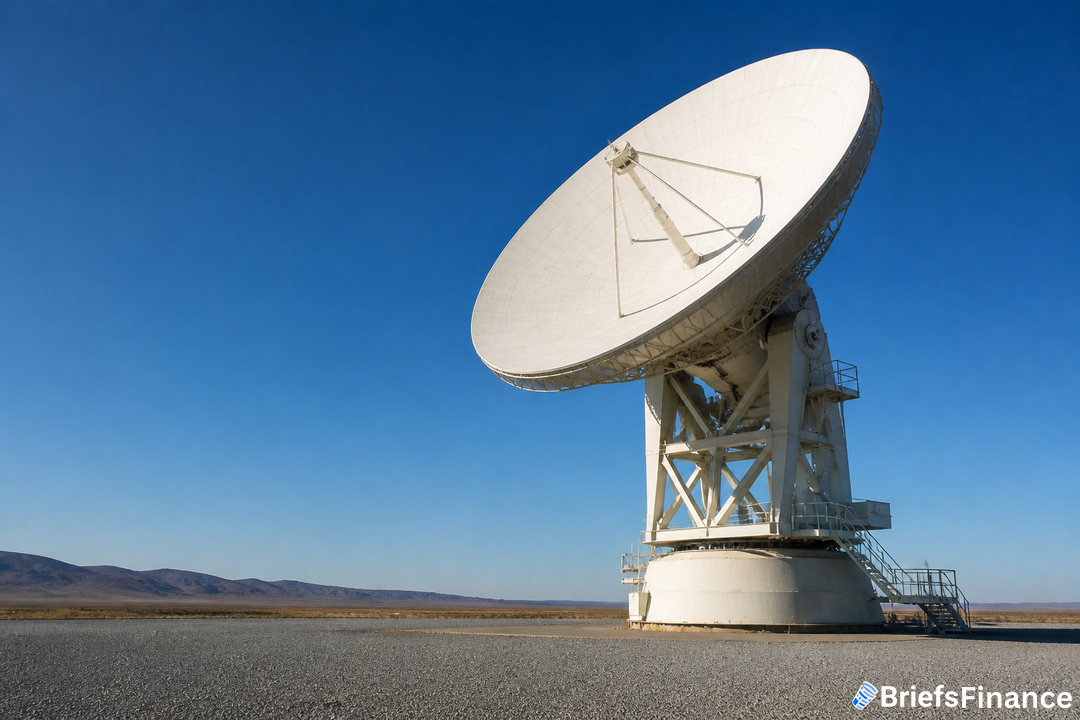
Iceye's newest low-orbit radar satellites push clarity to 11 centimeters, a step up from 16 cm, which can reveal smaller objects and fine ground changes. An AI processor on each satellite runs analytics in space so intelligence reaches users faster.

The system increases per-pass imaging opportunities and supports daily revisits to the identical location from the identical look angle. According to Vincent Ho Tin Noé, the chief product officer, "It gets us to operations faster and onto a repeatable orbit, allowing our satellites to reveal subtle, centimeter-scale changes that a standard image can miss, such as vehicle tracks, freshly disturbed ground or equipment that has been moved." Iceye says Gen5 offers the sharpest precision available today.

Production, contracts and cadence

In a Monday update, Iceye said it has averaged a fresh satellite generation roughly every 18 months and can deliver and launch within 12 months of a signed deal. Output is about one spacecraft a week, around 50 annually, with a target of 100 per year by the end of 2027. Gen4 production will continue into 2027 as Gen5 scales.

Based near Helsinki, Iceye supplies all-weather, day-and-night Earth observation and has government contracts across multiple European nations, among them Germany, Finland and Sweden. Earlier this year, a funding round valued the company at €10 billion ($11.1 billion).

New technologies can give thoughtful investors a gentle edge in making choices. We're hosting our first ever investor livestream on 11/17 to show you how to use ChatGPT and Claude to invest like a pro, hosted by Briefs Finance CEO Jaspreet Singh. Save your seat.

Security backdrop and partnerships

The rollout follows a tense episode last month involving a Russian satellite near one of Iceye's commercial spacecraft.

"Our fleet is designed for scalability and resilience," Ho-Tin-Noé said. The company counts 84 launched satellites, giving it "a level of resilience to the fleet that is quite special." Iceye is collaborating with Nokia Oyj on secure European in-orbit communications for defense and security, and plans call for launching up to 50 low Earth orbit satellites annually beginning in 2028. Separately, partner IHI Corp. said Thursday it had begun early-stage build, integration, and validation work for SAR satellites in Tokyo.

The investor angle

Sharper images, onboard AI and faster revisit times can widen Iceye's edge with defense and government buyers, while a 12-month contract-to-launch cycle supports recurring revenue. The company's ramp from roughly 50 to 100 satellites a year by end-2027, its work with Nokia, and a €10 billion valuation set a high bar, but also a clear roadmap for capacity growth and data sales.

Keeping an open mind about tools helps investors improve their long term results. On 11/17, our CEO Jaspreet Singh goes live for our first ever investor livestream on how to use ChatGPT and Claude to invest like a pro. Register to join him.

Disclosure

Recent News

1 2 3 … 128

Get Market Briefs delivered to your inbox every morning for free!

No fluff. No noise. No politics. Just finance news you can read in 5 minutes.

Blogs

November 16, 2026
The $40 Trillion National Debt: Trump's 4-Part Plan to Make It Feel Smaller
  • The national debt is above $40 trillion, and the Federal Reserve has gone from sending Washington its profits to losing money.
  • President Trump's four-part plan leans on shorter-term debt, stablecoin companies buying Treasuries, a bigger balance sheet and government stakes in private companies.
  • The goal is to outgrow the debt, not pay it off, so Jaspreet Singh points investors to the seven industries where Washington wants growth.
Read More
November 16, 2026
The Fed Is Talking About a Jumbo Interest Rate Hike. It Has No Easy Way Out
  • The Fed makes its next rate decision on December 9 and is now talking about jumbo interest rate hikes of 0.5%, though one in December looks unlikely.
  • Washington will pay a record $1.05 trillion in interest this year on $40 trillion of debt, and that debt resets at higher rates as the Fed hikes.
  • Jaspreet Singh's five moves are to pay down variable-rate debt, earn interest on your savings, know which stocks feel the pressure, look at value and hedge.
Read More
November 16, 2026
Buying on Margin Is at a Record High. Here's the Risk for the Stock Market
  • Margin debt, the money investors borrow to buy stocks, is at a record of around 4.6% of GDP, up from 3.9% in 2021.
  • ETF money has more than tripled in five years to 7% of GDP, while corporate buybacks and 401(k) money sit below their earlier peaks.
  • Margin calls and panic selling can make the next downturn deeper, so Jaspreet Singh keeps buying broad market funds and says most investors should skip margin debt.
Read More
November 16, 2026
Housing Prices Are Falling. Buying a House Still Isn't Cheaper
  • Housing prices have fallen for four straight weeks, but mortgage rates around 7.2% keep the monthly payment about where it was in 2023.
  • Talk of a jumbo Fed rate hike and a plan to sell Fannie Mae and Freddie Mac on the stock market could both push mortgage rates higher.
  • Briefs Finance CEO Jaspreet Singh treats a house as a liability: buy within your budget and let your investments build the wealth.
Read More
November 14, 2026
Nvidia News: Jensen Huang Is Out, and the "Bank" Behind American AI Just Lost Its Founder
  • Jensen Huang is out at Nvidia over affairs with multiple people, and the company he founded has been the bank of American AI, with about $30 billion into OpenAI and $10 billion into Anthropic.
  • A hotter-than-expected inflation report has Fed officials talking about a possible 0.5% hike in December, and gold, silver, and bitcoin fell on the news.
  • President Trump said the US may not need a deal with Iran, keeping oil prices and inflation risk high. Jaspreet Singh breaks down what it all means for AI stocks and your portfolio.
Read More
November 14, 2026
Record Highs, a 57-Year Low in Jobless Claims, and a Stock Market Bubble: Inside the Weirdest Market in History
  • Stocks are booming at the fastest pace in years, jobless claims just hit a 57-year low, and most investors still feel like nobody is hiring.
  • The Fed is protecting the dollar over the economy, oil swings on every Iran headline, and a few AI companies are carrying an S&P 500 where four of five stocks sit in a correction.
  • Jaspreet Singh explains why circular financing between Nvidia, OpenAI, Anthropic, and SpaceX rhymes with 2008's house of cards, and how his three investing pillars handle a stock market bubble.
Read More
November 14, 2026
Is a Recession Coming? The Fed Just Made a U-Turn It Has Only Made Twice in 60 Years
  • The Fed has raised rates, cut them, then raised them again only twice in the last 60 years, and both times the economy fell into a recession and stocks crashed.
  • The same stop-and-go cycle is playing out now, with one big difference: US debt is 125% of GDP today versus about 30% in 1980.
  • In the 1970s gold rose roughly 24x, real estate 157%, stocks lagged, and cash lost half its value. Jaspreet Singh lays out five assets to consider before the next flip.
Read More
November 14, 2026
The 2027 Tax Brackets Are Out: How Some Investors Can Earn $135,300 and Pay $0
  • The IRS 2027 tax plan keeps the same seven rates but widens every bracket and lifts the married-filing-jointly standard deduction to $33,200.
  • The 0% long-term capital gains bracket rises to $102,100, so a household living on $135,300 of investment income could owe $0 in federal income tax.
  • C corporations still pay 21%, small businesses keep the 20% QBI deduction, and the 401(k) limit climbs to $25,500 with an $8,500 catch-up for investors over 50.
Read More
November 14, 2026
Rare Earth Stocks: Why China's January 2027 Ban Could Be the Opportunity of the Decade
  • China plans to block rare earth exports to the US on January 10, 2027, and the US produces effectively zero of the 17 metals that go into phones, cars, dishwashers, and missiles.
  • When China cut off Japan in 2010 and squeezed Germany from 2015, some rare earth prices jumped 18x and 15x, and one rare earth company went bankrupt while another soared.
  • Washington is already putting billions into MP Materials, Vulcan, and a stockpile called Project Vault, and Jaspreet Singh walks through how investors can get exposure to rare earth stocks and ETFs.
Read More
November 14, 2026
Divided Government Just Changed Where the Money Moves: 5 Market Shifts After the Midterms
  • Democrats took control of Congress, setting up a divided government with a Republican White House, and the biggest spender in the economy is about to change where it spends.
  • The day after the election the market had one of its best days of 2026 while AI stocks, Tesla, and SpaceX fell and clean energy, healthcare, treasuries, gold, and silver rose.
  • Jaspreet Singh maps the five places money is already moving and the history that says stocks rose in the 12 months after each of the last 19 midterms.
Read More
1 2 3 … 33
Share via
Copy link