Free NewsletterPro Login
S&P 500 6,287 +0.42%
DOW 44,521 -0.18%
NASDAQ 21,103 +0.71%

Warning: Undefined variable $funds in /var/www/briefs.co/htdocs/wp-content/plugins/oxygen/component-framework/components/classes/code-block.class.php(133) : eval()'d code on line 491

Warning: foreach() argument must be of type array|object, null given in /var/www/briefs.co/htdocs/wp-content/plugins/oxygen/component-framework/components/classes/code-block.class.php(133) : eval()'d code on line 491
/* the link was here */

Ukraine Turns to Partners for Air Defense Missiles After Washington Refuses Further Shipments

Published Jul 30, 2026
[tts_player]
Share:
Ukraine Turns to Partners for Air Defense Missiles After Washington Refuses Further Shipments
Summary:
  • Ukraine is requesting air-defense missiles from other countries after President Zelenskyy's White House meeting with Trump produced no new US commitments.
  • A recent Russian overnight assault involving 74 missiles and 284 drones killed six people, underscoring the urgent need for more interceptors.
  • Kyiv believes it could start manufacturing its own Patriot missiles within 10 to 12 months if granted a US production license, but a full production line would take about five years.

Why Ukraine Needs Help

Ukraine's air defenses are running low, and the White House visit last week did not change that.

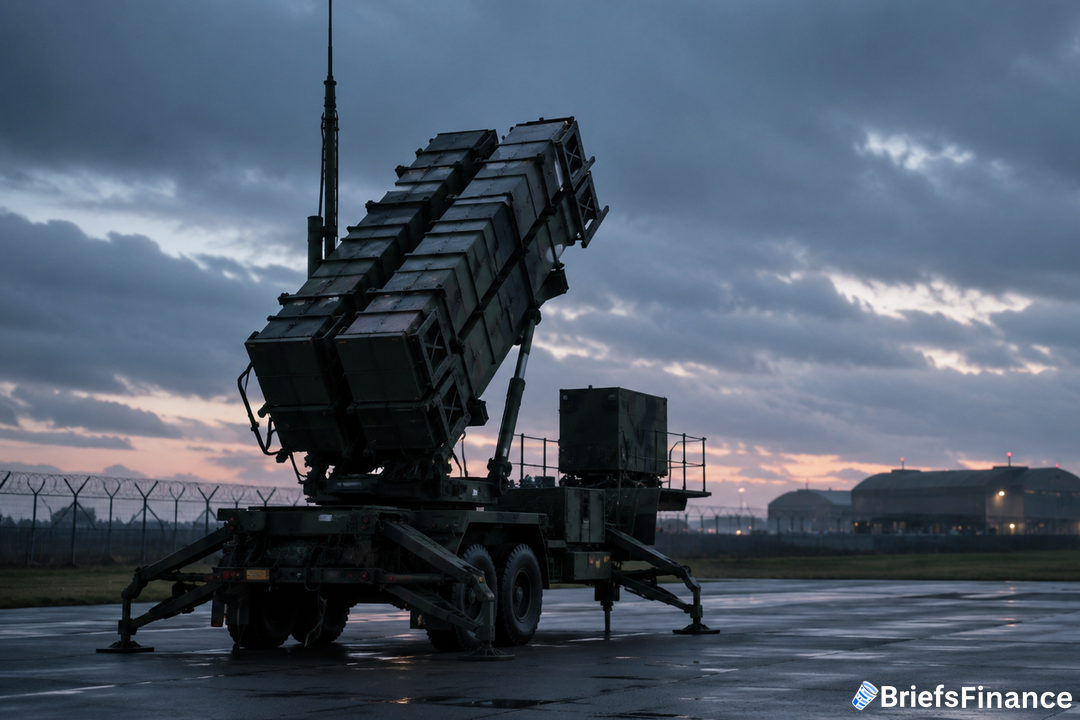
Zelenskyy asked President Trump for 300 Patriot interceptors, according to Axios. But Trump did not promise any new supplies. Ukraine's ambassador to Washington, Olha Stefanishyna, explained, "The US does not have enough to spare right now." Its own stockpiles have been squeezed by the ongoing war against Iran.

That leaves Ukraine in a bind. Without enough Patriots to defend its cities, the country needs to find missiles somewhere else.

The United States has been forced to keep Patriot batteries in the Middle East because of the fighting there, which has drained its available inventory. This global demand has left little surplus for Ukraine, despite the country's critical need to protect its cities and infrastructure.

So Ukraine is now turning to other allies. Shortly after a Russian missile struck eastern Poland, Polish Prime Minister Donald Tusk indicated he would contemplate providing additional Patriot systems.

Get the market news that matters in a five-minute read with Market Briefs, our free daily newsletter

Without adequate air defense, Ukraine's energy infrastructure and civilian centers remain vulnerable. The Patriot system is one of the few weapons capable of intercepting ballistic missiles, which Russia has increasingly used. The US has prioritized its own stockpiles and commitments to other allies, leaving Ukraine to seek alternatives.

This situation underscores the global strain on air-defense resources amid multiple conflicts.

The Numbers and the Timeline

The Pentagon announced a $59 billion plan on Wednesday to boost production of Patriot interceptors. But that kind of manufacturing takes years to ramp up.

Ukraine has an alternative plan. On July 8, Trump promised to issue those licenses, though the permits remain outstanding.

In discussions about potential manufacturing, Zelenskyy held talks with Pentagon representatives and leaders of Lockheed Martin Corp., the US defense contractor that makes the Patriot system, to discuss possible production. Stefanishyna said Ukraine can offer "so many things" for companies like Lockheed Martin "to be able to develop and scale up and adjust their technologies to the new reality."

Meanwhile, Stefanishyna has submitted her resignation request so she can go back to Ukraine to respond to corruption accusations. A replacement has not been confirmed.

The Strategic Stakes for Europe

The shortfall in Patriot interceptors carries risks far beyond Ukraine's borders. If Russian missiles continue to strike Ukrainian cities with impunity, the humanitarian toll will rise and the strain on neighboring countries - such as Poland and Romania - could intensify. These nations have their own Patriot systems to protect, but sharing even a few launchers could create vulnerabilities on NATO's eastern flank.

Ukraine's ability to hold out until it can produce its own missiles therefore depends not only on US policy but also on the willingness of European allies to temporarily weaken their own defenses. This delicate balancing act highlights why Kyiv is pressing so hard for a US production license, which would give it long-term independence from foreign donations.

Join Market Briefs, our free daily newsletter, for a quick daily rundown of the markets
Disclosure

Recent News

1 2 3 45

Get Market Briefs delivered to your inbox every morning for free!

No fluff. No noise. No politics. Just finance news you can read in 5 minutes.

Blogs

June 29, 2026
Portfolio Diversification: Why Putting All Your Eggs in One Basket Destroys Wealth
  • Real diversification means spreading investments across all 11 economic sectors plus bonds, alternatives, and cash so no single bet can sink the portfolio.
  • Different sectors perform at different times, so a diversified portfolio captures upswings while smoothing the brutal drawdowns that wipe out concentrated bets.
  • Total market index funds offer the simplest path to diversification, and annual rebalancing is what keeps the structure working over time.
Read More
June 29, 2026
Non Taxable Income: What It Is and Why It Matters
  • Non taxable income is money you receive that you don't owe income tax on.
  • The tax code treats workers, investors, and business owners very differently, and investors often come out ahead.
  • Learning how income is taxed is a quiet superpower for keeping more of what you earn.
Read More
June 29, 2026
Semiconductor Stocks: A Simple Guide for Investors
  • Semiconductor stocks are companies that design and make computer chips, the brains inside nearly every modern device.
  • The AI boom has turned chips into one of the market's most important and most watched groups.
  • They offer big growth potential, but come with high valuations and a notoriously cyclical history.
Read More
June 25, 2026
How Stocks Work: A Simple Guide for Beginners
  • A stock is a slice of ownership in a company - buy one, and you own a piece of the business.
  • You make money two ways: the share price rising over time, and dividends paid to shareholders.
  • The simplest path for most beginners is buying into the whole market through a low-cost index fund.
Read More
June 25, 2026
Stop Loss vs Stop Limit: What's the Difference?
  • A stop loss order sells your stock once it hits a trigger price, prioritizing getting you out.
  • A stop limit order only sells within a price range you set, prioritizing price over a guaranteed exit.
  • The trade-off: a stop loss almost always executes; a stop limit might not if the price moves too fast.
Read More
June 25, 2026
Energy Stocks: A Simple Guide for Investors
  • Energy stocks are companies that produce and supply the power the world runs on, from oil and gas to newer sources.
  • They make up one of the 11 sectors of the market and tend to move with energy prices and big-picture shifts.
  • Like any sector, the key is diversification and understanding the forces driving demand.
Read More
June 18, 2026
What Is a Stop Loss Order? A Simple Guide
  • A stop loss order automatically sells a stock once it falls to a price you set.
  • It's a tool to cap losses or lock in gains without watching the market all day.
  • It works best for active strategies, and can backfire if used carelessly on long-term holdings.
Read More
June 18, 2026
Best S&P 500 Index Fund: How to Choose One
  • The best S&P 500 index fund for most investors is simply the cheapest, most established one that tracks the index well.
  • Funds like VOO, IVV, and SPY all hold the same 500 companies, so the biggest difference is the fee.
  • Pick one, automate your buys, and let time do the heavy lifting.
Read More
June 17, 2026
What Are Penny Stocks? Risks and Rewards Explained
  • Penny stocks are very low-priced shares of very small companies, often trading for just a few dollars or less.
  • They promise huge gains but carry huge risks: low liquidity, high failure rates, and wild price swings.
  • Most investors are better served by quality companies and funds than by chasing cheap shares.
Read More
June 17, 2026
Best Stocks for Beginners With Little Money
  • The best stocks for beginners with little money usually aren't individual stocks at all - they're low-cost index funds.
  • You can start with $100 or less and use small, regular investments to build wealth over time.
  • Focus on diversification and consistency, not on picking the next big winner.
Read More
1 2 3 24
Share via
Copy link












