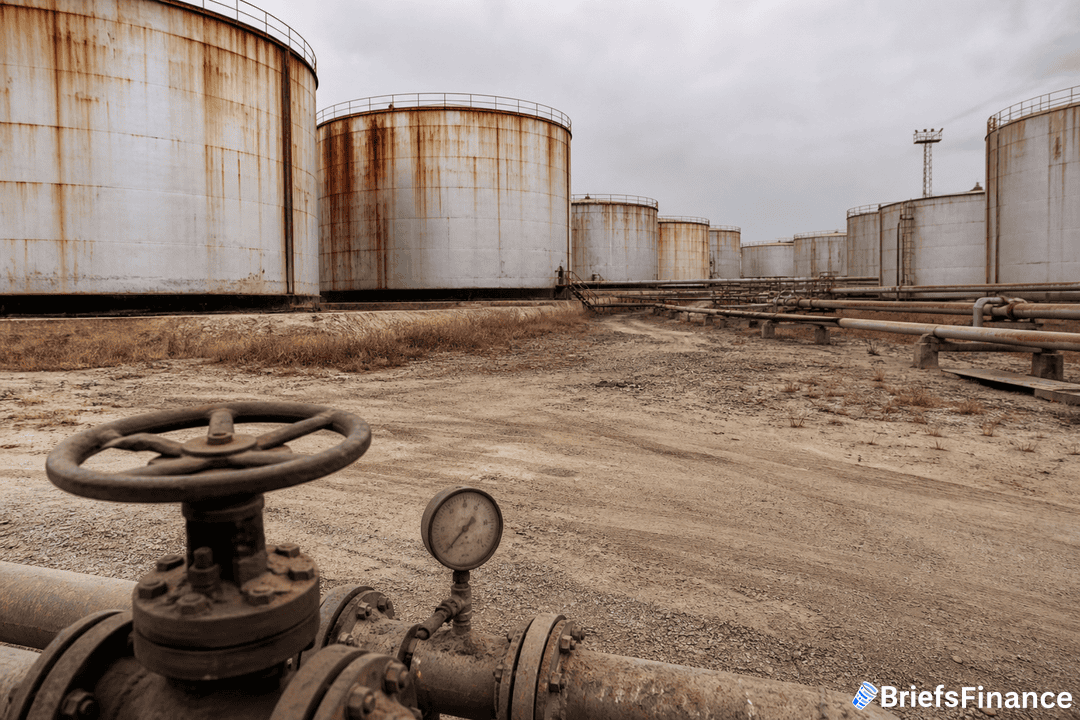
The nation's Strategic Petroleum Reserve has fallen to approximately 250 million barrels, its lowest point in 40 years, following a series of emergency sales and drawdowns. That decline has intensified scrutiny on the aging underground salt caverns in Louisiana and Texas that hold the crude, with questions mounting about how low the inventory can safely go before the storage system is compromised.
Energy Department officials say the reserve can continue operating at current levels, but they acknowledge there is a lower bound. According to department statements, the physical minimum required to keep brine pumps working and maintain cavern pressure is about 70 million barrels. Below that, the caverns could risk structural damage. However, officials stress that 70 million is not a practical target - it is an absolute floor, not a recommended operating level.
"The caverns are always full of either oil or water," said Energy Department spokesman Ben Dietz. "Changing the mix does not endanger their integrity." He added that the reserve is being managed responsibly as a national security asset, and that current inventories remain well above any danger point.
With strategic reserves running low, get the free Always Be Buying eBook to learn steady investing.
Yet not everyone agrees on where the safe threshold lies. Amos Hochstein, a senior energy adviser to President Biden, dismissed the 70 million figure as misleading. "Do not believe the people out of the government who say the SPR can go down to 70 million barrels," Hochstein told CNBC. "That's nonsense." He argued that the practical operational floor is much higher - closer to 250 million barrels - because below that level, the reserve would lose its ability to respond quickly to a major supply disruption.
Texas A&M petroleum engineering professor Siddharth Misra offered a middle view. He said the true minimum sits somewhere between 250 million and 300 million barrels, depending on how quickly the reserve might need to be drawn down in an emergency. "The physical minimum is 70 million, but operating at that level would be extremely risky," Misra explained. "You need a buffer to account for the rate of withdrawal, the condition of the caverns, and the time required to refill them." He noted that the caverns were originally designed for five full cycles of emptying and refilling, but after more than four decades of use, they have experienced significant wear.
A May report from the Government Accountability Office flagged those concerns. The report warned that repeated partial drawdowns can erode the salt walls, leaving irregular shapes that weaken the structural integrity of the caverns over time. While no immediate failure is expected, the GAO recommended that the Energy Department develop a long-term maintenance plan and consider whether the current drawdown strategy is sustainable.
The debate matters because the reserve remains a key tool for managing oil market shocks. Congress authorized several large sales in recent years, both to raise revenue and to counter price spikes following geopolitical events. Those sales have brought the inventory down from a peak of over 700 million barrels in 2010 to its current level. Refilling the reserve will take years and depends on oil prices staying low enough for the government to buy crude at a discount.
For now, officials say the reserve is safe and functional. But the gap between the physical minimum and the practical minimum - and the disagreement over where that line sits - underscores the delicate balance between using the reserve as a policy instrument and preserving it for genuine emergencies. As one analyst put it, the SPR is not just a storage facility; it is a strategic buffer. Pushing it too low could leave the nation vulnerable when it matters most.
The reserve was created in 1975 as a buffer against oil supply disruptions, and its design anticipated multiple full drawdowns and refills over several decades. But the recent pattern of repeated partial sales - often driven by budget needs rather than genuine emergencies - has accelerated the wear on the caverns. While the Department of Energy maintains that current operations remain safe, the combination of aging infrastructure, a shrinking inventory, and political pressure to use the reserve for non-emergency purposes has left the nation's energy safety net in a more fragile state than at any point since its early years.
When energy security feels uncertain, get the free Always Be Buying eBook to build wealth consistently.