Free NewsletterPro Login

Warning: Undefined variable $stocks in /var/www/briefs.co/htdocs/wp-content/plugins/oxygen/component-framework/components/classes/code-block.class.php(133) : eval()'d code on line 448

Warning: foreach() argument must be of type array|object, null given in /var/www/briefs.co/htdocs/wp-content/plugins/oxygen/component-framework/components/classes/code-block.class.php(133) : eval()'d code on line 448

Warning: Undefined variable $funds in /var/www/briefs.co/htdocs/wp-content/plugins/oxygen/component-framework/components/classes/code-block.class.php(133) : eval()'d code on line 472

Warning: foreach() argument must be of type array|object, null given in /var/www/briefs.co/htdocs/wp-content/plugins/oxygen/component-framework/components/classes/code-block.class.php(133) : eval()'d code on line 472
/* the link was here */

Hormuz Exports Near Prewar Levels After U.S. Escorts and Pipeline Reroutes

Published Sep 30, 2026
Share:
Summary:
  • Crude moving through the Strait of Hormuz ran at a rolling seven day pace of 13.5 million barrels a day as of Monday, matching Kpler's prewar baseline.
  • Total flows of crude plus refined fuels via Hormuz averaged 14.2 million barrels a day over seven days, roughly 80% of the strait's prewar norm of about 17 million bpd.
  • Gulf pipelines are carrying far more oil around Hormuz than before - about 40% of regional crude now bypasses the strait, up from roughly 17% - while ship-to-ship transfers under U.S. naval protection lower the risk of Iranian attacks.

How flows bounced back

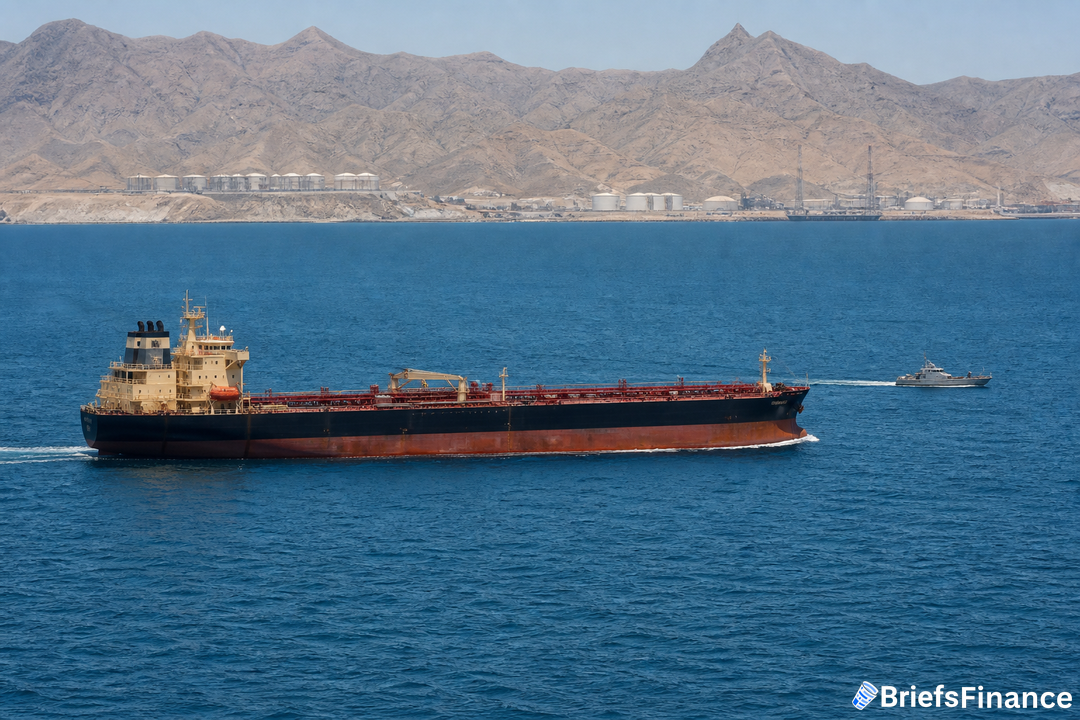
U.S. naval escorts and regional pipelines have helped restore crude exports through Hormuz to something close to the prewar rhythm. Kpler said Wednesday that crude crossing the strait hit a seven day rolling rate of 13.5 million barrels a day as of Monday, lining up with its prewar benchmark for that corridor. Zooming out, combined Persian Gulf and Red Sea crude shipments hit 19.5 million bpd on that seven-day metric, exceeding Kpler's estimate for the corridor before the war of about 17 million bpd.

Not every piece of the system is healing at the same speed. Refined products through Hormuz were running at 677,000 bpd as of Monday on a seven day basis, compared with 3.6 million bpd before the war. Taken together, crude plus product flows stood at 14.2 million bpd, or about four fifths of the strait's prewar level.

Tehran has repeatedly asserted control over the waterway and has declared the strait closed multiple times during the war. Yet the volumes tell a different story. Matt Smith, Kpler's director of commodity research, said Tehran's influence is waning as strong shipments continue through Hormuz.

Security is still not normal

The barrels may be back, but the risks aren't. Iran is still firing on tankers in attacks that have at times been deadly. To limit exposure, more than 70% of crude that crossed Hormuz in August switched ships off the coasts of the United Arab Emirates or Oman, according to Kpler.

In this setup, shuttle tankers move oil through Hormuz into the Gulf of Oman, where the cargo is transferred to another vessel headed to Asia. The U.S. military shields this shuttle system, which reduces the chance of exposure to Iranian attacks, but it is uncertain how long that level of protection can continue.

"It's very expensive and it's a huge U.S. military commitment," said Helima Croft of RBC Capital Markets, who heads global commodity strategy. She also said Gulf producers do not view this patchwork of escorts and ship-to-ship transfers as an acceptable alternative to a fully open Hormuz.

Pipelines in Saudi Arabia and the United Arab Emirates are carrying more of the load too. About 40% of Gulf crude now avoids the strait via pipelines, up from 17% before the war, Kpler data show. But fixed infrastructure is vulnerable.

When trade routes adapt, staying consistent with investing builds wealth steadily; download the free Always Be Buying E-Book

Saudi Arabia shut its East-West pipeline earlier this month after a drone strike launched from Iraq damaged it. Loadings later rose at the Red Sea port of Yanbu, a sign the line is running again. During the outage, Riyadh kept exports moving by shifting barrels back through Hormuz using the U.S.-protected shuttle system.

Fuel markets and policy fallout

The imbalance between crude and products is showing up in prices and policy chatter. Natasha Kaneva, who leads global commodities strategy at JPMorgan, said the "crude market has largely normalized even as refined product supplies remain constrained." With Middle East fuel shipments tight and Ukraine striking Russian refineries, the world is facing a fuel crunch.

In the U.S., diesel has hit record highs, raising fresh worries about the broader economy. "The biggest source of pain is the diesel market," said Francisco Blanch of Bank of America on CNBC's Squawk on the Street on Sept. 8. Amid pressure from Republican lawmakers before the midterm elections, President Donald Trump is weighing an export ban. "There are some in Washington who say, let the blockade do its work - we can wait out Iran," said Helima Croft on CNBC's Power Lunch on Sept. 25.

Kpler reports that Iran's crude sales have collapsed while the U.S. Navy maintains a blockade of the Islamic Republic and Washington intensifies sanctions. Treasury Secretary Scott Bessent, speaking Sunday on Fox News, said Iran will complete the last of its crude shipments to China in about two weeks, after which they will have "nothing left to trade for anything."

Diplomacy stalls, escalation risk rises

There is little evidence pressure alone will shift Tehran's stance. On CNBC's Squawk on The Street on Monday, Scott Modell - the CEO of Rapidan Energy who previously served as a CIA officer - said, "There is no hard evidence that U.S. economic pressure will fundamentally change Iran's positions."

Last week, Tehran proposed reopening Hormuz within seven days provided the U.S. returns to the June memorandum of understanding. That MOU stipulated that the U.S. would end the blockade and permit Iran to hold talks with Oman about a future administrative framework for Hormuz. The arrangement fell apart over the summer and fighting resumed. Trump rejected Iran's most recent proposal, and, according to unnamed U.S. officials quoted by The Wall Street Journal, told aides that after the midterm elections he expects to resume bombing Iran.

"The president I think is going to escalate after the midterms, we keep hearing that the Iranians are going to esclatate into the miderms," Modell said. "The direction of travel is toward escalation."

For anyone budgeting real-world fuel costs, the takeaway is straightforward. Crude volumes look healthy, but products are lagging and the security setup is costly and fragile. Any hit to the shuttle system, a pipeline, or diplomacy could squeeze supply again fast. Watching the bypass share, refined product throughput, and the cadence of attacks will tell you how durable this recovery really is.

Download the free Always Be Buying E-Book and start putting your money to work today
Disclosure

Recent News

1 2 3 … 89

Get Market Briefs delivered to your inbox every morning for free!

No fluff. No noise. No politics. Just finance news you can read in 5 minutes.

Blogs

September 29, 2026
Why Is Gold Going Down? A 5.2% Treasury Yield Just Took Its Job
  • President Trump rejected Iran's deal to reopen the Strait of Hormuz, oil prices jumped back up, and gold fell instead of rising.
  • Treasury yields hit their highest level in more than 20 years, so investors sold gold and bought Treasuries that pay interest.
  • Higher Treasury yields make the national debt, mortgages, car loans, and credit cards more expensive, with the Fed's next rate decision due October 28.
Read More
September 28, 2026
The Strategic Bitcoin Reserve: Why the Government Wants Bitcoin to Explode
  • The US government holds about 328,000 Bitcoin, worth roughly $25 billion, and since a 2025 executive order it keeps seized coins instead of selling them.
  • Washington wants a bigger pile of assets so its $40 trillion national debt looks smaller next to them, which lets it keep borrowing and spending.
  • Bitcoin's wild price swings, and a government holding a coin built to escape governments, are the two risks investors need to watch.
Read More
September 25, 2026
BRIEFS EXCLUSIVE: 43% Of Respondents Say Bills Outran Their Income Over Past Two Years
  • 43% of the 494 Market Briefs readers surveyed said their bills grew faster than their income over the past two years, even though 79% could cover a surprise $5,000 expense tomorrow.
  • Half of readers own gold or crypto, the two classic bets against a weaker dollar, and only 13% bought nothing at all in the last 12 months.
  • The median reader says it takes $150,000 a year to feel financially secure, about $62,000 above the U.S. median household income.
Read More
September 25, 2026
The Economy Is Booming. So Why Did Stocks and Bonds Fall Together?
  • S&P Global says the US economy is growing at its fastest rate since 2021, with corporate profits up 28.9% in a year, almost four times the historical average.
  • Stocks and bonds fell at the same time, which is not how the two markets normally behave, because Treasury yields above 5% now compete with stocks for investors' money.
  • Jaspreet Singh lays out three ways to invest through a shift like this: always be buying, buy the crash, or follow the money before it hits the headlines.
Read More
September 24, 2026
The 2026 Economic Reset Is Starting: Are We in a Recession, or Is the Pain Still Ahead?
  • The Federal Reserve has flipped from stimulating the economy to fighting inflation with higher interest rates, while the White House still wants growth at almost any cost.
  • The national debt tops $40 trillion, has outgrown the entire U.S. economy, and its interest payments are now the government's fastest-growing expense.
  • Higher rates bring pain for private equity, private credit, and speculative assets, but they open opportunities for investors holding cash, treasuries, and value assets.
Read More
September 23, 2026
Are We in a Recession? Without AI, America Might Already Be in One - and Washington Knows It
  • The White House attributes about three quarters of U.S. economic growth to AI, and many believe the economy would already be in a recession without it.
  • Washington has three reasons it cannot let the AI boom slow down: staying the world's superpower, outgrowing $40 trillion in national debt, and protecting a government stock portfolio worth billions.
  • Every market goes through booms and busts, and investors who understand the cycle get to buy the downturn instead of panic-selling with the crowd.
Read More
September 22, 2026
Will Interest Rates Go Down in 2026? Where the Money Moves Either Way
  • The Fed is leaning toward higher rates to fight 4% inflation, while the White House and a cracking job market push the other way.
  • If rates rise, money has tended to move toward short-term Treasuries, floating-rate loans, energy, banks and dividend payers.
  • If rates fall, it has tended to move toward gold, silver and Bitcoin, real estate, small caps, the S&P 500 and speculative bets.
Read More
September 21, 2026
How the Federal Reserve Makes Money - and Why It Just Posted Its Biggest Loss Ever
  • For 109 years the Federal Reserve created money, lent it to the U.S. government and handed the interest it collected back to Washington - almost $1 trillion in the decade starting in 2011.
  • Pandemic-era lending locked the Fed into earning about 2% on trillions of dollars while it now pays banks around 4%, producing a record loss of hundreds of billions in 2026.
  • The Fed covers its losses by creating money and the government covers its lost revenue by borrowing, and both feed the inflation that eats at the dollars in your account.
Read More
September 18, 2026
Kevin Warsh Just Defied Trump: What the Fed Rate Hike Means for Your Money
  • The Fed raised rates for the first time since 2023 in a unanimous vote led by Kevin Warsh, the chairman President Trump appointed to cut them.
  • Higher rates make the $40 trillion national debt, business loan resets and mortgages more expensive, but they strengthen the dollar and pay investors holding cash.
  • The war with Iran is pushing up oil, grocery and chip prices, another hike is likely in 2026, and recession talk is about to get louder.
Read More
September 17, 2026
Why America Bailed Out the Yen: The Japan Carry Trade, the Dollar and Your Mortgage Rate
  • In July 2026 the US sent money to steady the yen because Japan is the largest foreign owner of US debt, and Washington needs Japan to keep lending.
  • For decades the Japan carry trade let Wall Street borrow yen at essentially 0% and pour it into US stocks, real estate and Treasuries, and rising Japanese rates are shutting that off.
  • A weaker yen means fewer buyers for the dollar and for US debt, which pushes Treasury rates up and drags mortgage, car loan and credit card rates up with them.
Read More
1 2 3 … 27
Share via
Copy link











