Free NewsletterPro Login

Warning: Undefined variable $stocks in /var/www/briefs.co/htdocs/wp-content/plugins/oxygen/component-framework/components/classes/code-block.class.php(133) : eval()'d code on line 448

Warning: foreach() argument must be of type array|object, null given in /var/www/briefs.co/htdocs/wp-content/plugins/oxygen/component-framework/components/classes/code-block.class.php(133) : eval()'d code on line 448

Warning: Undefined variable $funds in /var/www/briefs.co/htdocs/wp-content/plugins/oxygen/component-framework/components/classes/code-block.class.php(133) : eval()'d code on line 472

Warning: foreach() argument must be of type array|object, null given in /var/www/briefs.co/htdocs/wp-content/plugins/oxygen/component-framework/components/classes/code-block.class.php(133) : eval()'d code on line 472
/* the link was here */

Galvanize Says California Is Ideal for Energy-Focused Industrial Bets

Published Sep 30, 2026
Share:
Summary:
  • Galvanize made its first two California buys this month for a combined $165 million, at discounts up to 30% versus replacement cost.
  • The firm has put roughly $700 million to work from a $1 billion pool raised for these deals, with other assets on the East Coast and in the Midwest.
  • California's sky-high power prices and tight land supply underpin the strategy, with upgrades aiming for "operational net zero" inside three years.

What Galvanize bought and why

High electricity bills are usually a headache. For Galvanize Real Estate, they are an opening. The unit led by Joseph Sumberg for Tom Steyer closed its first California acquisitions this month: industrial portfolios in Orange County and in Milpitas, Silicon Valley, for a total of $165 million. Sumberg said the purchases were struck at up to 30% below what it would cost to build comparable facilities today, and he called California a "fantastic market" given distressed pricing and power costs. While he noted these kinds of industrial assets "have been a bit of a falling knife," he argued the state is compelling for an efficiency-first strategy because energy prices are higher "than anywhere else in the US."

How Galvanize intends to add value

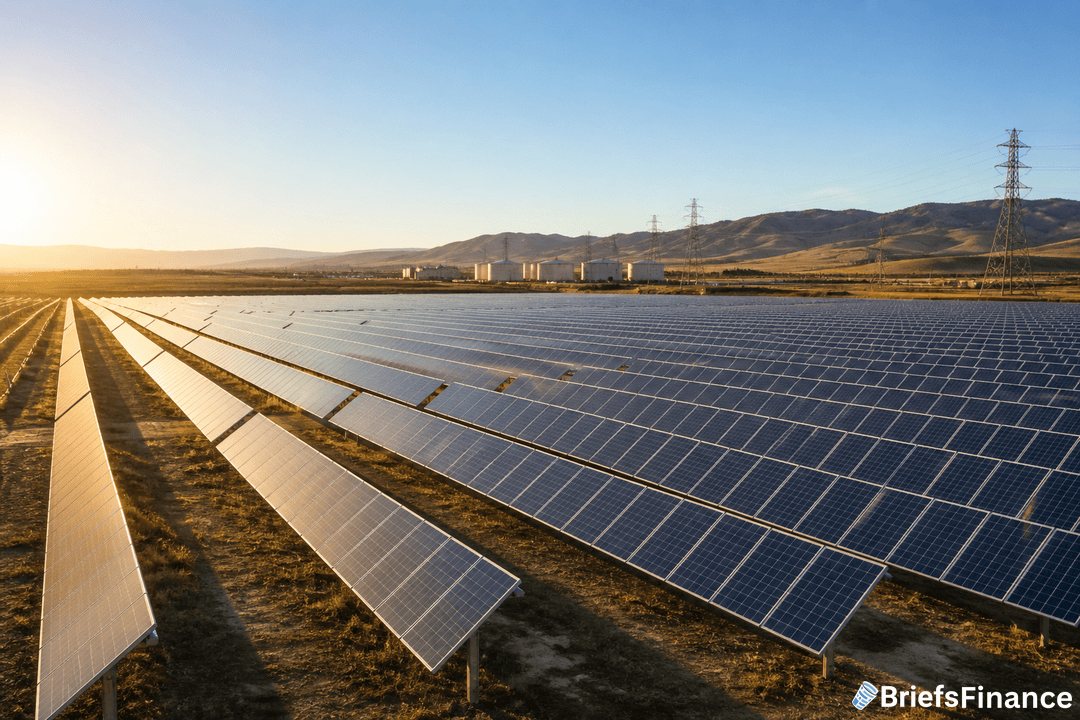
The game plan is simple to describe and hard to execute: buy, upgrade for efficiency, then sell. Galvanize plans to modernize mechanical systems, replace aging roofs, and add on-site solar. It targets property sales within five years and aims to reach what it describes as operational net zero in the first three years after acquisition. "We've not approached the three-year mark for any of the properties we've acquired," Sumberg said. "But we are very close with a good number of them."

The money and the moment

Following the Orange County and Milpitas purchases, Galvanize's commercial real estate unit has deployed roughly $700 million from the $1 billion it raised for this approach, with the remainder of the portfolio in the East Coast and Midwest. Sumberg, who joined Galvanize from Goldman Sachs Group Inc. in 2022, declined to comment on potential plans to raise new investor funds. Steyer - once a hedge fund billionaire and now a climate activist who spent heavily on an unsuccessful run for California governor and has pledged to donate his fortune - is estimated to be worth about $5 billion, per the Bloomberg Billionaires Index.

The broader backdrop is tilting toward energy-focused investing. Bankers and investors are chasing opportunities tied to the cost and supply of power as data center demand grows and war-fueled energy prices ripple through markets. In California specifically, households pay electricity prices that are close to double the national average.

Even when opportunities look specific to a region, disciplined saving pays off, get the free Always Be Buying E-Book today

A September report by Jones Lang LaSalle said owners of energy‑efficient buildings can save up to 75% on yearly power costs, and added that efficiency, once seen as optional for properties, is now treated as an urgent way to cut expenses. California's "strong foundation for a lower-emissions future" made it a "natural target" for Galvanize, said Nicolette Jaze, the firm's head of sustainability. Sumberg added that the two properties are in places where vacant land is scarce: "Not only are they in areas where you can't build that easily, but if you were to build you'd have to charge significantly more" in rent.

Why it could matter for your wallet

When power is pricey and new construction is hard, cutting energy use becomes a real profit lever. If Galvanize can buy at a discount, shrink utility bills materially, and later sell to buyers who value lower operating costs, that hints at where returns could concentrate in older industrial real estate.

If you prefer steady plans over timing moves, download our free Always Be Buying E-Book to learn the system

Disclosure

Recent News

1 2 3 … 89

Get Market Briefs delivered to your inbox every morning for free!

No fluff. No noise. No politics. Just finance news you can read in 5 minutes.

Blogs

September 29, 2026
Why Is Gold Going Down? A 5.2% Treasury Yield Just Took Its Job
  • President Trump rejected Iran's deal to reopen the Strait of Hormuz, oil prices jumped back up, and gold fell instead of rising.
  • Treasury yields hit their highest level in more than 20 years, so investors sold gold and bought Treasuries that pay interest.
  • Higher Treasury yields make the national debt, mortgages, car loans, and credit cards more expensive, with the Fed's next rate decision due October 28.
Read More
September 28, 2026
The Strategic Bitcoin Reserve: Why the Government Wants Bitcoin to Explode
  • The US government holds about 328,000 Bitcoin, worth roughly $25 billion, and since a 2025 executive order it keeps seized coins instead of selling them.
  • Washington wants a bigger pile of assets so its $40 trillion national debt looks smaller next to them, which lets it keep borrowing and spending.
  • Bitcoin's wild price swings, and a government holding a coin built to escape governments, are the two risks investors need to watch.
Read More
September 25, 2026
BRIEFS EXCLUSIVE: 43% Of Respondents Say Bills Outran Their Income Over Past Two Years
  • 43% of the 494 Market Briefs readers surveyed said their bills grew faster than their income over the past two years, even though 79% could cover a surprise $5,000 expense tomorrow.
  • Half of readers own gold or crypto, the two classic bets against a weaker dollar, and only 13% bought nothing at all in the last 12 months.
  • The median reader says it takes $150,000 a year to feel financially secure, about $62,000 above the U.S. median household income.
Read More
September 25, 2026
The Economy Is Booming. So Why Did Stocks and Bonds Fall Together?
  • S&P Global says the US economy is growing at its fastest rate since 2021, with corporate profits up 28.9% in a year, almost four times the historical average.
  • Stocks and bonds fell at the same time, which is not how the two markets normally behave, because Treasury yields above 5% now compete with stocks for investors' money.
  • Jaspreet Singh lays out three ways to invest through a shift like this: always be buying, buy the crash, or follow the money before it hits the headlines.
Read More
September 24, 2026
The 2026 Economic Reset Is Starting: Are We in a Recession, or Is the Pain Still Ahead?
  • The Federal Reserve has flipped from stimulating the economy to fighting inflation with higher interest rates, while the White House still wants growth at almost any cost.
  • The national debt tops $40 trillion, has outgrown the entire U.S. economy, and its interest payments are now the government's fastest-growing expense.
  • Higher rates bring pain for private equity, private credit, and speculative assets, but they open opportunities for investors holding cash, treasuries, and value assets.
Read More
September 23, 2026
Are We in a Recession? Without AI, America Might Already Be in One - and Washington Knows It
  • The White House attributes about three quarters of U.S. economic growth to AI, and many believe the economy would already be in a recession without it.
  • Washington has three reasons it cannot let the AI boom slow down: staying the world's superpower, outgrowing $40 trillion in national debt, and protecting a government stock portfolio worth billions.
  • Every market goes through booms and busts, and investors who understand the cycle get to buy the downturn instead of panic-selling with the crowd.
Read More
September 22, 2026
Will Interest Rates Go Down in 2026? Where the Money Moves Either Way
  • The Fed is leaning toward higher rates to fight 4% inflation, while the White House and a cracking job market push the other way.
  • If rates rise, money has tended to move toward short-term Treasuries, floating-rate loans, energy, banks and dividend payers.
  • If rates fall, it has tended to move toward gold, silver and Bitcoin, real estate, small caps, the S&P 500 and speculative bets.
Read More
September 21, 2026
How the Federal Reserve Makes Money - and Why It Just Posted Its Biggest Loss Ever
  • For 109 years the Federal Reserve created money, lent it to the U.S. government and handed the interest it collected back to Washington - almost $1 trillion in the decade starting in 2011.
  • Pandemic-era lending locked the Fed into earning about 2% on trillions of dollars while it now pays banks around 4%, producing a record loss of hundreds of billions in 2026.
  • The Fed covers its losses by creating money and the government covers its lost revenue by borrowing, and both feed the inflation that eats at the dollars in your account.
Read More
September 18, 2026
Kevin Warsh Just Defied Trump: What the Fed Rate Hike Means for Your Money
  • The Fed raised rates for the first time since 2023 in a unanimous vote led by Kevin Warsh, the chairman President Trump appointed to cut them.
  • Higher rates make the $40 trillion national debt, business loan resets and mortgages more expensive, but they strengthen the dollar and pay investors holding cash.
  • The war with Iran is pushing up oil, grocery and chip prices, another hike is likely in 2026, and recession talk is about to get louder.
Read More
September 17, 2026
Why America Bailed Out the Yen: The Japan Carry Trade, the Dollar and Your Mortgage Rate
  • In July 2026 the US sent money to steady the yen because Japan is the largest foreign owner of US debt, and Washington needs Japan to keep lending.
  • For decades the Japan carry trade let Wall Street borrow yen at essentially 0% and pour it into US stocks, real estate and Treasuries, and rising Japanese rates are shutting that off.
  • A weaker yen means fewer buyers for the dollar and for US debt, which pushes Treasury rates up and drags mortgage, car loan and credit card rates up with them.
Read More
1 2 3 … 27
Share via
Copy link










