The Zero-Emission Shift
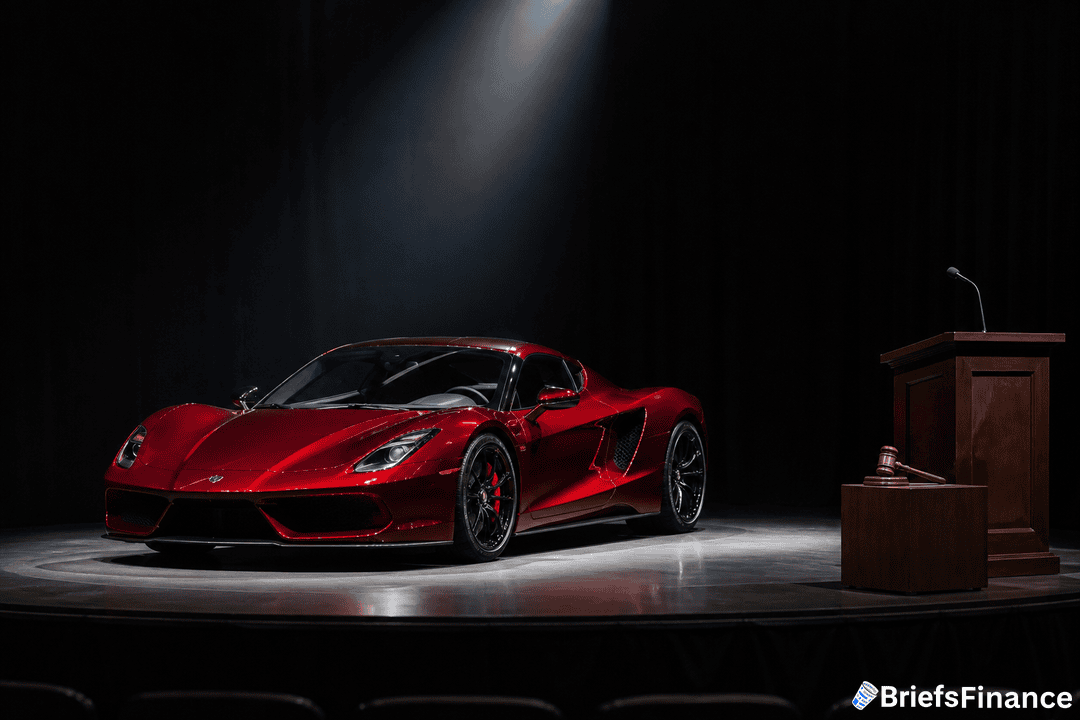
Despite initial backlash, Ferrari's inaugural electric vehicle commanded $40 million at a charity auction. The result made the model the priciest new vehicle ever sold at public auction. No prior new model had commanded a higher public-auction price.
The Luce, a "tailor made" example of Ferrari's forthcoming EV, was sold through Sotheby's at Monterey Car Week in California.
The model represents a notable break from Ferrari's long-standing tradition of combustion-engine performance cars.
Tailor-made models are one-off commissions assembled around an owner's exact choices. For the Luce, Ferrari worked with LoveFrom, a design studio founded by Jony Ive, the former Apple design chief who helped shape the iPhone and iMac. The finished four-door car takes Ferrari's design language in a new direction, drawing on nearly unrivaled levels of engineering and design.
Monterey Car Week has become a key stage for record-breaking collector car sales, and Sotheby's charity auction gave Ferrari a chance to reset the narrative around the Luce. The model's May unveiling drew heavy criticism and sent shares sliding, but the $40 million result signals that the brand's exclusivity can carry over to its electric era.
In May, Ferrari CEO Benedetto Vigna said orders were already coming in from longtime Ferrari clients and from customers new to the brand. Vigna made the company's ambition clear at launch.
If record-breaking car prices make you wonder about wealth, grab the free Always Be Buying eBook for steady investing.
"The Ferrari Luce has nothing to do with electric cars you have seen from other players," Vigna said. "You have to see it and drive it to understand that it wasn't copied, not the interiors, not the exterior, not the performance."
Vigna's comments underline how high the stakes are. The Luce is not just another EV; it is Ferrari's bet that the company can transfer its exclusivity from gasoline engines to battery-born power while keeping strong pricing power.
The Business Case
Despite the negative reception in May, Ferrari's underlying economics have remained strong. In late last month, the company lifted its full-year guidance after second-quarter results got a boost from orders for limited-run models such as the F80 and a pricier Purosangue four-seater.
That the Luce has achieved a $40 million auction record before its broader delivery line is also significant for Ferrari's wider lineup. High-priced collector sales are a visible sign of brand heat, and that heat can help other models keep their prices high in the resale market and support expectations for new allocations.
The charity auction result may not erase the aesthetic debate around Ferrari's electric design, but it shows that the Luce can command the kind of rock-star attention usually reserved for rare combustion flagships. For the world's wealthiest car buyers, owning the first Ferrari EV seems a prize beyond simply what the car does from zero to speed.
And for Ferrari, the record marks a useful plot twist: after months of skepticism, the company now has one of the most expensive new cars in history. Vigna's insistence that the car must be seen and driven is underscored by the fact that the first buyer went far beyond the Luce's typical base price to own the very first dedicated electric Ferrari.
The real storyline, arguably, is that Ferrari can continue to sell exclusivity even in a new departure. With the Luce, it has essentially taken electrification, recast it in Ferrari's own design language, and made it the platform for an auction milestone.
The auction's success also bolsters Ferrari's broader commercial strategy. Limited-run models like the F80 and the Purosangue have already driven recent earnings gains, but the Luce's record bid suggests that demand for the EV remains intense even after early skepticism. That interest could translate into strong order books for the forthcoming production version, which carries a base price around €550,000.
Ferrari's ability to maintain premium pricing during its electric transition will be closely watched by investors and rivals alike. The $40 million sale, while a charitable gesture, also serves as a powerful marketing signal that Ferrari can extend its aura of scarcity and performance into a new era. For collectors, the Luce now holds a place alongside the likes of classic V12 models, and future allocations may be more hotly contested as a result.
The auction result doesn't settle the design debate, but it does confirm that the brand's financial firepower remains intact even as it shifts away from combustion engines.
While that auction result grabs attention, the free Always Be Buying eBook teaches a system for any income.