Free NewsletterPro Login

Warning: Undefined variable $stocks in /var/www/briefs.co/htdocs/wp-content/plugins/oxygen/component-framework/components/classes/code-block.class.php(133) : eval()'d code on line 448

Warning: foreach() argument must be of type array|object, null given in /var/www/briefs.co/htdocs/wp-content/plugins/oxygen/component-framework/components/classes/code-block.class.php(133) : eval()'d code on line 448

Warning: Undefined variable $funds in /var/www/briefs.co/htdocs/wp-content/plugins/oxygen/component-framework/components/classes/code-block.class.php(133) : eval()'d code on line 472

Warning: foreach() argument must be of type array|object, null given in /var/www/briefs.co/htdocs/wp-content/plugins/oxygen/component-framework/components/classes/code-block.class.php(133) : eval()'d code on line 472
/* the link was here */
×
Free investor livestream — Nov 17

How To Use ChatGPT & Claude To Research Stocks Like A Pro

01
The prompt we use to break down any stock
02
How to fact-check what AI tells you
03
How to compare two stocks in minutes
Home » Deep Briefs »  » The AI Bubble Isn't Jamie Dimon's Biggest Worry. The Credit Crisis Behind It Is.

The AI Bubble Isn't Jamie Dimon's Biggest Worry. The Credit Crisis Behind It Is.

Author: Nate Gregory
Published: Nov 14, 2026 
Disclosure: Briefs Finance is not a broker-dealer or investment adviser. All content is general information and for educational purposes only, not individualized advice or recommendations to buy or sell any security. Investing involves significant risk, including possible loss of principal, and past performance does not guarantee future results. You are solely responsible for your investment decisions and should consult a licensed financial, legal, or tax professional before acting on any information provided.
Summary:
  • Jamie Dimon, CEO of America's biggest bank, told Bloomberg his real concern isn't the AI bubble but the borrowing behind it, because the market "will ask for more and more and more."
  • Credit spreads sit near 1.5%, a level last seen in February 2007 and January 2000, right before the last two bubbles burst.
  • Credit crises move in five stages, from boom to pullback, and Briefs Finance CEO Jaspreet Singh maps where 2026 sits and how investors can prepare.

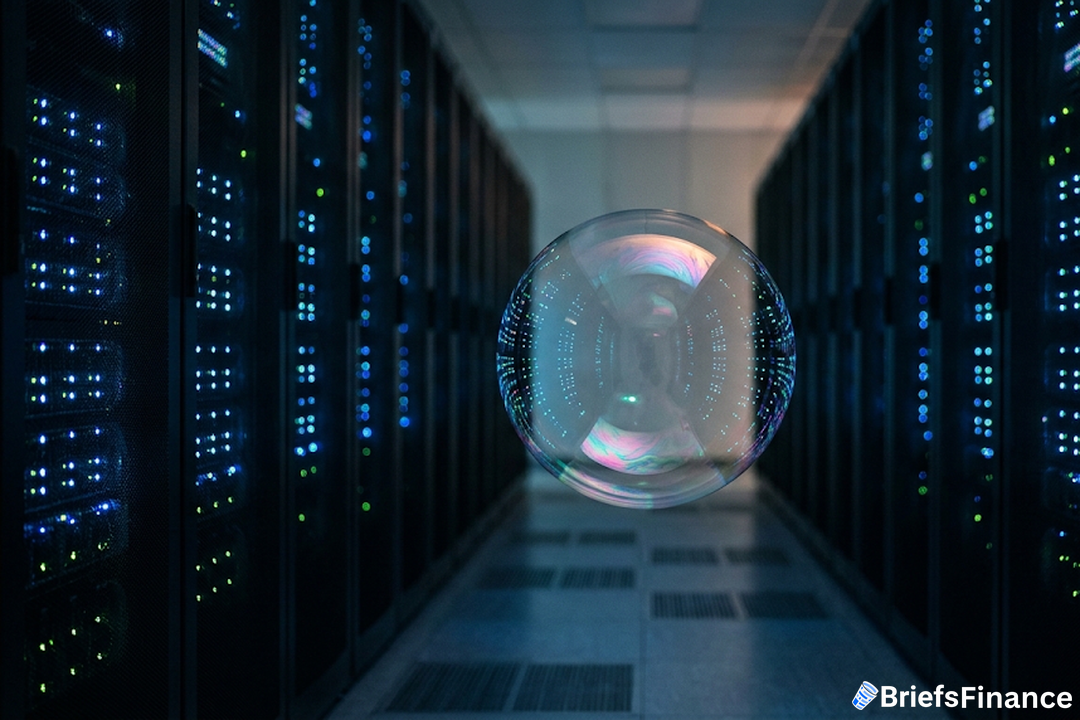
Jamie Dimon runs the biggest bank in America. When Bloomberg asked him what he thinks of the AI bubble, he didn't talk about stock prices.

"I always said the best thing to do with any of these things is deal with it before it becomes a crisis," he said. If it does become one, "we will deal with it - it just will be in a much less pleasant way."

The line that caught Briefs Finance CEO Jaspreet Singh's attention came next: Dimon's big concern isn't the AI bubble. It's the credit crisis that could be building behind it.

"We can't borrow endlessly and spend endlessly," Dimon said. "There will be a point where the market will ask for more and more and more," and at some point that feeds into corporate debt and credit spreads.

Dimon's Real Worry Isn't the AI Bubble. It's the Borrowing Behind It.

What does "more and more and more" mean? Companies have been borrowing money like crazy to invest in AI.

As banks like JPMorgan Chase get more concerned about the AI bubble, interest rates go up and borrowing gets more expensive. The companies building AI still need to borrow more, so the cost keeps climbing.

Eventually it hits a breaking point. Companies that want to borrow can't afford to, but they need the money to keep growing, and that's where a credit crisis starts.

The pressure is already visible:

  • The Chinese AI bubble popped, with AI stocks there falling more than 40%.
  • South Korea's AI market fell in 2026 as well.
  • In the US, Google stock crashed on concerns about its AI debt, and Intel crashed on the same worry.

Why a 1.5% Credit Spread Makes the AI Bubble Riskier Than It Looks

Start with a mortgage. A year ago you could borrow $400,000 at around 6.17%, which worked out to something like $2,400 a month.

Today that same $400,000 costs about 7.24%, or roughly $2,700 a month. Same house, same loan amount, $300 more every month because rates went up.

Now swap $400,000 for $400 million, which is closer to what a company borrows. The extra cost gets a lot bigger.

Dimon's concern isn't just where rates sit today. It's where the credit spread could go, and a credit spread is the premium a company has to pay to borrow because lending to it carries risk.

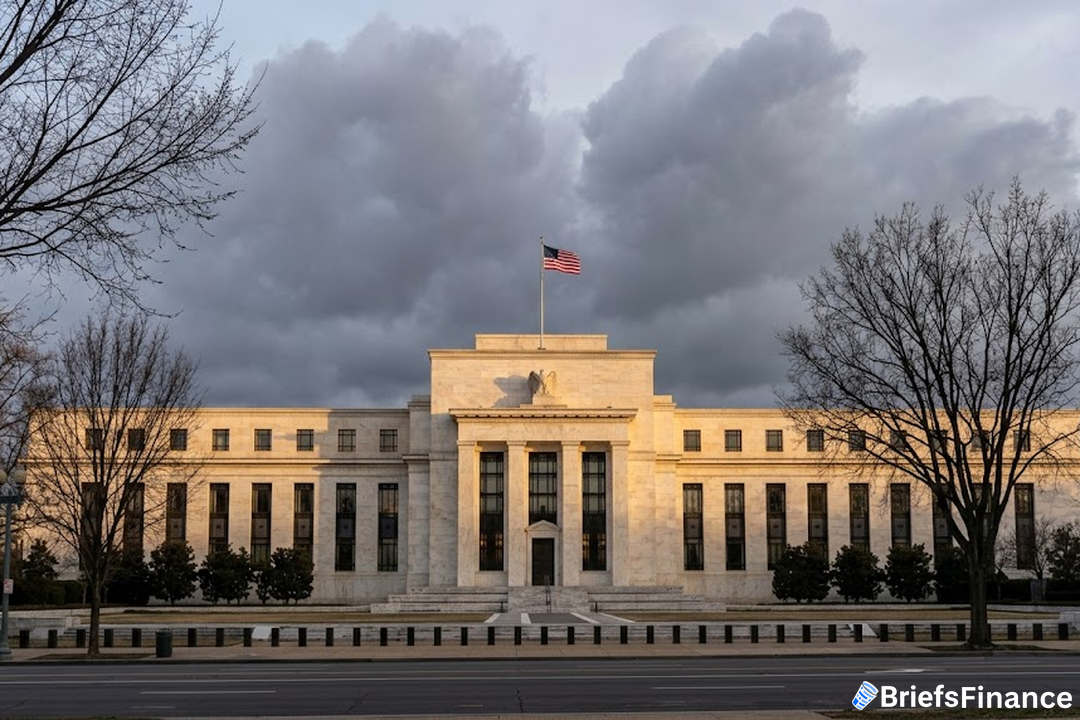
A Federal Reserve chart puts that spread at roughly 1.5% right now, which is very low. Low might sound like good news.

The last time spreads were this low was February 2007, just before the housing market burst. Before that it was January 2000, just before the dot-com bubble popped.

If the economy or the AI market starts to hurt, that spread can jump quickly. Borrowing gets much more expensive right when AI companies need access to a lot of money they don't have.

The Economy Runs on Credit, and AI Companies Are the Biggest Borrowers

Our economy runs on spending. The more money you spend, the more money somebody else makes.

Buy a burrito at Chipotle and you're supporting the economy. Put that burrito on your Amex after you've already spent your paycheck and you're supporting it even more, because now you're spending money you don't have.

That's a credit-based economy, not a money-based one. Spending depends on how much credit people and companies can qualify for, not just what's in their pockets.

Corporations are huge borrowers, and right now the biggest borrowers are big tech and AI companies. That money lands in somebody's pocket, whether it's contractors, employees, or the crews building the buildings.

A credit crisis means AI companies can't borrow as much. Less money flowing in means fewer jobs, fewer contracts, and less growth.

Jaspreet lays out five stages of a credit crisis:

  1. Boom. A new industry takes off and lending grows with it.
  2. Loosening. Banks see money to be made and relax their standards.
  3. Pricey loans. Banks see rising risk and raise interest rates.
  4. Cracks. Defaults and bankruptcies start showing up.
  5. Pullback. Banks stop lending.

Most investors panic through those stages, and the ones who understand them tend to find opportunities instead. Jaspreet and his analysts research those opportunities with ChatGPT and Claude, and he's showing exactly how in a free livestream on November 17.

Stage 1: Everyone Wants a Piece of the Boom

In the 1990s the new technology was the internet, and money poured into internet companies through debt and investment dollars because everybody wanted a piece of the action.

Today it's artificial intelligence, with a record amount of debt flowing into the industry. AI is changing the economy, every company wants to be the leader, and the fastest way to grow is to borrow as much as possible.

It isn't just the companies borrowing. Investors borrow to buy the stocks too.

China set a record for money borrowed to invest in AI stocks right before its AI bubble burst. South Korea saw record margin borrowing, which means buying stocks with money borrowed from a brokerage, poured into AI stocks before that bubble burst too.

Those investors didn't just lose their money. They still owe the debt they borrowed to buy the stocks, which makes it a double hit.

Stage 2: Lending Gets Loose, and Private Credit Fills the Gap

The clearest example of loose lending is the run-up to 2008. President Bush said housing was the best investment you could make, and banks did everything they could to get loans out the door:

  • NINJA loans, short for no income, no job, no assets. You could sign for a $400,000 house with none of the three.
  • Subprime loans. A 480 credit score couldn't qualify, so banks found a way to lend to a 550 score at a higher interest rate.
  • 120% loan-to-value mortgages. Want a $400,000 house? Here's $480,000, so you have money to move in, renovate, and buy something new.

Everybody believed housing prices could never fall, so banks lent to anyone who could breathe and sign.

The AI bubble has seen nothing like 2008. But lending did loosen over the last several years, especially during the era of extremely low interest rates after the pandemic, in 2020, 2021, and 2022.

The catch is that businesses don't get 30-year fixed-rate mortgages. They get adjustable loans, generally three to five to seven years long.

In 2026 a big chunk of those 2020 and 2021 loans is readjusting, and a 3% loan from 2021 is resetting at 7%, 8%, or 9%. On hundreds of millions of dollars, that's a big jump in costs even for a company that isn't borrowing anything new.

What Is Private Credit, and Why Is It Bleeding?

The bigger worry here isn't banks like JPMorgan Chase, Wells Fargo, and Bank of America, which have their own concerns. It's private credit.

Private credit grew out of a gap in the market. A $200 million loan for a risky AI startup was too big for a regional bank and too small for the biggest banks, so companies that size struggled to find a lender.

Hedge funds built an industry to fill it. Firms like BlackRock and Blackstone lent to these middle-market companies, especially tech and software businesses that used to be cash-flow machines, and they borrowed from investors to keep the lending going.

Today those private credit firms are bleeding. BlackRock, Blackstone, and Apollo have all halted investors from pulling money out, because the companies they lent to aren't paying the loans back and letting investors leave would collapse the funds.

Higher interest rates pushed up the burden on borrowers, and many can't keep paying, because while a few key tech companies make a lot of money, plenty don't. A traditional software company that didn't invest in AI fast enough may not be growing fast enough to compete.

Dimon referenced 2008 directly. He said this feels like 2005, 2006, and 2007, when there was a lot of money to be made and people took whatever loans they could because they thought they'd get rich.

Stage 3: Loans Get Pricey, and the AI Bubble Meets Higher Rates

Dimon said JPMorgan is no longer being so loose with its lending requirements. In his words, they don't have to chase that.

Higher interest rates have historically been the needle that pops bubbles. In the 1990s, valuations skyrocketed as money flooded into dot-com companies, the Federal Reserve raised rates to cool the economy, and the bubble burst.

Rates have climbed a lot over the last several years, partly because of the Fed and partly because of higher Treasury yields. A Treasury yield is the interest rate you earn when you lend money to the US government.

Yields rose over the last 12 months not because of the Fed but because investors and countries around the world grew less interested in lending to the US. They had worries about the dollar and inflation, and the government had to offer higher yields to bring them back.

Dimon points to a second reason loans are getting pricey, which he calls increased competition for capital. A few years ago investors had extra cash and savings sitting around, and those savings aren't there the way they were.

Now companies are fighting for dollars, and more banks are deciding they'd rather not lend at all, so the ones that do charge more to justify the risk. Sticky inflation adds to it, because a bank earning only interest on a ten-year loan wants protection from inflation eating its profit.

That creates two problems for companies:

  • A company that needs money to keep growing, or even to keep operating, now pays a lot more for it.
  • A company trying to refinance loans from years ago faces significantly higher rates, assuming a bank will refinance it at all now that valuations have fallen.

Picture a company that thought it was worth $100 million three years ago and is valued at $80 million today. The value it expected to grow shrank instead, and the debt on top of it got more expensive.

Stage 4: Cracks Show Up as Defaults, From China to Google

Every credit crisis shows cracks the same way: more defaults, then more bankruptcies.

In the dot-com era, banks lent millions to internet companies that were just an idea, with no revenue and no profit. Rates rose in the late 1990s, loans got pricey, and hundreds of internet companies defaulted in 2001.

In 2008, mortgage rates rose, adjustable-rate mortgages reset, home prices fell, and foreclosures flooded in.

In 2026 the cracks look like this:

  • China. As the AI bubble burst, investors who borrowed to buy AI stocks declared default.
  • South Korea. Investors who bought AI stocks on margin had to declare default too.
  • United States. The bubble hasn't burst, and some don't believe there is one. But Google saw a lot of pain after pouring all of its free cash flow into AI while parts of its business shrank.
  • Intel. The company, which is taking investment from the US government, had one of its worst days on concerns it won't see the AI growth investors expected.

Dimon expects the next cracks to show up in the data center industry.

Ray Dalio, founder of Bridgewater, the largest hedge fund in the world, is seeing the same thing. He posted that "the market is now beginning to tighten, as investors are beginning to require larger concessions," which means lenders want more protection and higher interest before they hand over money.

Stage 5: The Pullback Is the Actual Credit Crisis

If the cracks spread, banks pull back. They tighten restrictions and make it much harder to borrow.

That's the credit crisis, because spending in our economy isn't just the money in your pocket, it's the credit you can qualify for. When banks stop lending, money stops entering the economy as credit, and spending stops with it.

After the dot-com bubble burst, banks stopped lending to internet companies because they couldn't tell the good ones from the bad. After 2008, NINJA loans, subprime loans, and 120% mortgages disappeared, and you needed a 30% down payment, a great credit score, a great income, and great assets just to be considered.

What Investors Can Do Before the AI Bubble Question Gets Answered

There's a chance the AI bubble bursts, the market crashes, the economy hurts, and it all turns into a great buying opportunity. There's also a chance it never bursts and markets keep climbing.

Jaspreet's starting point is what he calls ABB, or always be buying. Set up a system to buy the broad market every week, two weeks, or month, and keep buying whether markets are up, down, or sideways, for years and decades.

If that's not enough to hit your goals, he lays out three options:

  • Retire later. Work until 72 instead of 65 and let the money compound longer.
  • Invest more. Go from $500 a month to $1,000 by cutting expenses or picking up a second job.
  • Earn better returns, which comes with more risk.

Better returns come from two places. The first is what Jaspreet calls POOP: panic leads to overselling, which leads to opportunity, which leads to profit.

Buying through the 2020 pandemic crash, the 2008 crash, or the 2000 dot-com bust meant buying almost any investment on sale. The problem is that nobody knows when the next crash comes, only that one will.

The second is market shifts: identifying where money is moving and investing there, not where it was.

Both take research, and Jaspreet recommends doing it with AI tools like ChatGPT and Claude, because it's almost like having a Wall Street analyst at your fingertips. Those tools are only as good as the person prompting them, which is exactly what his free livestream on November 17 covers, down to the ten prompts his analysts use.

Dimon has already started tightening at JPMorgan, and he made clear that doesn't make the rest of the banking industry safe. If this does become a crisis, it will get dealt with "in a much less pleasant way."



Tag »

More Deep Briefs

Buy the Dip or Run? What the Market's Worst Day in Years Is Telling Investors

The AI Bubble Isn't Jamie Dimon's Biggest Worry. The Credit Crisis Behind It Is.

How to Budget Every Payday: 5 Moves So You Never Worry About Money

How to Invest in Stocks: 5 Things to Do Before You Invest Your First Dollar

Best ETFs to Buy? 5 Three-ETF Portfolio Examples and Risks

Best Investments of a Generation: 5 Market Shifts Backed by Your Tax Dollars

How to Get Ahead Financially: 10 Moves to Make While Everyone Else Falls Behind

National Debt at $40 Trillion: Why Inflation Is the Hidden Tax, and Who Profits From It

FOMC Meeting: Why the Fed Is Getting Nervous, and Why AI Stocks Feel It

Midterm Elections: Where the Money Could Move if Republicans or Democrats Win

Brazil Stock Market Crash: Why Lula's Win Matters to U.S. Investors

Credit Utilization: How Paying Down Cards Can Help Your Score

How to Calculate Your Net Worth, With a Worked Example

How to Get Out of Debt on a Low Income, Step by Step

How to Save Money on a Low Income, With a Budget Example

How to Budget With an Irregular Income, Even in Lean Months

How to Track Your Spending in 15 Minutes a Week

Should You Invest or Pay Off Debt? How to Decide

Pay Yourself First: What It Means and How to Automate It

What Is a Good Credit Score? Ranges and What Moves Yours

How to Lower Your Credit Card Interest Rate, With a Call Script

How Does Credit Card Interest Work? A Plain-English Guide

Credit Card Minimum Payment: What Happens If You Only Pay It

Should You Save or Pay Off Debt First? How to Decide

Debt Snowball vs Avalanche: Which Card to Pay First

What Is a Sinking Fund? How to Start One

Are We in a Recession? 5 Threats to the Economy and Where the Money Is Moving

How Boring Math Makes You Rich: The Briefs Money Spreadsheet, Explained

Common Investing Mistakes: Why a Stock Grade Is One Tool, Not the Whole Toolkit

How to Read a Company's Numbers Without a Finance Degree (Using Briefs Terminal)

What Type of Investor Am I? The Three Investor Archetypes, Explained

How to Build a Stock Watchlist That Isn't Just Stocks You Heard About

How to Choose an ETF That Matches Your Idea (Using the ETF Planning Tool)

Is This Stock a Good Buy? How to Use the Briefs Score to Tell If a Stock Fits the Way You Invest

How to Tell an Asset From a Liability: The One Question to Ask Before You Buy Anything

How to Build Your First $2,000 Emergency Fund and Wipe Out Every Debt Over 10%

How to Invest Through a Crash: 3 Rules From the Worst-Timed Investor Alive

Active vs. Passive Investing: How To Build A Million Dollar Portfolio Faster

Growth, Income, or Wealth Preservation: How To Build Wealth No Matter Which Way You Invest

What Is the Briefs Connector? A Simple Guide

Is a Recession Coming? What the Last Five Rate Hiking Cycles Say

Fed Interest Rates May Rise Again in 2026 - and the Newest Culprit Is AI

Housing Market 2026: Why Office Buildings Are Cracking Before Houses Do

Dividend Investing vs. Growth Investing: Why the Slower Portfolio Can End Up Bigger

Why Is Gold Going Down? A 5.2% Treasury Yield Just Took Its Job

The Strategic Bitcoin Reserve: Why the Government Wants Bitcoin to Explode

BRIEFS EXCLUSIVE: 43% Of Respondents Say Bills Outran Their Income Over Past Two Years

The Economy Is Booming. So Why Did Stocks and Bonds Fall Together?

The 2026 Economic Reset Is Starting: Are We in a Recession, or Is the Pain Still Ahead?

Are We in a Recession? Without AI, America Might Already Be in One - and Washington Knows It

Will Interest Rates Go Down in 2026? Where the Money Moves Either Way

How the Federal Reserve Makes Money - and Why It Just Posted Its Biggest Loss Ever

Kevin Warsh Just Defied Trump: What the Fed Rate Hike Means for Your Money

Why America Bailed Out the Yen: The Japan Carry Trade, the Dollar and Your Mortgage Rate

Treasury Yields Are Spiking Because Lenders Are Backing Away From U.S. Debt

Fiat Currency Runs on Trust, and the World Just Stopped Trusting the Dollar

When Will RAM Prices Go Down? Inside the Memory Shortage

How Is the Economy Doing? Washington Says It's Fixed, but the Numbers Don't Agree

US National Debt Hits $40 Trillion: Why the Economy Hasn't Collapsed Yet

Your 401k Is Fueling the AI Bubble

What Is Wealth Preservation? How To Protect Your Money From Anything

Why Is Everything So Expensive? Why Prices May Never Come Back Down

US Housing Market: Why Renting Can Cost Less Than Buying

An Interest Rate Hike in 2026? The Fed Just Broke Its Own Script

5 Passive Income Ideas That Pay You Whether You Work or Not

The Best Way to Invest 10k: Three Options To Transform 10K into 10 Million

The Tax Write Offs the Rich Are Using in 2026 While the IRS Shrinks

America Is Running Out of Debt Buyers. Treasury Bills Are the Government's Fix

How to Get the Most From Your Guideline 401k

Principal 401k: What to Know About Your Plan

What a Tariff Dividend Means for Your Money

No Tax on Overtime: How Overtime Pay Is Taxed

Reading the Silver Price Forecast for 2026

What to Do When Reddit Stocks Go Viral

Why Is Bitcoin Dropping? 4 Reasons Bitcoin Falls

The Fidelity 500 Index Fund, Made Simple for Beginners

USA Penny Stocks: Risks and Rewards Explained

Finding Cheap Stocks to Buy Now Without Getting Burned

Best Dividend Stocks: A Beginner's Playbook

Roth 401k, Explained for New Investors

How a Roth IRA Calculator Shows Your Future Wealth

Portfolio Diversification: Why Putting All Your Eggs in One Basket Destroys Wealth

Non Taxable Income: What It Is and Why It Matters

What Are Semiconductor Stocks? Chip Stocks Explained

How Stocks Work: A Simple Guide for Beginners

Stop Loss vs Stop Limit: What's the Difference?

Energy Stocks: A Simple Guide for Investors

What Is a Stop Loss Order? A Simple Guide

Best S&P 500 Index Fund: How to Choose One

What Are Penny Stocks? Risks and Rewards Explained

Best Stocks for Beginners With Little Money

Tech Stocks: A Simple Guide for New Investors

What Is a Joint Stock Company? A Simple Guide

Capital Gains Tax in California: A Simple Guide

Top Covered Call ETFs: How to Compare Them

What Are Stock Options? A Plain-English Guide

EBITDA Margin: What It Is and How to Calculate It

What Is Taxable Income? A Simple Guide for Investors

What Is a Covered Call? How the Strategy Works

What Is Gross Margin? A Simple Guide for Investors

1 2 3 4

Get Market Briefs delivered to your inbox every morning for free!

No fluff. No noise. No politics. Just finance news you can read in 5 minutes.
Join Free

Blogs

November 14, 2026
Nvidia News: Jensen Huang Is Out, and the "Bank" Behind American AI Just Lost Its Founder
  • Jensen Huang is out at Nvidia over affairs with multiple people, and the company he founded has been the bank of American AI, with about $30 billion into OpenAI and $10 billion into Anthropic.
  • A hotter-than-expected inflation report has Fed officials talking about a possible 0.5% hike in December, and gold, silver, and bitcoin fell on the news.
  • President Trump said the US may not need a deal with Iran, keeping oil prices and inflation risk high. Jaspreet Singh breaks down what it all means for AI stocks and your portfolio.
Read More
November 14, 2026
Record Highs, a 57-Year Low in Jobless Claims, and a Stock Market Bubble: Inside the Weirdest Market in History
  • Stocks are booming at the fastest pace in years, jobless claims just hit a 57-year low, and most investors still feel like nobody is hiring.
  • The Fed is protecting the dollar over the economy, oil swings on every Iran headline, and a few AI companies are carrying an S&P 500 where four of five stocks sit in a correction.
  • Jaspreet Singh explains why circular financing between Nvidia, OpenAI, Anthropic, and SpaceX rhymes with 2008's house of cards, and how his three investing pillars handle a stock market bubble.
Read More
November 14, 2026
Is a Recession Coming? The Fed Just Made a U-Turn It Has Only Made Twice in 60 Years
  • The Fed has raised rates, cut them, then raised them again only twice in the last 60 years, and both times the economy fell into a recession and stocks crashed.
  • The same stop-and-go cycle is playing out now, with one big difference: US debt is 125% of GDP today versus about 30% in 1980.
  • In the 1970s gold rose roughly 24x, real estate 157%, stocks lagged, and cash lost half its value. Jaspreet Singh lays out five assets to consider before the next flip.
Read More
November 14, 2026
The 2027 Tax Brackets Are Out: How Some Investors Can Earn $135,300 and Pay $0
  • The IRS 2027 tax plan keeps the same seven rates but widens every bracket and lifts the married-filing-jointly standard deduction to $33,200.
  • The 0% long-term capital gains bracket rises to $102,100, so a household living on $135,300 of investment income could owe $0 in federal income tax.
  • C corporations still pay 21%, small businesses keep the 20% QBI deduction, and the 401(k) limit climbs to $25,500 with an $8,500 catch-up for investors over 50.
Read More
November 14, 2026
Rare Earth Stocks: Why China's January 2027 Ban Could Be the Opportunity of the Decade
  • China plans to block rare earth exports to the US on January 10, 2027, and the US produces effectively zero of the 17 metals that go into phones, cars, dishwashers, and missiles.
  • When China cut off Japan in 2010 and squeezed Germany from 2015, some rare earth prices jumped 18x and 15x, and one rare earth company went bankrupt while another soared.
  • Washington is already putting billions into MP Materials, Vulcan, and a stockpile called Project Vault, and Jaspreet Singh walks through how investors can get exposure to rare earth stocks and ETFs.
Read More
November 14, 2026
Divided Government Just Changed Where the Money Moves: 5 Market Shifts After the Midterms
  • Democrats took control of Congress, setting up a divided government with a Republican White House, and the biggest spender in the economy is about to change where it spends.
  • The day after the election the market had one of its best days of 2026 while AI stocks, Tesla, and SpaceX fell and clean energy, healthcare, treasuries, gold, and silver rose.
  • Jaspreet Singh maps the five places money is already moving and the history that says stocks rose in the 12 months after each of the last 19 midterms.
Read More
November 14, 2026
Buy the Dip or Run? What the Market's Worst Day in Years Is Telling Investors
  • The stock market posted its worst day in years one day after its best day of 2026, splitting investors into a buy-the-dip camp and a this-time-is-different camp.
  • The Fed rescued markets in 2000, 2008, and 2020, but inflation is already a problem and the Fed has committed to protecting the dollar instead of the stock market.
  • Jaspreet Singh explains why nothing material changed in 48 hours and lays out a phased way to buy the dip without betting everything at once.
Read More
November 14, 2026
The AI Bubble Isn't Jamie Dimon's Biggest Worry. The Credit Crisis Behind It Is.
  • Jamie Dimon, CEO of America's biggest bank, told Bloomberg his real concern isn't the AI bubble but the borrowing behind it, because the market "will ask for more and more and more."

  • Credit spreads sit near 1.5%, a level last seen in February 2007 and January 2000, right before the last two bubbles burst.
  • Credit crises move in five stages, from boom to pullback, and Briefs Finance CEO Jaspreet Singh maps where 2026 sits and how investors can prepare.
Read More
November 3, 2026
How to Budget Every Payday: 5 Moves So You Never Worry About Money
  • A median earner could make about $4.7 million over a career, yet most retire with closer to $13,000 in the bank because of a keeping problem, not an income problem.
  • Audit your money, save $2,000, pay off credit card debt, then automate a 75/15/10 split across three bank accounts.
  • Earn more only after your system is in place, then protect what you build with an accountant, attorneys, the right insurance, and an estate plan.
Read More
November 3, 2026
How to Invest in Stocks: 5 Things to Do Before You Invest Your First Dollar
  • Paying off credit card debt at around 22% interest beats the stock market's roughly 10% average, and even Warren Buffett's 19%.
  • Save $2,000 in a separate emergency fund, learn to research with AI, and decide whether you're a growth, income, or wealth preservation investor.
  • Write down a plan for buying during market crashes, which have happened 25 times in the last 100 years.
Read More
1 2 3 … 32
Share via
Copy link