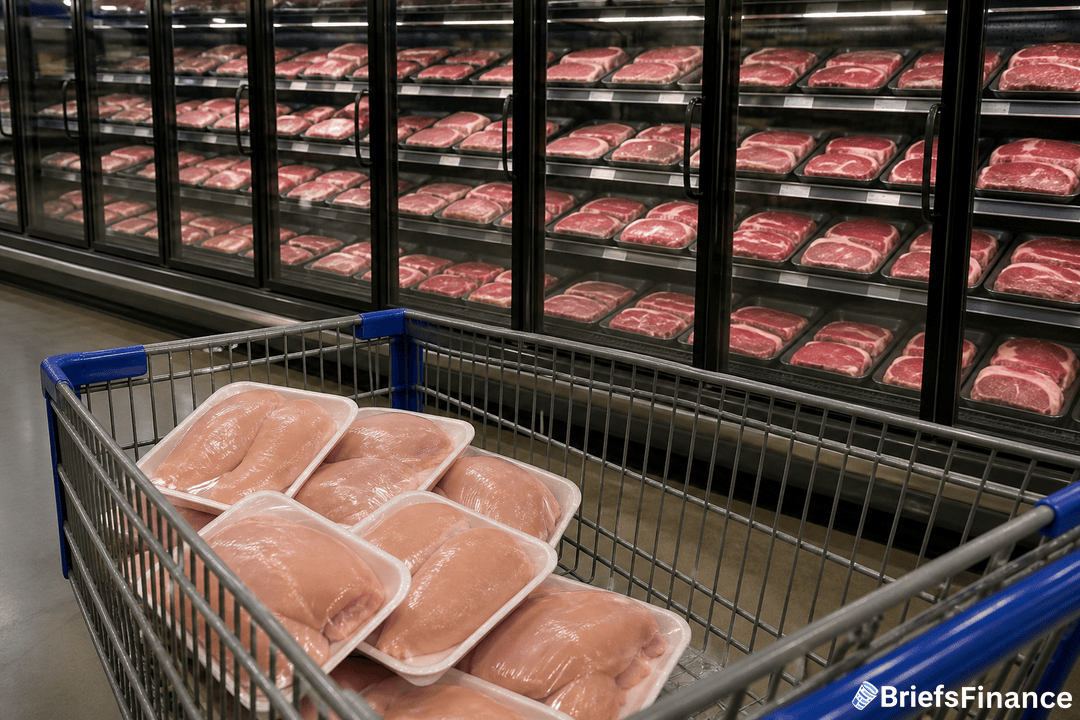
Aaron Kaufman noticed it at the grocery store first. Moving from Brooklyn to Manhattan, he saw ground beef jump from $6 to $8 per pound, and that was enough to push him toward chicken.
He is not alone. After years of paying more and grumbling less, American shoppers are finally cutting back on beef in a meaningful way.
What the Data Shows
Circana tracked beef sales during the 13 weeks ending mid-July, a stretch covering both Memorial Day and July Fourth. Volume dropped 0.3% compared with the same window last year, a sharp reversal from the roughly 5% growth seen in that period over the prior two years.
The average retail price for a pound of ground beef held flat in July at $7.116, according to the Bureau of Labor Statistics. That is still a 9.4% increase from July 2025, though it marks the smallest year-over-year gain in 17 months.
The survey also found that roughly 40% of beef buyers say they are purchasing the meat less often. Shoppers who once handled higher prices by cooking more at home or hunting for cheaper cuts have now simply started buying less or switching proteins. Chicken is the big winner, thanks to lower prices and plenty of supply.
If rising grocery bills have you rethinking your usual protein, grab the free Always Be Buying eBook and learn a steadier way to build wealth.
Why Prices Stayed High
Despite a long bout of high beef prices, the market's main floor remains cattle. The US cattle herd has been reduced to just above its lowest level in half a century, and rebuilding it is a slow process that takes years, not months.
To fill the gap, the US is importing more meat from Argentina and resuming live cattle exports from Mexico after a ban related to the screwworm parasite. But the reopened border crossing is limited, and the imported cattle still need months before they can be processed.
Chicago live cattle futures came off their lowest levels in years in December and hit a fresh low in August 2026.
The current shortage stems from years of drought and high feed costs, which led ranchers to cull herds. Because cows produce only one calf per year, rebuilding the herd is a slow, multiyear process. This structural imbalance is why prices remain elevated even as demand weakens - a cycle that typically takes several years to resolve.
"It's not always just about the price of food; it's the price of life," Chris DuBois, a Circana executive vice president, said. "It's really forcing people to act."
A separate industry observer said, "This pullback felt due, given a long inflationary streak. It's the first time consumption has ever pushed back."
What Relief Is Coming
Restaurant prices are already starting to signal cheaper options. "Beef inflation will be a little bit less pronounced" in the second half, said Shake Shack's chief financial officer, Michelle Hook.
Burger King's parent company is also expecting some relief, but not until early 2027.
The bottom line: $8 ground beef may be slowly fading, but the change won't show up overnight. In the meantime, the chicken aisle is where the money will shift.
When higher prices change how you shop for meat, let the free Always Be Buying eBook show you a calmer path to growing your money.