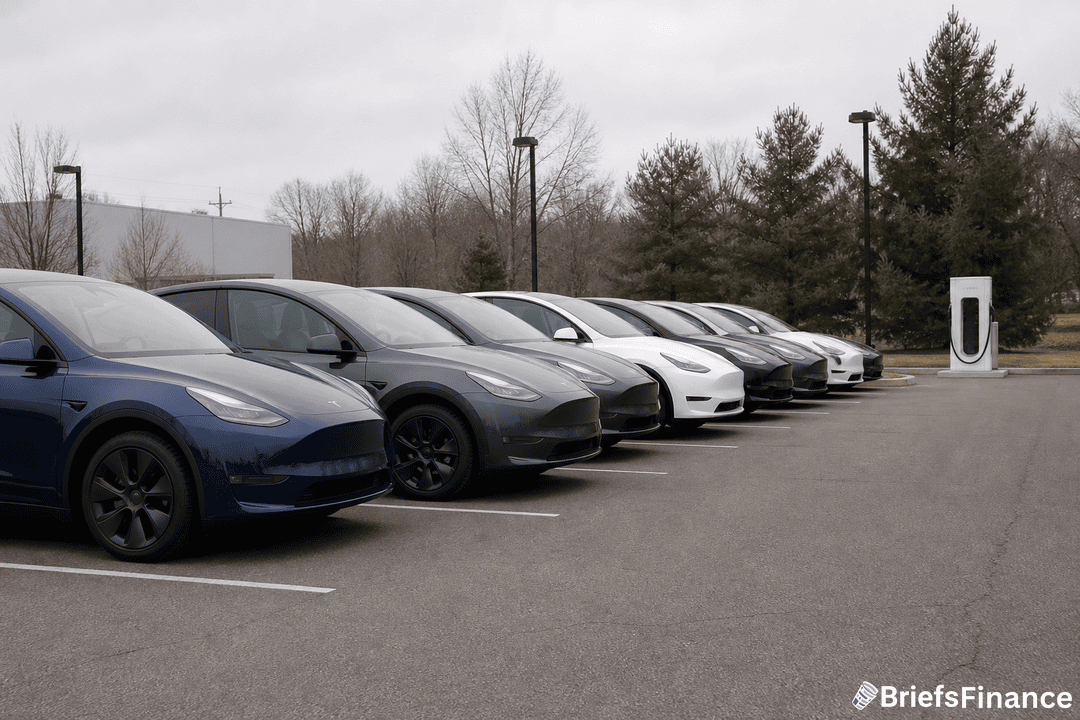
The Turnaround in July
After months of falling prices, new electric vehicles just got more expensive again.
The average sale price of a fully electric car hit $56,126 in July, according to Kelley Blue Book. That was 1.6% higher than July 2025 and 1.2% above June, making July 2026 the first month with a price increase.
The upturn ended a run of declines that went back to December. It may not sound like a big shift, but it flipped the direction of a trend that had held for months.
Why Automakers Stopped Discounting
The backstory starts in late 2025, when the $7,500 federal tax credit for U.S.-made clean vehicles expired.
Without that credit, the full cost landed on the buyer. Automakers had to soften the blow with their own deals as demand softened.
Those discounts held prices down from January through June. Now they are easing.
Sam Abuelsamid, Telemetry's vice president of market research, said the need to offer discounts has diminished.
"Automakers have less excess inventory of EVs," he said. "They don't have to spend as much on incentives, and they don't have to negotiate on price as much."
If rising car prices have you rethinking your budget, grab the free Always Be Buying eBook and start building wealth anyway.
"It gives car companies more pricing power," he added.
EV buyers also tend to sit at the high end of the market. K.C. Boyce, an executive at Escalent focused on automotive and energy research, put it this way: "Buyers in the luxury segment are most likely to purchase an EV versus those on the mainstream side."
That mix matters. When a large share of EV sales comes from the luxury side, it pulls the average price upward.
Boyce said the data helps explain a common complaint these days. "This data really explains why we are seeing consumers say, 'New vehicles in general, and EVs in particular, feel unaffordable to me.'"
The broader new-car market is moving in the same direction. KBB put the average price paid for any new vehicle at $49,855 in July, the highest level so far in 2026, as prices have climbed since March.
So EVs are not the only thing getting pricier at the dealership.
Cheaper Models Are on the Way
Help is coming, in the form of lower-priced EVs.
Slate's stripped-down pickup starts at $24,950 and is expected to reach customers later this year. Ford announced last week that the Fathom pickup, the first model on its forthcoming EV platform, will start at $28,350.
Toyota and Subaru have also launched a series of new EVs with starting prices in the high $30,000s. That puts them right inside the range most buyers say they can afford.
Those price tags matter because Escalent research shows most consumers consider a new vehicle affordable if it falls between $32,000 and $48,000. Boyce said one extra perk can shift that feeling: bundling a home charger plus installation with an EV changes affordability perceptions as much as an $8,000 cut in the manufacturer's suggested retail price, or MSRP.
In other words, the current average still sits well above what most people are comfortable paying. That gap helps explain why so many buyers have been holding back.
The arrival of those cheaper models is what should close that gap.
The average is likely to keep creeping upward for the next few months. Abuelsamid thinks that trend holds until the cheaper models actually arrive.
"Once they're here, we'll probably start to see that average price on electric vehicles start to trend downwards."
For anyone waiting on the sidelines, that means the near-term window may be the priciest before lower-cost options land. The good news is the math should swing back in your favor before too long, as long as those models show up as promised.
When the cost of what you want keeps climbing, the free Always Be Buying eBook shows how steady investing still wins.