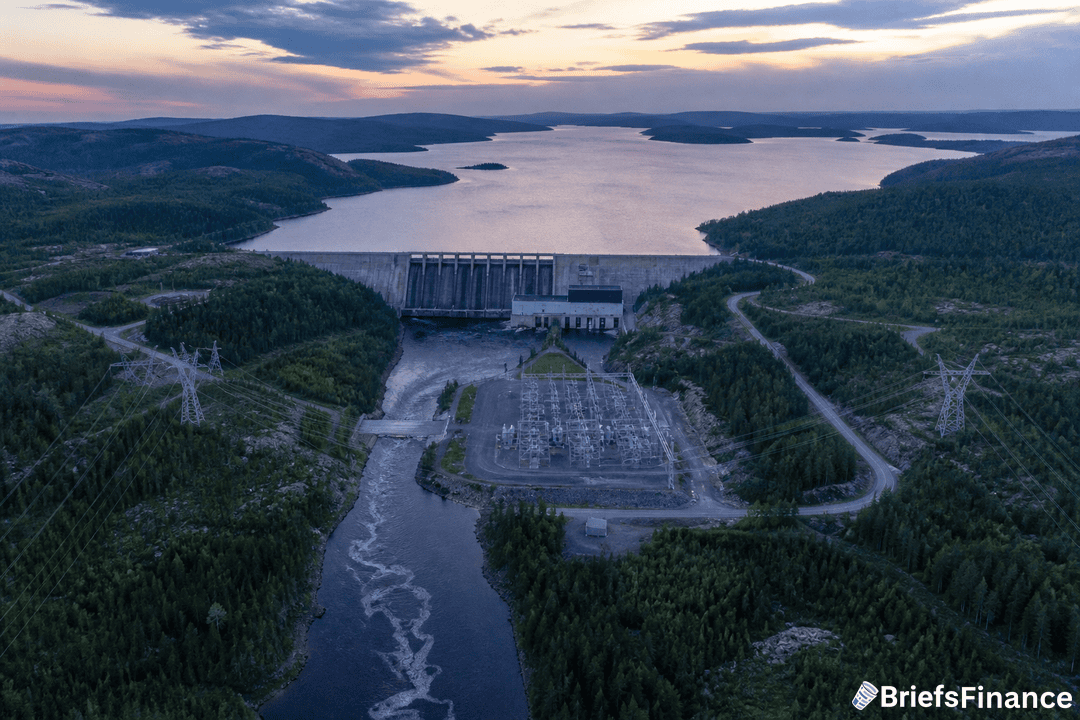
A Long Feud Over Cheap Power
The tension between these two goes back a long way. Both provinces have huge hydroelectric resources, but they have never agreed on a fair price for the power flowing between them.
Newfoundland has long argued that an old contract let Quebec buy electricity from the Churchill River at rock-bottom prices. That deal was so one-sided that it became a political sore spot for generations. When Wakeham became premier last October, he said the previous agreement was not in his province's best interest. That killed the deal and sent both sides back to the table.
Now they have a new framework. The announced terms allocate 10 gigawatts to Quebec. Newfoundland will receive 2.35 to 3 gigawatts.
To put that in perspective, one gigawatt is roughly the output of a typical nuclear reactor. So we are talking about a lot of electricity moving between provinces.
Compared with the late-2024 deal, this is a meaningful upgrade for both sides. Quebec gets 39% more power, and Newfoundland gets as much as 58% more. That is a big shift from where things stood just a few months ago.
Just as a long power dispute finds resolution, you can find financial peace with the free Always Be Buying eBook.
What Changed Behind the Scenes
The earlier plan was a 50-year supply pact worth C$34 billion, which works out to about $24.5 billion in U.S. dollars. It fell apart because Newfoundland thought it was getting shortchanged.
The new agreement looks different in a few important ways. Churchill Falls Labrador Corp. is expected to expand its generating capacity, and there are plans for a new run-of-river plant on the Churchill River at Gull Island. Run-of-river means the plant uses the natural flow of the river rather than a massive dam and reservoir.
Radio-Canada reports that wind energy is included in the new agreement. That is a notable addition, since the original fight was entirely about hydro. Adding wind suggests the two provinces are thinking beyond the old argument and building something broader.
There is also a question of ownership in the background. Hydro-Quebec, which is owned by the Quebec government, holds 34% of Churchill Falls Labrador Corp. The rest belongs to Newfoundland's provincial power company. That split has been at the heart of the tension for years, and it is not going away overnight.
What This Means for Your Money
For investors, this is worth watching for a couple of reasons. First, big infrastructure projects like expanding Churchill Falls and building a new plant at Gull Island do not happen without spending. That spending flows to construction firms, equipment makers, and the companies that supply the parts.
Second, the demand for clean power is only going up. Data centers, electric vehicles, and manufacturing all need electricity, and they need a lot of it. A deal that adds gigawatts of hydro and wind capacity to the grid is a bet that this demand is real and growing.
The 39% increase for Quebec means more power available for its industrial customers. The 58% increase for Newfoundland means more revenue flowing back to a province that has long felt it was getting the short end of the stick.
There is still plenty of detail to come. The news conference on Monday will fill in the specifics, and the real test will be whether this deal holds up better than the last one did. But for now, the direction is clear: after years of fighting, these two provinces found a way to share the power. That is good news for anyone who cares about reliable electricity and the companies that keep the lights on.
When old contracts finally get reworked, your wealth plan can too, with the free Always Be Buying eBook.