Free NewsletterPro Login
S&P 500 6,287 +0.42%
DOW 44,521 -0.18%
NASDAQ 21,103 +0.71%

Warning: Undefined variable $funds in /var/www/briefs.co/htdocs/wp-content/plugins/oxygen/component-framework/components/classes/code-block.class.php(133) : eval()'d code on line 491

Warning: foreach() argument must be of type array|object, null given in /var/www/briefs.co/htdocs/wp-content/plugins/oxygen/component-framework/components/classes/code-block.class.php(133) : eval()'d code on line 491
/* the link was here */

Canadian Firm Zimar Wins $1.9B Niger Refinery Contract

Published Aug 16, 2026
[tts_player]
Share:
Summary:
  • Zimar Inc., a Canadian industrial energy firm, signed a 16-year, $1.9 billion agreement to build and operate a refinery and petrochemical complex in Dosso, Niger.
  • The facility will produce 100,000 barrels per day; after 13 years of operation, ownership transfers to Niger's government.
  • The deal follows a review of an initial 2024 signing, and coincides with Niger's recent crude oil exports and joint drilling with Algeria.

Deal Overview

Foreign Minister Bakary Sangaré announced the project on state-run Radio Television du Niger after the signing ceremony in Niamey, Niger's capital, on Saturday. "The estimated cost of the project is $1.9 billion," Sangaré said. "The agreement takes effect upon signature, and its total term is set at 16 years, comprising 3 years of construction and 13 years of operation."

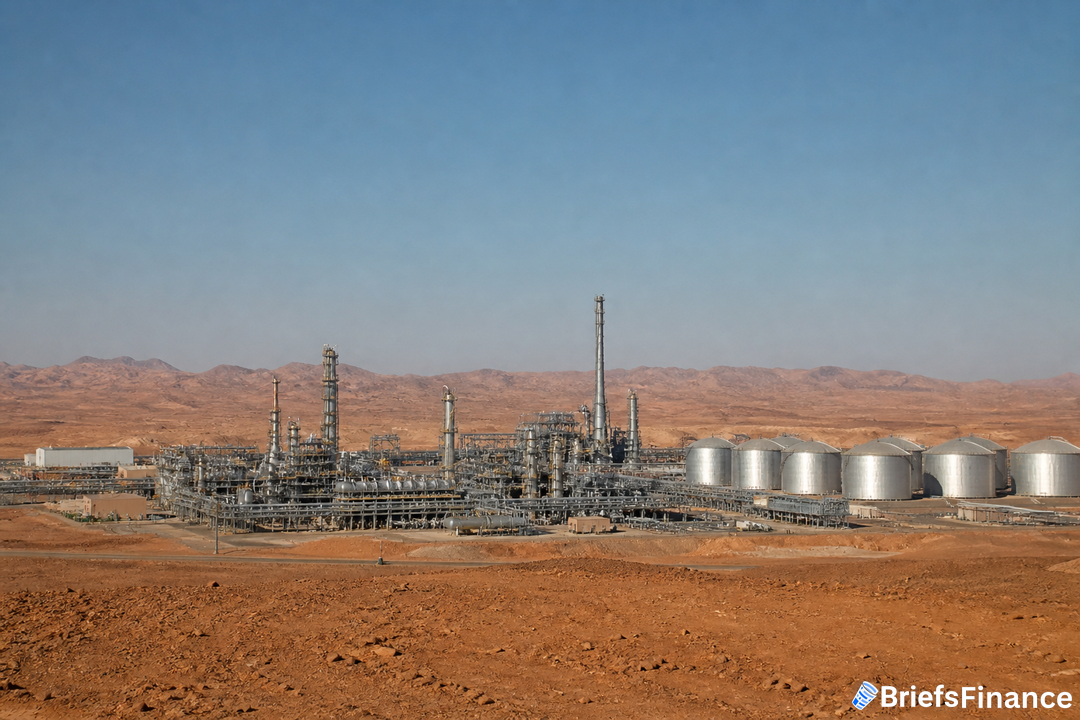
The agreement stipulates that Zimar will construct a refinery and petrochemical facility in Dosso, a city in southwestern Niger. The facility is expected to produce 100,000 barrels daily. After the 13 years of operation, Zimar will hand the infrastructure over to the state as part of the deal.

Roughly two years have passed since the initial October 2024 signing. Sangaré said that Niger's government had requested a review and subsequent amendments to the agreement.

What the Deal Involves

The project includes both a refinery and a petrochemical complex, so Niger will be able to process fuels and other products rather than only export the raw material. Zimar is responsible for the construction phase and will then operate the facility for 13 years, after which the state takes over. The $1.9 billion covers the entire development and startup period.

Building a refinery takes patience and steady investment, and so does building wealth; get the free Always Be Buying eBook.

This arrangement is designed to reduce Niger's reliance on imported refined products and create local jobs and expertise. The transfer at the end of the term also gives the government control of the operation without additional payment.

Regional Energy Moves

The country has been intensifying its push to develop its oil resources. Just this week, Niger and Algeria launched a joint drilling operation at the Kafra oil block, located near Agadez and close to the Algerian border.

On Friday, assisted by Algeria's Sonatrach SpA, Niger loaded its inaugural Meleck crude oil cargo at the Sèmè oil terminal in Benin, according to the Algeria Press Service.

Authorities estimate Niger's oil reserves at around 3 billion barrels.

The refinery project is part of Niger's broader strategy to become a regional energy hub. The partnership with a Canadian firm also reflects Niger's openness to foreign investment in its oil sector.

This deal marks a significant step for Niger as it moves from being a raw exporter to a refining nation. By building local processing capacity, the country aims to capture more value from its resources and create jobs. The involvement of a foreign partner like Zimar brings technical expertise and capital, which are essential for such a large-scale infrastructure project.

Long-Term Strategy

The eventual transfer of ownership to the state ensures that the long-term benefits remain within Niger, aligning with the government's goal of economic self-sufficiency. As Niger continues to expand its upstream activities, including the recent joint venture with Algeria, this refinery will be a cornerstone of its energy strategy for decades to come.

The 16-year timeline also points to Niger's commitment to long-term industrial build-out. The three-year construction phase will require steady financing and infrastructure, while the 13-year operating period gives the state space to develop local skills, build downstream industries, and establish a track record as a refiner before ownership shifts. The crude export at Sèmè and the joint drilling with Algeria show that Niger is already working to connect its upstream production to a broader national energy plan.

Like a country investing in infrastructure for its future, invest consistently for yours; get the free Always Be Buying eBook.

Disclosure

Recent News

1 2 3 55

Get Market Briefs delivered to your inbox every morning for free!

No fluff. No noise. No politics. Just finance news you can read in 5 minutes.

Blogs

June 29, 2026
Portfolio Diversification: Why Putting All Your Eggs in One Basket Destroys Wealth
  • Real diversification means spreading investments across all 11 economic sectors plus bonds, alternatives, and cash so no single bet can sink the portfolio.
  • Different sectors perform at different times, so a diversified portfolio captures upswings while smoothing the brutal drawdowns that wipe out concentrated bets.
  • Total market index funds offer the simplest path to diversification, and annual rebalancing is what keeps the structure working over time.
Read More
June 29, 2026
Non Taxable Income: What It Is and Why It Matters
  • Non taxable income is money you receive that you don't owe income tax on.
  • The tax code treats workers, investors, and business owners very differently, and investors often come out ahead.
  • Learning how income is taxed is a quiet superpower for keeping more of what you earn.
Read More
June 29, 2026
Semiconductor Stocks: A Simple Guide for Investors
  • Semiconductor stocks are companies that design and make computer chips, the brains inside nearly every modern device.
  • The AI boom has turned chips into one of the market's most important and most watched groups.
  • They offer big growth potential, but come with high valuations and a notoriously cyclical history.
Read More
June 25, 2026
How Stocks Work: A Simple Guide for Beginners
  • A stock is a slice of ownership in a company - buy one, and you own a piece of the business.
  • You make money two ways: the share price rising over time, and dividends paid to shareholders.
  • The simplest path for most beginners is buying into the whole market through a low-cost index fund.
Read More
June 25, 2026
Stop Loss vs Stop Limit: What's the Difference?
  • A stop loss order sells your stock once it hits a trigger price, prioritizing getting you out.
  • A stop limit order only sells within a price range you set, prioritizing price over a guaranteed exit.
  • The trade-off: a stop loss almost always executes; a stop limit might not if the price moves too fast.
Read More
June 25, 2026
Energy Stocks: A Simple Guide for Investors
  • Energy stocks are companies that produce and supply the power the world runs on, from oil and gas to newer sources.
  • They make up one of the 11 sectors of the market and tend to move with energy prices and big-picture shifts.
  • Like any sector, the key is diversification and understanding the forces driving demand.
Read More
June 18, 2026
What Is a Stop Loss Order? A Simple Guide
  • A stop loss order automatically sells a stock once it falls to a price you set.
  • It's a tool to cap losses or lock in gains without watching the market all day.
  • It works best for active strategies, and can backfire if used carelessly on long-term holdings.
Read More
June 18, 2026
Best S&P 500 Index Fund: How to Choose One
  • The best S&P 500 index fund for most investors is simply the cheapest, most established one that tracks the index well.
  • Funds like VOO, IVV, and SPY all hold the same 500 companies, so the biggest difference is the fee.
  • Pick one, automate your buys, and let time do the heavy lifting.
Read More
June 17, 2026
What Are Penny Stocks? Risks and Rewards Explained
  • Penny stocks are very low-priced shares of very small companies, often trading for just a few dollars or less.
  • They promise huge gains but carry huge risks: low liquidity, high failure rates, and wild price swings.
  • Most investors are better served by quality companies and funds than by chasing cheap shares.
Read More
June 17, 2026
Best Stocks for Beginners With Little Money
  • The best stocks for beginners with little money usually aren't individual stocks at all - they're low-cost index funds.
  • You can start with $100 or less and use small, regular investments to build wealth over time.
  • Focus on diversification and consistency, not on picking the next big winner.
Read More
1 2 3 24
Share via
Copy link










