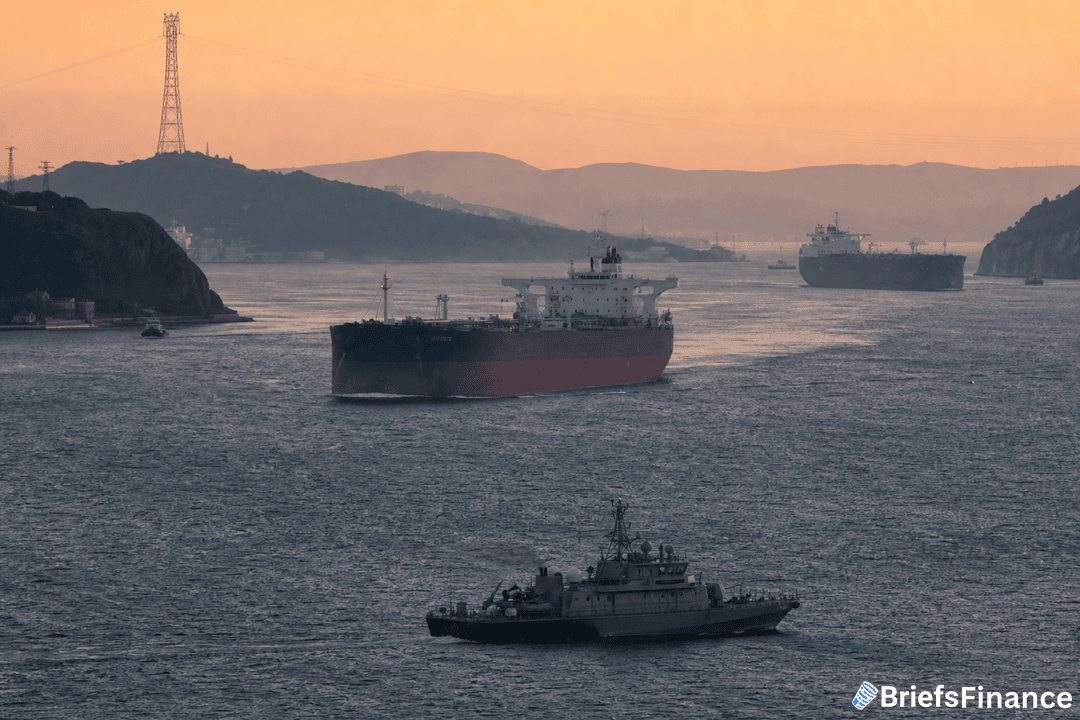
Iran Answers the Claim
The U.S. has aircraft carriers in the region and a blockade. Iran has a shorter answer, and it posted it online.
The post was a direct reply to President Trump, who had said that after a U.S. victory over Iran, he would "pretty soon" declare the strait a U.S. territory. Trump, who likes to say "to the victor belong the spoils," had floated charging tolls in the strait after the fighting, then dropped the idea.
Before the war started with U.S. attacks on Feb. 28, the strait was open and toll-free. The war changed that.
Foreign Minister Seyed Abbas Araghchi told Shahrara News there is no ceasefire and no negotiations with the U.S. at present. Qatar and Pakistan are relaying messages, he said, but that is not negotiation.
Ships Are Getting Hit Again
The fighting has not stayed far away from shipping.
The British Navy-backed organization, UKMTO, said the report was verified.
Since a temporary ceasefire fell apart in June, Iranian projectiles have frequently struck ships sailing through the strait. The U.S., meanwhile, has attacked Iranian targets as part of a blockade of Iranian ports.
When headlines like this make markets feel uncertain, the free Always Be Buying eBook shows how steady investing wins.
That mix is why energy markets have stayed twitchy. Prices were already higher than before the war, and every ship strike gives the market another reason to keep them there.
The Blockade Is Built to Last
Treasury Secretary Scott Bessent said Thursday night on Newsmax that Washington will use economic measures against Iran "that have never been seen on Iran." He urged unprecedented economic sanctions and a naval cordon that would halt all movement into and out of Iranian ports.
Meanwhile, Defense Secretary Pete Hegseth said late Thursday that the naval blockade could go on indefinitely by rotating ships. He rejected as "completely misrepresented" reports of problems aboard the USS Abraham Lincoln, such as food shortages, low morale, and sailors trying to go overboard.
The carrier has been out for a long stint. The Lincoln has spent more than 250 days in the region.
The plan had called for the Lincoln to leave in May. The USS George Washington strike group, which left Vietnam on Aug. 12, is slated to replace it.
Rep. Mike Levin said he contacted Hegseth and acting Navy Secretary Hung Cao in writing about the "simply unacceptable" conditions on the Lincoln. The list included moldy showers, broken toilets, no hot water, scarce fresh produce, supply shortages, and an "overwhelming workload" leading to extreme fatigue and burnout.
U.S. Central Command denied a reported brawl on the carrier and said no service members died. That denial followed an Iranian media claim on Tuesday.
Iranian media said seven U.S. Navy personnel were killed and several wounded in a violent clash.
What the Pump Tells You
For most people, the clearest sign of this standoff is the gas station.
The $4.07 average gasoline price is a heavy jump for any household, and it is exactly the trade-off Trump described when he said Americans should accept paying a little more while the U.S. pressures Iran.
Trump said Friday that paying more is part of the pressure campaign. "We don't want to have them have a nuclear weapon," he said.
"So remember that, when you have to pay a little bit more, you're at four dollars," he said.
The future of Hormuz is not just a foreign policy fight. It is a waterway that moves oil, and when it is tangled up in a blockade, the cost shows up in a very local place: your fuel bill.
If talk of blocked shipping lanes worries you, grab the free Always Be Buying eBook for a simple plan.