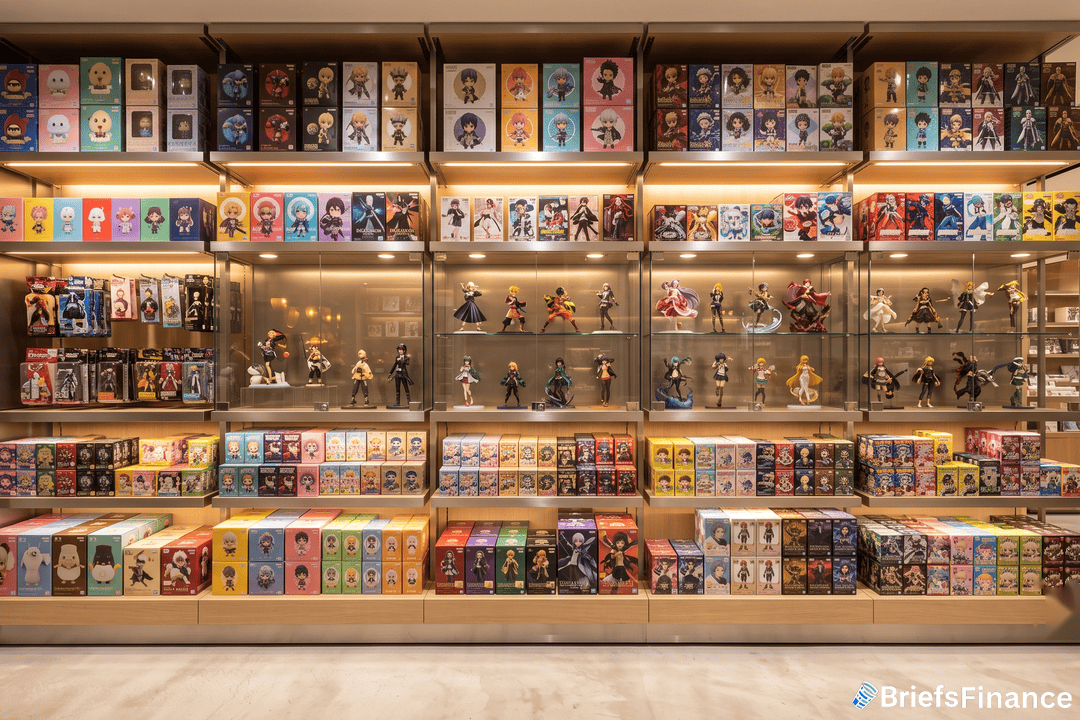
Armani Kaity, a 24‑year‑old New Yorker, loves *My Hero Academia* but can't buy official merchandise easily. Yet Japanese trading houses see a $24 billion opportunity by 2033, according to Grand View Research. That gap between what fans want and what they can get is driving a shift in how anime goods reach America.
Anime has become a global cultural phenomenon, with Netflix investing hundreds of millions in licensing and producing original series. Over half of Netflix's subscribers have watched anime, driving demand for official merchandise that the current supply chain cannot meet.
The Bottleneck: Slow Decisions and Thin Distribution
Anime in Japan is funded by a committee of broadcasters, publishers, toy makers, and studios. That committee must give unanimous approval for every new product, and it meets only once a month. The process creates a bottleneck. Ed LaBay, executive vice president at Hot Topic, says the retailer plans to launch around 100 product types with new anime, but often only a few arrive in time.
Get your free investing masterclass bonus when you join Market Briefs, our free daily newsletter
For fans like Anthony Grimando, 29, the result is frustration. "A lot of the time, when I go to the store to get something in the US, the quality isn't as good or it's made for a Western audience," he says. Shigekazu Watanabe, east coast regional manager of Kinokuniya Book Stores of America, sums it up: "There is still a meaningful gap between demand and supply, particularly for timely releases, exclusive items and premium or collector‑oriented products."
Trading Houses Step In
Japanese trading companies - firms that buy and sell goods across borders - are moving to fix the problem. Marubeni Corporation has a joint venture (a business partnership) called Mag.net Co. with publisher Shogakukan. It exports merchandise to BoxLunch, a store owned by Hot Topic.
Mitsubishi Corporation has teamed up with Sega Corporation and Tomy Company for US product distribution. Sumitomo Corporation entered into a partnership with a subsidiary of manga publisher Shueisha Inc. Itochu Corporation acquired an equity interest in a character‑licensing startup based in San Francisco.
Marubeni's head of new business development, Makoto Nakamura, asserted, "We are second to none when it comes to distribution and sales." He also points out the scale of piracy: "I've been to anime events abroad, where I see quite a few items that would probably make the original creators furious if they ever found out." That kind of demand is why trading houses are now holding "more than a dozen" ongoing talks in Asia and South America about expanding official distribution.
What to Watch
Marubeni's joint venture Mag.net Co. plans to expand exports to the Middle East later this year and work with local retailers. The company is also testing AI to speed up product reviews, aiming to launch merchandise close to when an anime airs. Armani Kaity, who says she is still missing pins to complete a bag, calls that "one of my greatest disappointments."
Subscribe to Market Briefs, our free daily newsletter, and claim your bonus investing masterclass