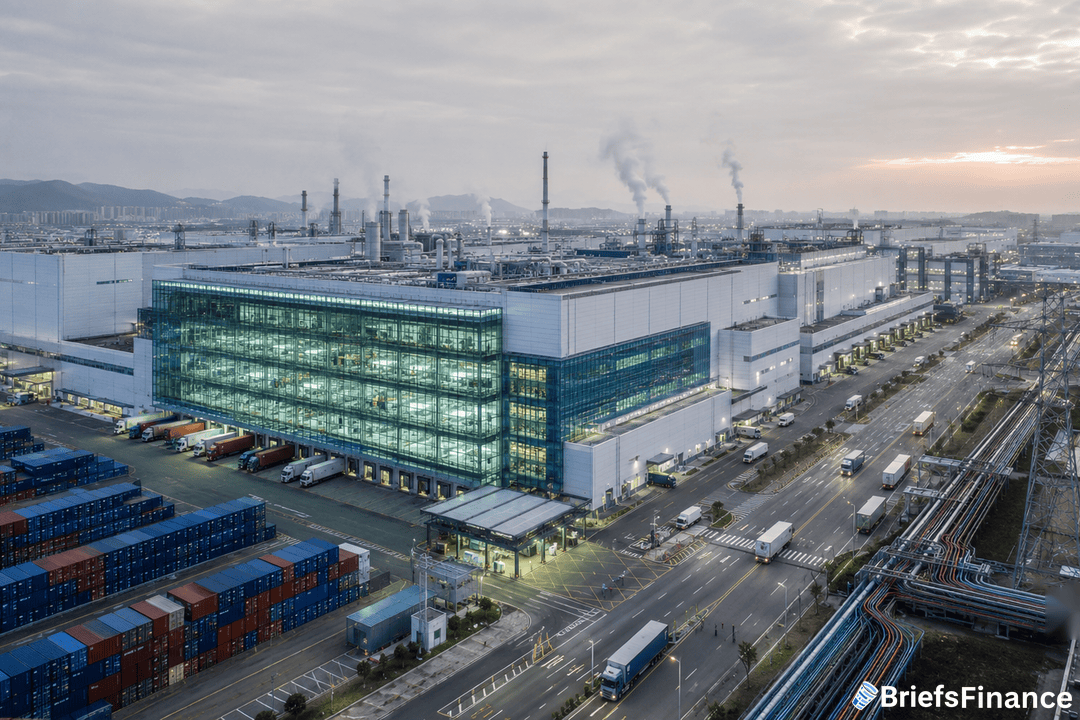
Export Surge Driven by AI Chip Demand
South Korea's export sector posted another month of strong growth in June, demonstrating the enduring strength of the semiconductor-driven expansion. Without adjustment, shipments surged 70.9%, versus a revised 53.4% increase in May.
The expansion was once again led by semiconductor shipments, boosted by substantial investments in AI and data centers. These numbers indicate that South Korea's export-led growth story continues, with chip demand boosting the economy and compensating for struggles in other sectors.
These figures reinforce the Bank of Korea's hawkish position. Officials have cited robust growth, ongoing inflation, a weak won, and rising housing costs as reasons to consider rate hikes. The next policy meeting is scheduled for July 16.
The surge in AI-related chip demand is being fueled by global tech giants expanding their data center capacity, a trend that benefits South Korea's top memory chip manufacturers. Both Samsung and SK Hynix have announced massive investment plans to meet this demand, aligning with the government's broader strategy to dominate the semiconductor supply chain.
Get your free investing masterclass bonus when you join Market Briefs, our free daily newsletter
Economic Risks and Policy Responses
While the chip boom has been a powerful engine for growth, it also highlights South Korea's heavy reliance on a single sector. Other industries, such as automotive and consumer electronics, have underperformed, making the economy vulnerable to any downturn in global chip demand. The Bank of Korea is closely watching for spillover effects - rising wages and consumption from the semiconductor sector could keep inflationary pressures elevated. Meanwhile, the weak won has raised the cost of imports, adding another layer of complexity for policymakers.
Inflationary Pressures and Central Bank Stance
Bank of Korea Governor Shin Hyun Song said, "the chip boom is feeding into consumption, investment, and wages, which could make inflation more persistent." In May, consumer inflation hit its highest level in over two years, partly due to the Middle East conflict's economic effects. Core inflation, excluding food and energy, increased 2.5%, indicating that broader price pressures are emerging.
The sustained export growth underscores the critical role of the semiconductor sector in South Korea's economy, which has been a key driver of GDP expansion. With AI-related chip demand showing no signs of slowing, the country's trade surplus has widened, providing a buffer against global economic headwinds. However, policymakers remain cautious about inflationary pressures and the impact of a weak currency on import costs.
Government's Semiconductor Investment Plan
The plan, announced shortly after the June trade figures, targets a doubling of memory chip output over five years.
The continued export strength highlights how South Korea's economy remains heavily dependent on the semiconductor sector, which accounts for a substantial share of total shipments. This dependence makes the country's growth vulnerable to fluctuations in global chip demand, but the current AI-driven boom has provided a significant boost, helping to offset weaker performance in automotive and consumer electronics sectors.
For now, the export numbers show that the boom is real.
Subscribe to Market Briefs, our free daily newsletter, and claim your bonus investing masterclass