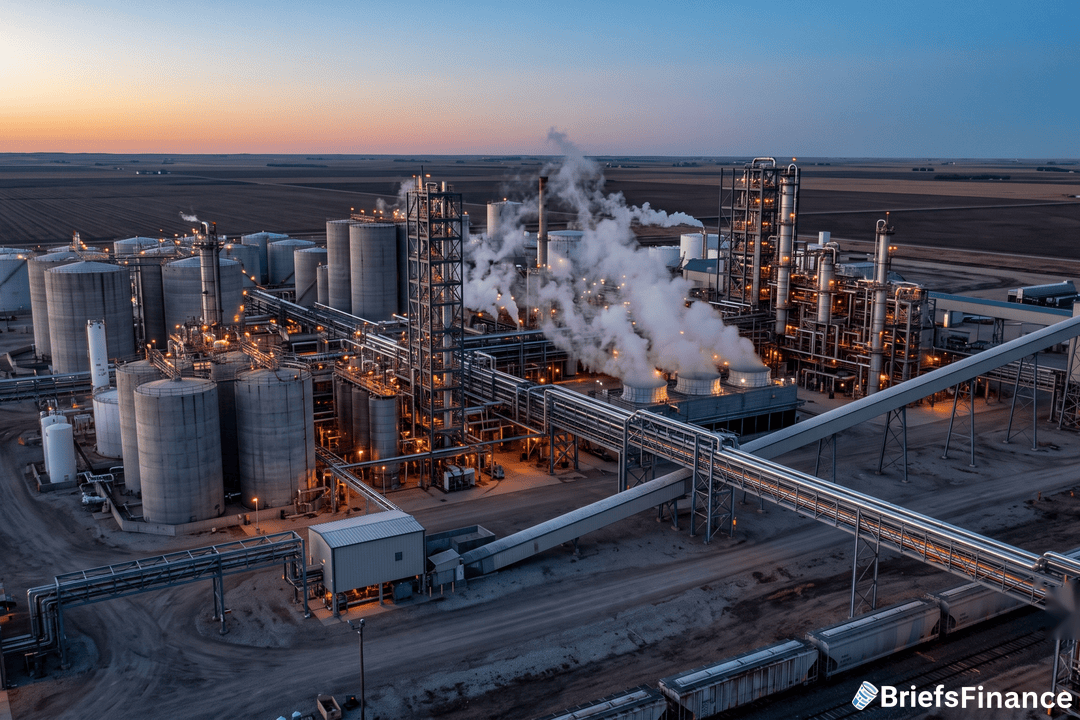
Fertilizer prices have been elevated in recent years due to geopolitical and trade conflicts, including U.S. duties on key suppliers, President Donald Trump's tariffs and the wars in Ukraine and Iran. At the same time, farmers are facing low crop prices. The U.S. Department of Agriculture just stepped in with a $500 million plan to speed up domestic fertilizer production.
The Investment Details
The Department of Agriculture is providing financial support for both new fertilizer plants and expansions of existing ones. Agriculture Secretary Brooke Rollins said, "We want fertilizer plants built in America and we are willing to prioritize it."
The program will focus on projects that are ready to build and already have private financing. Deputy Agriculture Secretary Stephen Vaden said the program seeks "a small number of projects" that already have private financing "and that with an injection of federal capital can be accelerated to provide actual fertilizer that farmers can purchase quicker." A Nebraska project by J Westling & Co., for example, is expected to come online in 2029, producing 365,000 tons of urea ammonium nitrate fertilizer annually.
Get your free investing masterclass bonus when you join Market Briefs, our free daily newsletter
Market Reaction
Shares in fertilizer producers Nutrien Ltd., Mosaic Co. and CF Industries Holdings Inc. fluctuated after the announcement.
Earlier this week, President Donald Trump removed tariffs on phosphate fertilizers imported from Morocco. The suspension is expected to cut phosphate fertilizer prices by 22%, according to the USDA. Rollins said, "By opening up the market, obviously those prices will come down for our farmers."
Why Now?
The elevated costs, at a time when farmers are also facing low crop prices, have raised concerns about the nation's food security.
The U.S. has limited domestic reserves of phosphate and potash. The nation produces most of its own phosphate and nitrogen fertilizers, but the foreign supplies it does require have become pricier due to trade policies and global supply disruptions. The USDA's investment aims to increase domestic production.
Background: The Fertilizer Squeeze
American farmers are caught between high input costs for fertilizers - driven by trade disputes and global conflicts - and depressed crop prices that squeeze their margins. Without a stable domestic supply, the nation's food production could be vulnerable to international disruptions. The USDA's move aims to reduce reliance on foreign sources and stabilize costs for growers, a step that could also buffer the effects of future tariff changes or supply shocks.
What to Watch
Separately, the USDA announced Tuesday it would allocate up to $500 million to mid-sized meatpacking companies to mitigate rising expenses from the declining U.S. cattle population. This initiative does not include the biggest meatpacking firms. Meanwhile, the Justice Department is actively probing both the meat and fertilizer sectors.
Subscribe to Market Briefs, our free daily newsletter, and claim your bonus investing masterclass