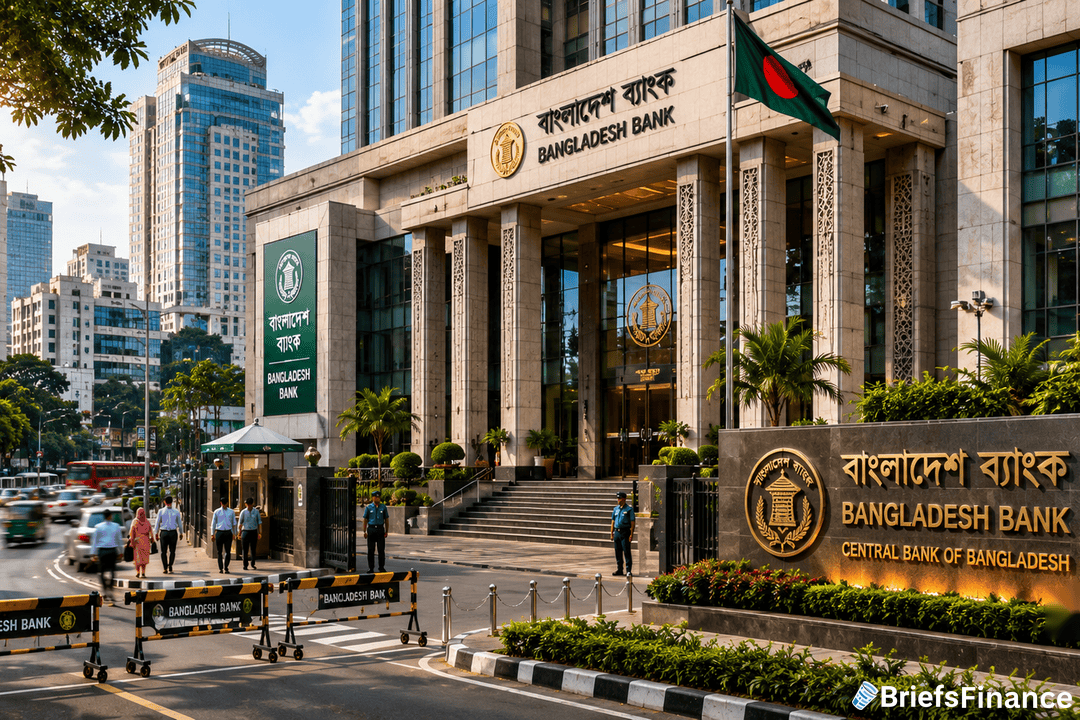
In its monetary policy statement, the Bangladesh Bank announced it would keep a tight monetary policy stance until the end of the first half of fiscal 2027, aiming to control price rises and keep inflation expectations in check.
Rate Decision and Inflation Challenge
This rate decision marks the first monetary policy move since Mostaqur Rahman became governor in February. Bangladesh's economy remains vulnerable to higher energy costs due to the conflict in Iran, though tensions have since reduced. The nation relies on imports for roughly 95% of its energy supply.
The central bank anticipates a slow uptick in economic activity and investment, supported by budget tax adjustments and its own credit programs. However, it cautioned that the outlook is uncertain because of volatile import prices, persistent inflation, and declining remittances from overseas workers.
The tight policy comes amid persistent supply-side pressures. Bangladesh imports most of its energy, making it vulnerable to global price shocks, and the political upheaval since August 2024 has added to economic uncertainty. The bank hopes that holding rates steady will eventually bring inflation closer to its 7% target, though the outlook remains clouded by external factors.
Get your free investing masterclass bonus when you join Market Briefs, our free daily newsletter
Why the Economy Is Under Pressure
The central bank cited a list of external risks that make the outlook uncertain. High energy prices are a major problem.
The source mentions an Iran war as a factor, though the conflict has eased. Volatile import costs and slowing remittance inflows from overseas workers add to the strain.
The political landscape is also shifting. Former prime minister Sheikh Hasina was ousted in August 2024. Since then, the economy has faced supply-chain disruptions and higher U.S. tariffs. The combination of higher import costs and weaker foreign-exchange inflows is squeezing the country's ability to pay for essential goods.
Government Turns to the IMF
The request signals that the government sees the economy as fragile and in need of external support.
The central bank expects a gradual recovery driven by tax changes in the budget and targeted lending programs. But it warns that the outlook remains uncertain because of those same external pressures. In plain terms, Bangladesh is walking a tightrope: high rates fight inflation but slow growth, while global shocks keep hitting.
What to Watch
The key question is whether inflation will start to fall toward the 7% target in the coming months. If it does not, the central bank may have to raise rates even higher. If external pressures ease, the bank could eventually loosen policy. For now, the cost of borrowing stays at 10%, and the IMF loan request adds a layer of international oversight.
Subscribe to Market Briefs, our free daily newsletter, and claim your bonus investing masterclass