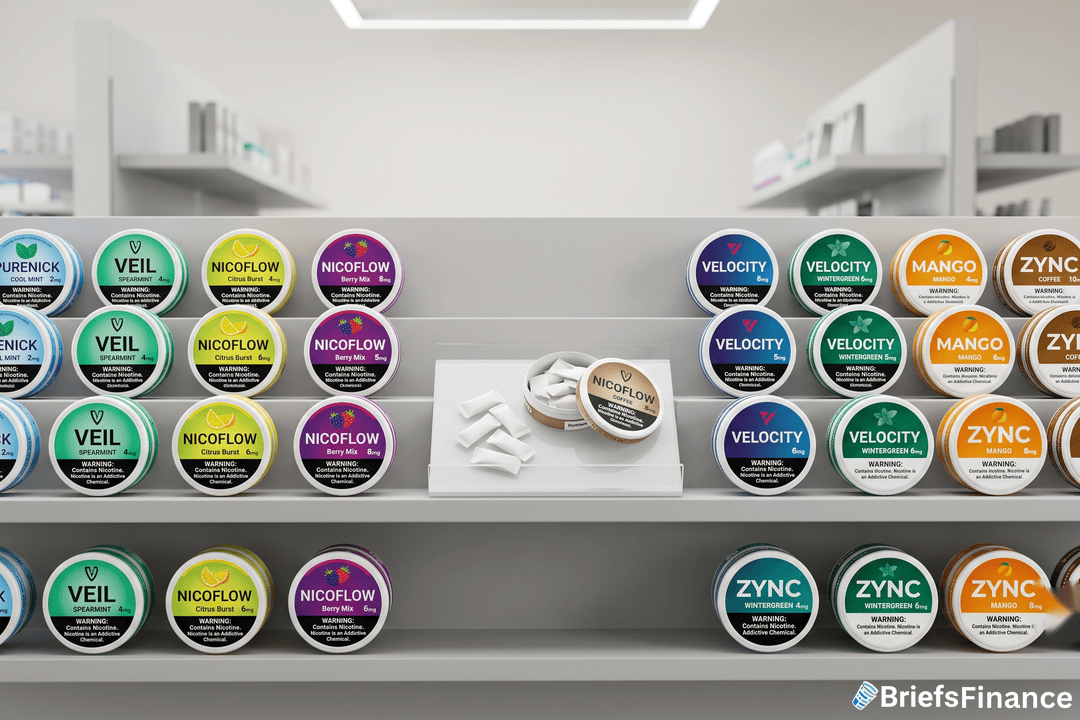
The FDA just informed smokers that using a Zyn pouch instead of cigarettes reduces their chances of developing various diseases linked to smoking. But critics warn the same flavored pouches could normalize nicotine for people who never smoked before. That tension is the heart of this story.
The Decision and What It Means for Philip Morris
The FDA granted Philip Morris (ticker: PM) permission to market its Zyn nicotine pouches as a less harmful alternative to cigarettes. The decision covers 20 specific products, including varieties such as Wintergreen, Spearmint, Smooth, Peppermint, Menthol, Cool Mint, Coffee, Citrus, Cinnamon, and Zyn Chill, each offered in both 3-milligram and 6-milligram nicotine strengths. This is not a full safety endorsement, but it is a powerful marketing tool.
Stacey Kennedy, who serves as the U.S. CEO of Philip Morris, described the announcement as "an important moment for the more than 45 million legal-age nicotine consumers in America." The company can now put a clear disease-risk reduction claim on its packaging and advertising. The FDA's evaluation determined that people who fully transition from smoking to using Zyn have a decreased risk of conditions including chronic bronchitis, emphysema, stroke, lung cancer, heart disease, and oral cancer.
Get your free investing masterclass bonus when you join Market Briefs, our free daily newsletter
This FDA authorization follows the agency's Modified Risk Tobacco Product (MRTP) framework, which allows companies to market products with reduced-risk claims only if rigorous scientific evidence shows a meaningful reduction in harm relative to traditional cigarettes. Previously, in January 2025, the same 20 Zyn products received premarket tobacco product authorization for sale - but without permission to advertise health benefits. The June 2026 upgrade gives Philip Morris a significant edge in the nicotine pouch market.
The Political and Regulatory Shift
This authorization comes during a Trump administration that has taken a more industry-friendly stance on nicotine products. White House spokesperson Kush Desai said, "President Trump consistently pledged on the campaign trail to expand access to nicotine vapes, pouches, and other products that evidence shows help adults quit smoking." The president's promise to "save vaping" was a campaign talking point, and the Zyn decision follows heavy lobbying from tobacco and vaping companies.
The FDA's acting director of the Center for Tobacco Products, Bret Koplow, said the agency's review "is intended to ensure that adult users have clear, science-based information about the relative harms of tobacco products, so they can make informed choices." The decision was announced on June 30, 2026.
Critics and Controversy
Not everyone is celebrating. The product has already become a cultural phenomenon, helped by former Fox News host Tucker Carlson, who popularized Zyn among conservative audiences before he later turned against the brand and started his own nicotine pouch company, Alp. Sources have reported that Robert F. Kennedy Jr., the Health and Human Services Secretary, also uses nicotine pouches.
The concern is that a "less harmful" label could make nicotine feel safe to a new generation. The FDA's authorization does not mean Zyn is harmless; it merely indicates that the evidence shows it is less dangerous than smoking cigarettes. But for investors, the key number is 20: that is how many products now carry an official government-backed risk reduction claim.
Zyn pouches are placed between the gum and lip, delivering nicotine without burning tobacco. Their discreet use has made them popular in workplaces and social settings, but also raised concerns about youth uptake.
Subscribe to Market Briefs, our free daily newsletter, and claim your bonus investing masterclass