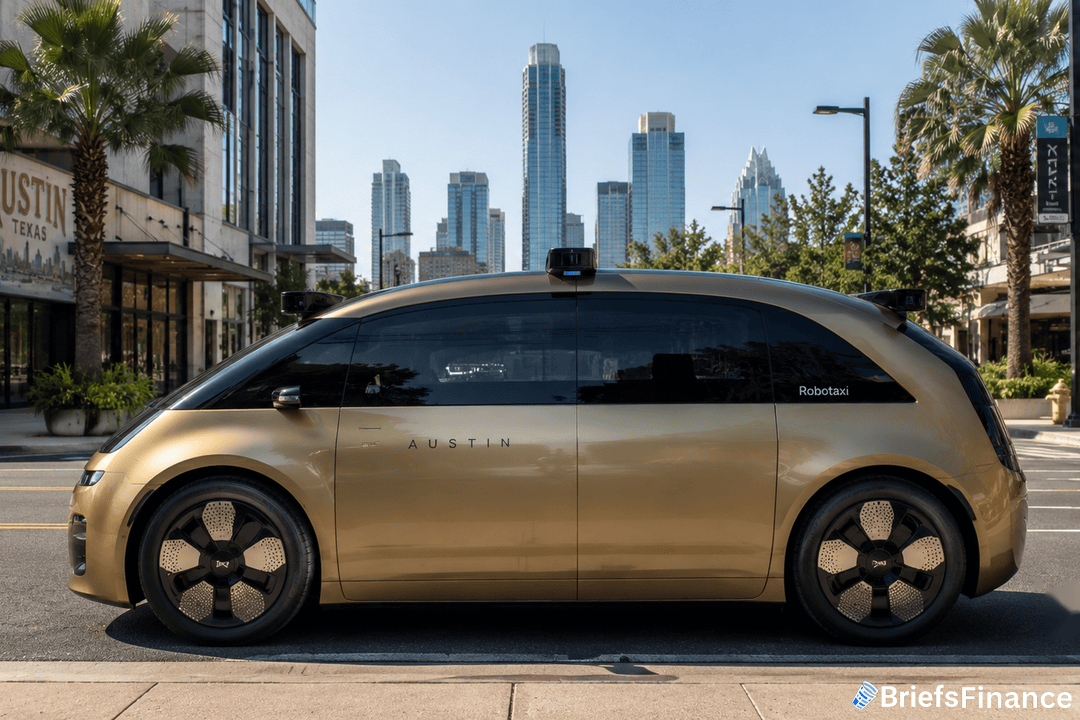
Tesla's latest testing phase brings the Cybercab closer to commercial deployment. While the vehicle currently requires a safety monitor, the ultimate goal is to operate entirely without human oversight. This real-world data collection in Austin will be critical for validating the camera-only approach and for gaining regulatory approvals.
Tesla is testing a car that has no steering wheel and no brake pedal. A human safety monitor still has to sit in the passenger seat. But regulators may soon remove a key rule that requires brake pedals in self-driving cars.
The Cybercab design was first shown nearly two years ago as a two-seat vehicle without traditional controls. Since then, Tesla has been refining its Full Self-Driving software, which is currently in beta with select drivers.
The Cybercab represents a significant step toward Tesla's long-held goal of a fully autonomous ride-hailing network. CEO Elon Musk has repeatedly stated that the company's robotaxi service could generate substantial revenue by allowing owners to send their cars out to earn money. The Austin test provides real-world data on the vehicle's performance without manual controls, building on lessons learned from the earlier Model Y pilot.
The Austin Test
Why Tesla Thinks It Can Win
A Tesla spokesperson said, "Building both the vehicle and the self-driving software gives Tesla a cost advantage over Waymo." Waymo relies on partners like Jaguar and Zeekr for its sensor-heavy robotaxis.
Get your free investing masterclass bonus when you join Market Briefs, our free daily newsletter
The difference in technology is stark. Waymo's technology uses lidar and radar, much like a driver who has night vision and a radar detector. Tesla uses only cameras, trusting them to see the road like a human's eyes. This approach could make Tesla's Cybercab cheaper to produce, but it also faces tougher technical challenges.
Regulatory Tailwind
The public comment period is ongoing, and the rule is expected to be finalized later this year.
If it passes, this change would remove a key hurdle for Tesla. The Cybercab can then be built without any manual controls at all, matching the company's vision of a pure self-driving vehicle.
What to Watch
As Tesla rolls out gold-colored two-seat Cybercabs, its robotaxi network's successes and problems will become more visible than when it used lightly modified Model Ys. The next few months will show whether Tesla's camera-only strategy can match Waymo's proven sensor approach.
Subscribe to Market Briefs, our free daily newsletter, and claim your bonus investing masterclass