Free NewsletterPro Login
S&P 500 6,287 +0.42%
DOW 44,521 -0.18%
NASDAQ 21,103 +0.71%
S&P 500 +12.4%
Briefs Finance Fund +24.8%
JOIN THE FUND →

Trump Demands Gasoline Prices Drop to $2.50 a Gallon

Published Jun 30, 2026
[tts_player]
Share:
Summary:
  • President Donald Trump posted on Truth Social ordering gasoline retailers to lower prices to $2.50 per gallon and warned of consequences if they do not comply.
  • The national average price stands at $3.86 per gallon, while California costs $5.45 and Hawaii $5.49.
  • Trump announced he has tasked the Justice Department with probing oil companies, while Chevron's finance chief told CNBC that lower prices won't come quickly.

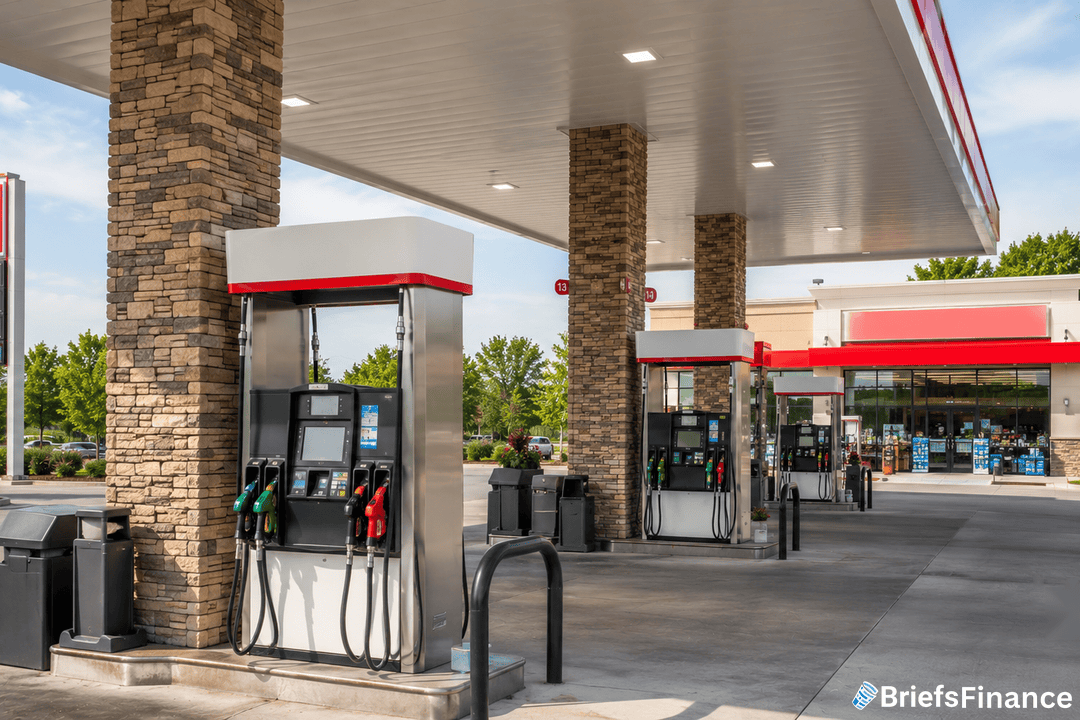
Trump posted on Truth Social that big oil companies are not passing on lower crude costs to drivers. He wrote that oil prices are "dropping like a rock," yet the price at the pump remains high. He linked the drop in crude prices to easing Middle East tensions and the Strait of Hormuz being reopened, but accused retailers of holding onto the savings.

"There will be no gauging, which is totally illegal," Trump wrote. "If retailers don't do this, big problems lie ahead!"

The Lag at the Pump

"It's going to take time, though. There is a lag between, you know, oil prices and reductions in oil prices, and when that shows up at the pump," Bonner said. He added that "we expect that prices will come down as things continue to normalize."

Get your free investing masterclass bonus when you join Market Briefs, our free daily newsletter

In California, drivers pay $5.45 per gallon, and in Hawaii they pay $5.49 - both far above the president's target. AAA data shows that the national average surpassed $4 per gallon after the US-Iran conflict erupted in February. Prices have eased a bit since peace talks began and Trump declared a ceasefire last week.

The president's demand arrives amid a complex geopolitical landscape. The US-Iran conflict, which began in February, initially sent crude prices soaring, but recent peace negotiations and the reopening of key shipping lanes have driven oil costs lower. Trump's threats of legal action against oil companies add to the uncertainty for the energy sector.

California's Tax Squeeze

California's high prices are partly due to state taxes. The current tax is 61.4 cents per gallon, and on July 1 it will rise to 63.4 cents. In his social media post, Trump urged California to cease imposing high taxes on gasoline.

Gasoline prices are shaped by multiple factors beyond crude oil costs, including refinery capacity, seasonal demand, and local taxes. California's unique fuel blend requirements also add to its pump prices, making a nationwide target of $2.50 especially challenging for that state.

Presidential pressure on gasoline prices is rare, as the market is largely driven by global supply and demand. However, Trump's public demand and threat of legal action could influence consumer sentiment and put political pressure on states like California to reconsider tax policies. Meanwhile, the energy sector faces uncertainty as the Justice Department probe looms, potentially affecting investment and production decisions.

What to Watch

Keep an eye on whether retailers actually lower prices toward $2.50 in the coming weeks, and whether California's scheduled tax increase takes effect on July 1 as planned. Chevron's caution about the lag suggests prices will not move overnight.

Subscribe to Market Briefs, our free daily newsletter, and claim your bonus investing masterclass

Disclosure

Recent News

1 2 3 29

Get Market Briefs delivered to your inbox every morning for free!

No fluff. No noise. No politics. Just finance news you can read in 5 minutes.

Blogs

June 29, 2026
Portfolio Diversification: Why Putting All Your Eggs in One Basket Destroys Wealth
  • Real diversification means spreading investments across all 11 economic sectors plus bonds, alternatives, and cash so no single bet can sink the portfolio.
  • Different sectors perform at different times, so a diversified portfolio captures upswings while smoothing the brutal drawdowns that wipe out concentrated bets.
  • Total market index funds offer the simplest path to diversification, and annual rebalancing is what keeps the structure working over time.
Read More
June 29, 2026
Non Taxable Income: What It Is and Why It Matters
  • Non taxable income is money you receive that you don't owe income tax on.
  • The tax code treats workers, investors, and business owners very differently, and investors often come out ahead.
  • Learning how income is taxed is a quiet superpower for keeping more of what you earn.
Read More
June 29, 2026
Semiconductor Stocks: A Simple Guide for Investors
  • Semiconductor stocks are companies that design and make computer chips, the brains inside nearly every modern device.
  • The AI boom has turned chips into one of the market's most important and most watched groups.
  • They offer big growth potential, but come with high valuations and a notoriously cyclical history.
Read More
June 25, 2026
How Stocks Work: A Simple Guide for Beginners
  • A stock is a slice of ownership in a company - buy one, and you own a piece of the business.
  • You make money two ways: the share price rising over time, and dividends paid to shareholders.
  • The simplest path for most beginners is buying into the whole market through a low-cost index fund.
Read More
June 25, 2026
Stop Loss vs Stop Limit: What's the Difference?
  • A stop loss order sells your stock once it hits a trigger price, prioritizing getting you out.
  • A stop limit order only sells within a price range you set, prioritizing price over a guaranteed exit.
  • The trade-off: a stop loss almost always executes; a stop limit might not if the price moves too fast.
Read More
June 25, 2026
Energy Stocks: A Simple Guide for Investors
  • Energy stocks are companies that produce and supply the power the world runs on, from oil and gas to newer sources.
  • They make up one of the 11 sectors of the market and tend to move with energy prices and big-picture shifts.
  • Like any sector, the key is diversification and understanding the forces driving demand.
Read More
June 18, 2026
What Is a Stop Loss Order? A Simple Guide
  • A stop loss order automatically sells a stock once it falls to a price you set.
  • It's a tool to cap losses or lock in gains without watching the market all day.
  • It works best for active strategies, and can backfire if used carelessly on long-term holdings.
Read More
June 18, 2026
Best S&P 500 Index Fund: How to Choose One
  • The best S&P 500 index fund for most investors is simply the cheapest, most established one that tracks the index well.
  • Funds like VOO, IVV, and SPY all hold the same 500 companies, so the biggest difference is the fee.
  • Pick one, automate your buys, and let time do the heavy lifting.
Read More
June 17, 2026
What Are Penny Stocks? Risks and Rewards Explained
  • Penny stocks are very low-priced shares of very small companies, often trading for just a few dollars or less.
  • They promise huge gains but carry huge risks: low liquidity, high failure rates, and wild price swings.
  • Most investors are better served by quality companies and funds than by chasing cheap shares.
Read More
June 17, 2026
Best Stocks for Beginners With Little Money
  • The best stocks for beginners with little money usually aren't individual stocks at all - they're low-cost index funds.
  • You can start with $100 or less and use small, regular investments to build wealth over time.
  • Focus on diversification and consistency, not on picking the next big winner.
Read More
1 2 3 24
Share via
Copy link










