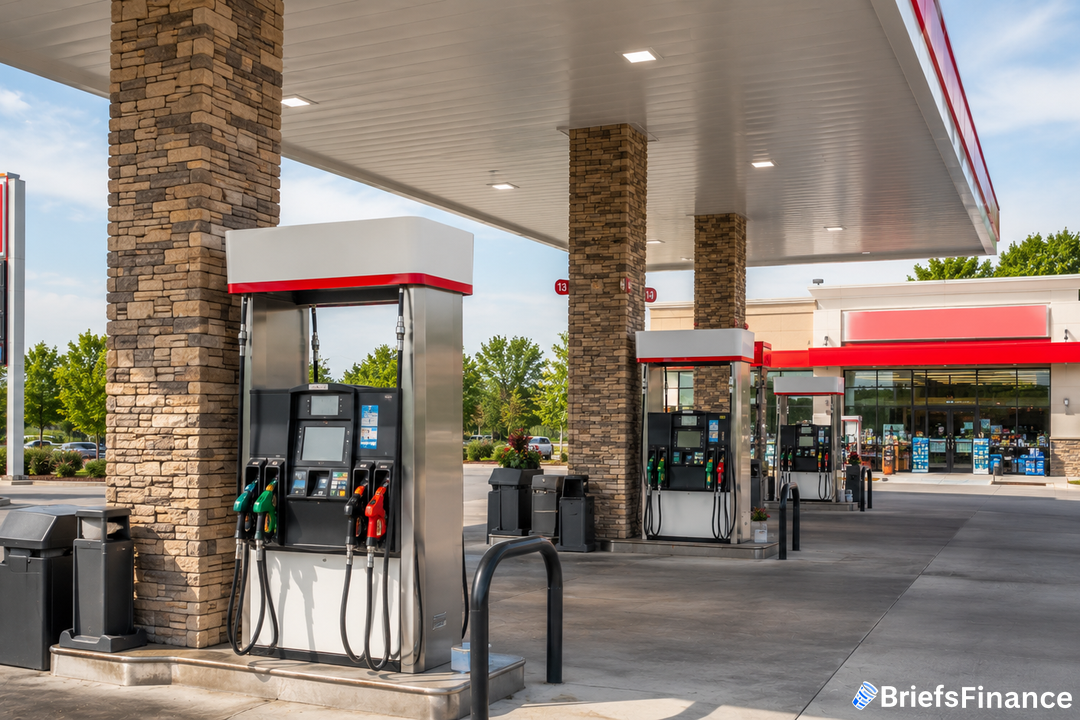
Trump posted on Truth Social that big oil companies are not passing on lower crude costs to drivers. He wrote that oil prices are "dropping like a rock," yet the price at the pump remains high. He linked the drop in crude prices to easing Middle East tensions and the Strait of Hormuz being reopened, but accused retailers of holding onto the savings.
"There will be no gauging, which is totally illegal," Trump wrote. "If retailers don't do this, big problems lie ahead!"
The Lag at the Pump
"It's going to take time, though. There is a lag between, you know, oil prices and reductions in oil prices, and when that shows up at the pump," Bonner said. He added that "we expect that prices will come down as things continue to normalize."
Get your free investing masterclass bonus when you join Market Briefs, our free daily newsletter
In California, drivers pay $5.45 per gallon, and in Hawaii they pay $5.49 - both far above the president's target. AAA data shows that the national average surpassed $4 per gallon after the US-Iran conflict erupted in February. Prices have eased a bit since peace talks began and Trump declared a ceasefire last week.
The president's demand arrives amid a complex geopolitical landscape. The US-Iran conflict, which began in February, initially sent crude prices soaring, but recent peace negotiations and the reopening of key shipping lanes have driven oil costs lower. Trump's threats of legal action against oil companies add to the uncertainty for the energy sector.
California's Tax Squeeze
California's high prices are partly due to state taxes. The current tax is 61.4 cents per gallon, and on July 1 it will rise to 63.4 cents. In his social media post, Trump urged California to cease imposing high taxes on gasoline.
Gasoline prices are shaped by multiple factors beyond crude oil costs, including refinery capacity, seasonal demand, and local taxes. California's unique fuel blend requirements also add to its pump prices, making a nationwide target of $2.50 especially challenging for that state.
Presidential pressure on gasoline prices is rare, as the market is largely driven by global supply and demand. However, Trump's public demand and threat of legal action could influence consumer sentiment and put political pressure on states like California to reconsider tax policies. Meanwhile, the energy sector faces uncertainty as the Justice Department probe looms, potentially affecting investment and production decisions.
What to Watch
Keep an eye on whether retailers actually lower prices toward $2.50 in the coming weeks, and whether California's scheduled tax increase takes effect on July 1 as planned. Chevron's caution about the lag suggests prices will not move overnight.
Subscribe to Market Briefs, our free daily newsletter, and claim your bonus investing masterclass