Free NewsletterPro Login

Warning: Undefined variable $stocks in /var/www/briefs.co/htdocs/wp-content/plugins/oxygen/component-framework/components/classes/code-block.class.php(133) : eval()'d code on line 448

Warning: foreach() argument must be of type array|object, null given in /var/www/briefs.co/htdocs/wp-content/plugins/oxygen/component-framework/components/classes/code-block.class.php(133) : eval()'d code on line 448

Warning: Undefined variable $funds in /var/www/briefs.co/htdocs/wp-content/plugins/oxygen/component-framework/components/classes/code-block.class.php(133) : eval()'d code on line 472

Warning: foreach() argument must be of type array|object, null given in /var/www/briefs.co/htdocs/wp-content/plugins/oxygen/component-framework/components/classes/code-block.class.php(133) : eval()'d code on line 472
/* the link was here */

FDA PreCheck Pilot Picks Seven Firms for Faster Plant Reviews

Published Jun 29, 2026
[tts_player]
Share:
Summary:
  • The FDA selected seven companies for its PreCheck pilot program to speed up regulatory review of new manufacturing facilities.
  • The program could cut as much as 14 months off the typical review timeline for these sites.
  • The seven firms chosen for the pilot are Amneal, Cellares, Eli Lilly, Fujifilm Biotechnologies, Kriya Therapeutics, Kyowa Kirin, and Regeneron.

The U.S. FDA has chosen seven firms to take part in its PreCheck pilot, an initiative aimed at speeding up the regulatory evaluation of new drug production sites. Under this program, regulators can begin assessing new plants during their construction phase, identifying and fixing problems early.

The selected companies vary widely, from the world's largest healthcare firm to small, privately owned biotechs focused on gene therapies. Most of these firms intend to produce biologic drugs or genetic treatments, a category that requires more sophisticated production processes. Eligibility for PreCheck required firms to construct a new plant that could manufacture medicines aimed at filling a supply shortage or expanding access to treatments for conditions lacking adequate options.

One example is Lilly's site in Lebanon, Indiana, which will produce the active ingredients for GLP-1 tablets and injections. Regeneron's recently announced $2 billion facility in Saratoga Springs, New York, is another selection.

Regeneron CEO Leonard Schleifer said in a statement that his company has put money into U.S. biologics manufacturing and has pushed for greater emphasis on domestic medicine production. "We're pleased to see programs like the FDA's PreCheck Pilot Program that encourage collaboration between innovators and regulators to build next generation manufacturing capabilities and strengthen America's biopharmaceutical industry," he said.

Eli Lilly said in a statement it is "evaluating how PreCheck and related regulatory improvements may impact the facility's timeline and will continue to work closely with FDA to support the program's success."

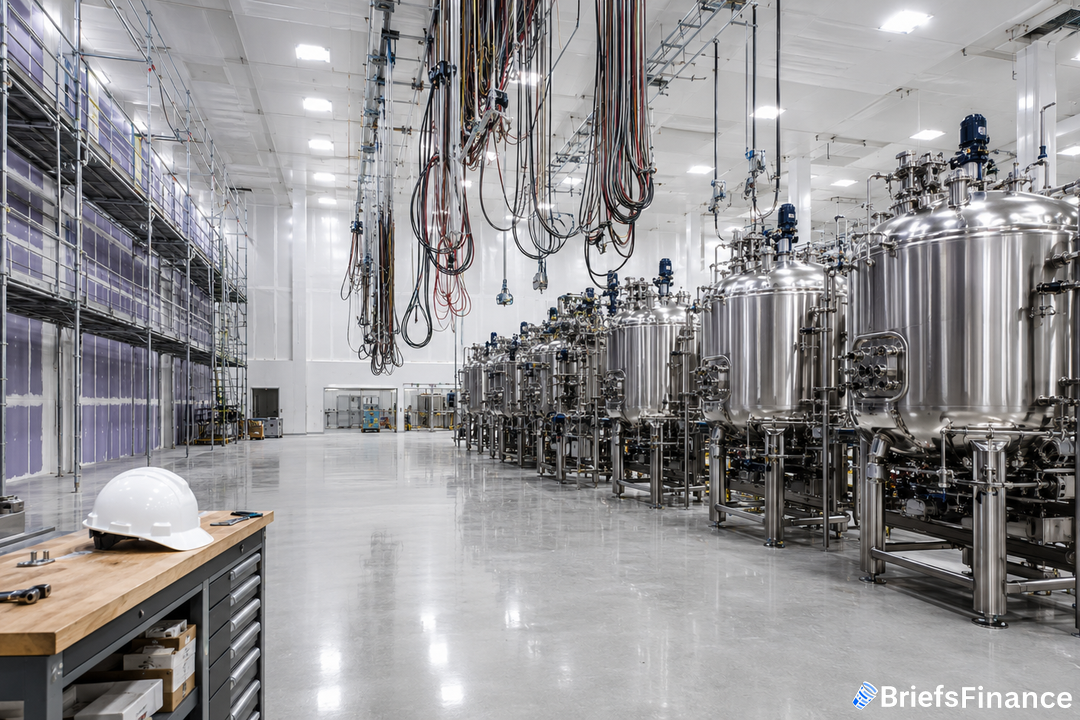
Another selected facility is Fujifilm Biotechnologies' new Holly Springs, North Carolina site, which the contract manufacturer opened last year. The site is currently generating monoclonal antibodies for clients Regeneron and Johnson & Johnson, and will expand production for additional customers as further sections of the plant come online in 2027 and 2028.

PreCheck has two main parts: a facility readiness phase, during which the FDA offers technical advice before operations start, and an application submission phase, in which participants receive deeper feedback, faster inspections, and plant evaluations. Fujifilm noted that it anticipates completing the operational readiness review by year-end thanks to the accelerated procedures, and believes the program will enable its clients to pursue swifter approval routes with the FDA.

Broader Context

The PreCheck pilot is part of a broader push by the Trump administration to encourage more domestic production of medicine. By allowing regulators to engage with manufacturers during the construction phase, the program aims to resolve compliance issues early, ultimately shortening the time it takes for new facilities to begin supplying critical medications. This collaborative model could prove especially valuable for addressing drug shortages and expanding access to advanced therapies such as gene and cell treatments, which often require complex, specialized manufacturing infrastructure. The selected companies represent a cross-section of the industry, from large multinationals to emerging biotechs, reflecting the program's potential to benefit a wide range of drug production efforts.

The seven facilities selected span a range of therapeutic areas. Amneal's New York plant will produce sterile liquid products for pain, respiratory, and ophthalmic uses. Cellares' New Jersey location is dedicated to producing gene therapies derived from cells for treating cancers and blood disorders.

Eli Lilly's Indiana facility will create active ingredients for GLP-1 oral and injectable drugs. Fujifilm Biotechnologies' North Carolina plant manufactures monoclonal antibodies. Kriya Therapeutics' North Carolina location will produce AAV-based gene therapies for chronic conditions.

Kyowa Kirin's North Carolina facility makes biologics for rare diseases. Regeneron's New York facility will manufacture biologic active ingredients, sterile injectable products, and protein-based treatments for a variety of conditions.

Disclosure

Recent News

1 2 3 64

Get Market Briefs delivered to your inbox every morning for free!

No fluff. No noise. No politics. Just finance news you can read in 5 minutes.

Blogs

August 31, 2026
America Is Running Out of Debt Buyers. Treasury Bills Are the Government's Fix
  • The government took in about $5 trillion in taxes in 2025 and spent about $7 trillion, and the national debt is now over $40 trillion.
  • Investors, banks, and foreign countries are all lending less to the U.S., so starting September 9 the government plans to sell more short-term treasury bills and use that cash to buy back its long-term debt.
  • Government interest rates set the floor for your mortgage, your car loan, and your credit card, and short-term Treasury ETFs like SGOV are one way investors are playing it.
Read More
August 23, 2026
How to Get the Most From Your Guideline 401k
  • Guideline is a company that provides low-cost 401k plans, popular with small businesses and their employees.
  • A "Guideline 401k" follows the same core rules as any 401k: tax-advantaged growth, contribution limits, and often an employer match.
  • The biggest results come from capturing the full match, choosing low-cost funds, and picking Roth or traditional to fit your situation.
Read More
August 23, 2026
Principal 401k: What to Know About Your Plan
  • Principal is one of many companies that manage workplace 401k plans, so a "Principal 401k" is simply a 401k where Principal is the provider.
  • The rules of a 401k are the same no matter who runs it: pre-tax or Roth contributions, tax-advantaged growth, and often an employer match.
  • The biggest wins come from grabbing the full match, picking low-cost funds, and knowing whether Roth or traditional fits you.
Read More
August 23, 2026
What a Tariff Dividend Means for Your Money
  • A "tariff dividend" is the idea of taking money the government collects from tariffs and paying some of it back to citizens.
  • To judge the idea, you first need to know what a tariff is: a tax on imported goods, usually paid by the companies bringing them in.
  • Tariffs ripple through prices, businesses, and your investments, so the smart move is understanding those ripples, not just the headline.
Read More
August 23, 2026
No Tax on Overtime: How Overtime Pay Is Taxed
  • "No tax on overtime" refers to a tax break that lets certain workers deduct some overtime pay, lowering the income they get taxed on.
  • A deduction does not mean overtime is truly tax-free. It means part of that pay is subtracted before your tax is figured.
  • The bigger money lesson: how you earn money changes how it is taxed, and investors often get the friendliest treatment of all.
Read More
August 23, 2026
Reading the Silver Price Forecast for 2026
  • Nobody can honestly promise a specific silver price for 2026. Any exact number is a guess, so treat forecasts as opinions, not facts.
  • Silver is unusual because it is both a precious metal and an industrial metal, so its price answers to two very different forces.
  • Instead of chasing a forecast, learn the drivers - inflation, interest rates, recession fear, and industrial demand - so you can judge any prediction yourself.
Read More
August 23, 2026
What to Do When Reddit Stocks Go Viral
  • "Reddit stocks" usually means stocks getting hyped in online communities, where crowds can send a price soaring or crashing fast.
  • These tips can be entertaining and sometimes useful, but they are opinions, not research, and often come loaded with hype.
  • The safe move is to treat every online tip as a starting point, then do your own homework before risking a dollar.
Read More
August 23, 2026
Why Is Bitcoin Dropping Right Now?
  • Bitcoin drops for a mix of reasons: interest rates, big-picture money policy, regulation news, and simple shifts in how much risk investors want to take.
  • Bitcoin has a fixed supply and no earnings, so its price runs almost entirely on supply, demand, and sentiment.
  • Sharp drops are normal for bitcoin. Understanding the drivers matters more than reacting to any single day.
Read More
August 23, 2026
The Fidelity 500 Index Fund, Made Simple for Beginners
  • The Fidelity 500 Index Fund is a low-cost fund that tracks the S&P 500, an index of 500 large U.S. companies.
  • Buying it means owning a tiny slice of 500 businesses at once, which spreads your risk in a single purchase.
  • Index funds like this win over time mostly by keeping fees low and letting compounding do the work.
Read More
August 23, 2026
USA Penny Stocks: Risks and Rewards Explained
  • USA penny stocks are very low-priced shares of very small companies, often trading under $5 and sometimes under $1.
  • They dangle the dream of huge, fast gains, but carry brutal risks: low liquidity, wild swings, and high failure rates.
  • Most investors build wealth faster with quality companies and funds than by chasing cheap shares.
Read More
1 2 3 25
Share via
Copy link










