Free NewsletterPro Login
S&P 500 6,287 +0.42%
DOW 44,521 -0.18%
NASDAQ 21,103 +0.71%
S&P 500 +12.4%
Briefs Finance Fund +24.8%
JOIN THE FUND →
BREAKING
×

Raizen's 3.4 Billion Reais Cash Burn Highlights Deep Restructuring Woes

Published Jun 29, 2026
[tts_player]
Share:
Summary:
  • Raizen SA burned 3.4 billion reais in cash in the first three months of 2026.
  • The company's impairment charge nearly doubled to 22.5 billion reais for the crop year ending March 2026.
  • Creditors approved a 65 billion reais out-of-court restructuring, the largest in Brazilian history.

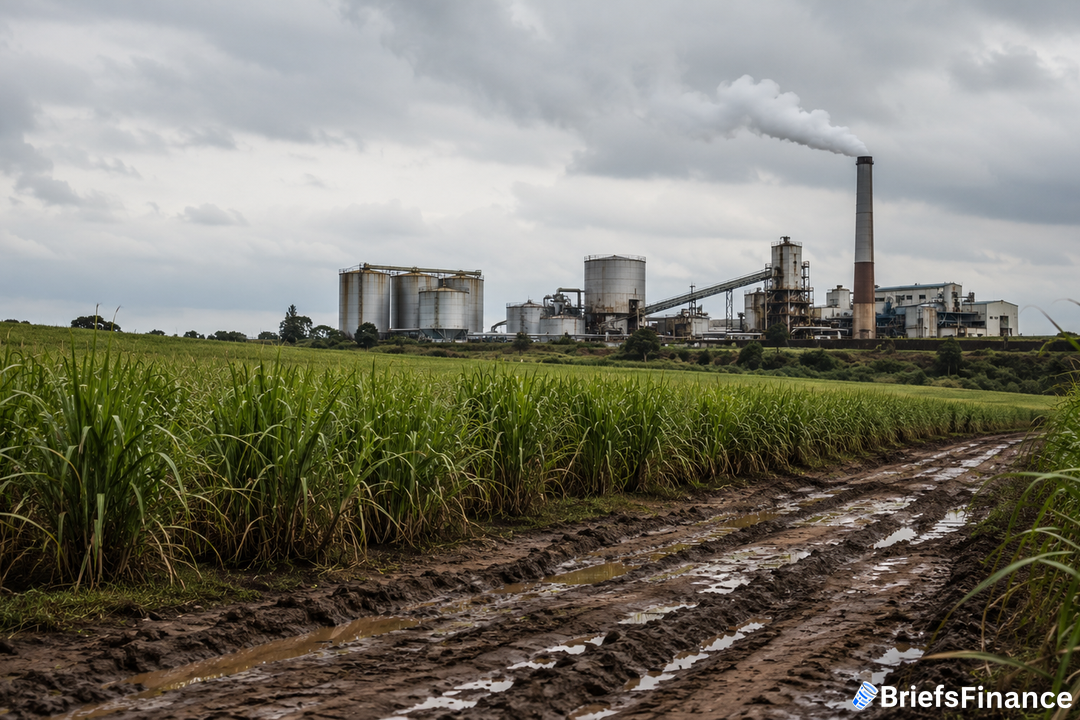
Raizen, formed in 2011 through a partnership between Shell and Brazilian conglomerate Cosan, has faced a perfect storm of rising borrowing costs, poor crop yields, and strategic missteps that eroded its financial flexibility. The company previously sold several sugar-cane mills as part of a divestiture program, and its fuel distribution unit benefited from a police crackdown on illegal competitors and a surge in domestic diesel procurement amid geopolitical tensions.

This cash depletion resulted from the company's choice to overhaul its working capital strategy, such as cutting back on supplier finance deals and substituting them with debts of longer maturities.

The approved scheme involves swapping 45% of the company's debt for an approximate 80% equity stake, while shareholder Shell Plc contributes 3.5 billion reais in fresh capital.

Cash Burn and Working Capital Squeeze

Despite the cash drain, Raizen's sugar and ethanol segment saw a 23% rise in adjusted EBITDA. Higher ethanol prices boosted the business, even though the company had sold several sugar-cane mills in the prior year under a wide-ranging divestiture program. The fuel distribution division posted a 60% increase in quarterly adjusted EBITDA. Raizen and other large distributors gained from a police campaign against illegal fuel competitors, and also from ramping up domestic diesel procurement as importers faced price surges amid the Iran war.

Impairment Charge Nearly Doubles

Raizen said, "The impairments stem from significant uncertainty about the company's ability to continue as a going concern and from lower recoverable values on certain assets."

An insider indicated that the impairment charge won't impact the restructuring process, and Raizen anticipates recovering between 10 billion and 12 billion reais of that amount through the out-of-court process. Raizen, which was formed through the partnership of Shell and Cosan SA, has encountered challenges stemming from poor strategic choices, high interest rates, and weak harvests.

Challenges and Outlook

The 65 billion reais restructuring, approved by creditors in early May, is a crucial lifeline that will significantly dilute existing shareholders but also provides a much-needed capital injection from Shell. The planned split into two distinct businesses aims to unlock value and allow management to focus on the unique operational challenges of fuel distribution versus sugar and ethanol production.

The restructuring plan also involves a substantial debt-to-equity conversion that will reduce Raizen's leverage, though at the cost of heavy dilution for current owners, including Cosan. The separation into two standalone companies is expected to attract targeted investors and improve operational clarity, with the fuel distribution unit shouldering most of the restructured debt.

What to Watch

Raizen aims to finalize the split by the end of 2027, and the bulk of the restructured debt will be assigned to the fuel distribution arm.

Disclosure

Recent News

1 2 3 28

Get Market Briefs delivered to your inbox every morning for free!

No fluff. No noise. No politics. Just finance news you can read in 5 minutes.

Blogs

June 29, 2026
Portfolio Diversification: Why Putting All Your Eggs in One Basket Destroys Wealth
  • Real diversification means spreading investments across all 11 economic sectors plus bonds, alternatives, and cash so no single bet can sink the portfolio.
  • Different sectors perform at different times, so a diversified portfolio captures upswings while smoothing the brutal drawdowns that wipe out concentrated bets.
  • Total market index funds offer the simplest path to diversification, and annual rebalancing is what keeps the structure working over time.
Read More
June 29, 2026
Non Taxable Income: What It Is and Why It Matters
  • Non taxable income is money you receive that you don't owe income tax on.
  • The tax code treats workers, investors, and business owners very differently, and investors often come out ahead.
  • Learning how income is taxed is a quiet superpower for keeping more of what you earn.
Read More
June 29, 2026
Semiconductor Stocks: A Simple Guide for Investors
  • Semiconductor stocks are companies that design and make computer chips, the brains inside nearly every modern device.
  • The AI boom has turned chips into one of the market's most important and most watched groups.
  • They offer big growth potential, but come with high valuations and a notoriously cyclical history.
Read More
June 25, 2026
How Stocks Work: A Simple Guide for Beginners
  • A stock is a slice of ownership in a company - buy one, and you own a piece of the business.
  • You make money two ways: the share price rising over time, and dividends paid to shareholders.
  • The simplest path for most beginners is buying into the whole market through a low-cost index fund.
Read More
June 25, 2026
Stop Loss vs Stop Limit: What's the Difference?
  • A stop loss order sells your stock once it hits a trigger price, prioritizing getting you out.
  • A stop limit order only sells within a price range you set, prioritizing price over a guaranteed exit.
  • The trade-off: a stop loss almost always executes; a stop limit might not if the price moves too fast.
Read More
June 25, 2026
Energy Stocks: A Simple Guide for Investors
  • Energy stocks are companies that produce and supply the power the world runs on, from oil and gas to newer sources.
  • They make up one of the 11 sectors of the market and tend to move with energy prices and big-picture shifts.
  • Like any sector, the key is diversification and understanding the forces driving demand.
Read More
June 18, 2026
What Is a Stop Loss Order? A Simple Guide
  • A stop loss order automatically sells a stock once it falls to a price you set.
  • It's a tool to cap losses or lock in gains without watching the market all day.
  • It works best for active strategies, and can backfire if used carelessly on long-term holdings.
Read More
June 18, 2026
Best S&P 500 Index Fund: How to Choose One
  • The best S&P 500 index fund for most investors is simply the cheapest, most established one that tracks the index well.
  • Funds like VOO, IVV, and SPY all hold the same 500 companies, so the biggest difference is the fee.
  • Pick one, automate your buys, and let time do the heavy lifting.
Read More
June 17, 2026
What Are Penny Stocks? Risks and Rewards Explained
  • Penny stocks are very low-priced shares of very small companies, often trading for just a few dollars or less.
  • They promise huge gains but carry huge risks: low liquidity, high failure rates, and wild price swings.
  • Most investors are better served by quality companies and funds than by chasing cheap shares.
Read More
June 17, 2026
Best Stocks for Beginners With Little Money
  • The best stocks for beginners with little money usually aren't individual stocks at all - they're low-cost index funds.
  • You can start with $100 or less and use small, regular investments to build wealth over time.
  • Focus on diversification and consistency, not on picking the next big winner.
Read More
1 2 3 24
Share via
Copy link












