Why prices and revenues popped
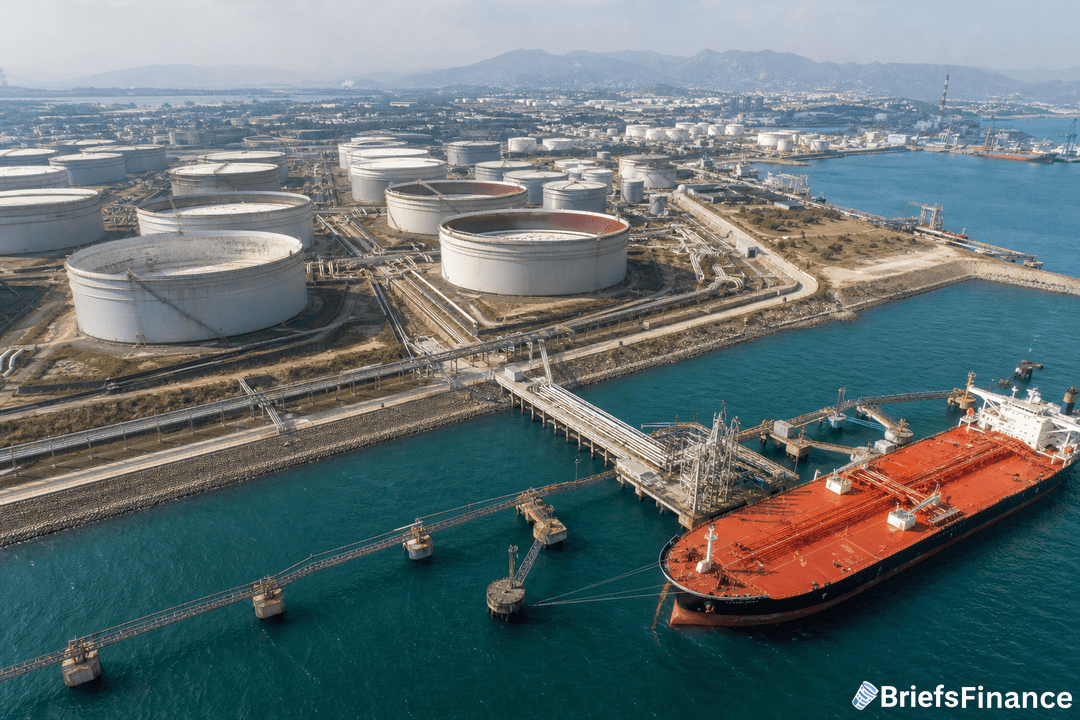
With tensions in the Middle East lifting benchmark prices, Russia's export haul climbed to almost $21.2 billion in October, the most since May, according to the IEA. Crude did the heavy lifting - more than 80% of the total - because Ukrainian strikes on refineries squeezed petroleum-product output and shipments.
Urals and ESPO crossed the $100 per barrel line as the IEA highlighted near daily strikes targeting tankers moving through the Strait of Hormuz and heavy Houthi attacks on Saudi energy infrastructure. That helped Russian barrels find buyers, since flows to China and India do not need to pass through Hormuz.
Flows and refinery hits
The IEA pegged crude exports at 5.33 million barrels per day in October, unchanged from September and roughly 4% above a year earlier. Refined-product exports totaled 1.49 million barrels per day, the most since June, though still about one third below last year's level.
Ukrainian drones cut into refinery runs during the first half of October, then the pressure eased when Kyiv paused strikes for two weeks. That lull coincided with appeals for restraint from US President Donald Trump, who aimed to lower fuel prices before the midterm elections. Afterward, Ukraine resumed strikes on key facilities, notably the export-oriented Kirishi plant and the Omsk refinery, the nation's largest. The renewed campaign has already trimmed refinery throughput and could push more crude onto ships this month, unless Russia's export terminals run into trouble.
When market forces shift, thoughtful tools can help investors stay informed and ready. We're hosting our first ever investor livestream on 11/17 to show you how to use ChatGPT and Claude to invest like a pro, hosted by Briefs Finance CEO Jaspreet Singh. Save your seat.
Budget math and what to watch
Triple digit crude offered relief to a budget that gets about one fifth of its revenue from oil and gas and is stretched by the invasion of Ukraine and a wartime economy. Government data released Tuesday suggest the annual budget gap will come in at 3.2% of GDP this year.
Export proceeds do not flow straight into the federal budget. Instead, Moscow taxes producers while also handing out sizable subsidies to the sector. Net oil tax income in October was about $10 billion, based on Bloomberg's read of Finance Ministry data, after multi billion ruble payouts to support domestic fuel deliveries. The bottom line: if refinery outages shift more barrels to sea and prices hold above $100, watch how that filters through to Russia's tax take, global supply, and your energy exposure.
Smart technology and disciplined analysis often give investors a clearer view of opportunities. On 11/17, our CEO Jaspreet Singh goes live for our first ever investor livestream on how to use ChatGPT and Claude to invest like a pro. Register to join him.