How a 1988 scandal still matters
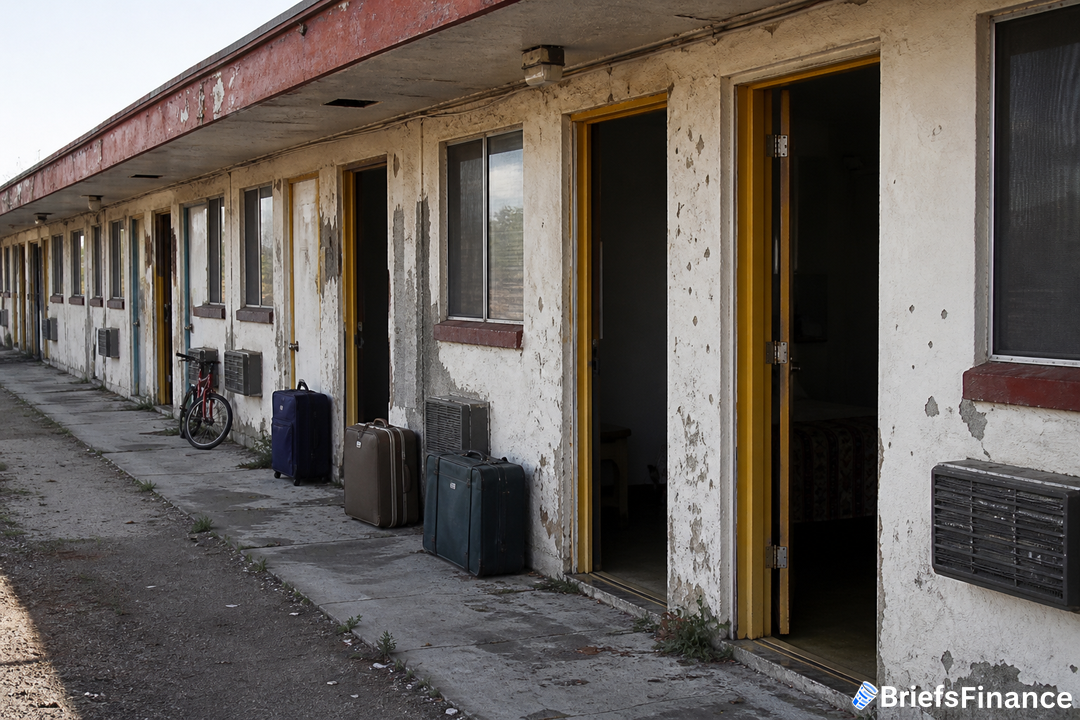
In December 1988 the city completed relocating the last 448 homeless families from the Martinique Hotel. The once-fashionable Manhattan landmark had turned into a national shorthand for the "welfare hotel" and reportedly housed 1,500 children as the city paid $1,800 per month per family, equal to $5,126 today, for rundown rooms. After major renovations, the Martinique no longer serves families on the edge of homelessness.
Three decades on, many other hotels and motels still do, as a nationwide housing shortage - driven largely by state and local limits on new building - leaves too few places to rent. The Martinique was a scandal because tight rules had squeezed out inexpensive housing and the city ended up paying roughly five times going rents for substandard shelter. The pattern persists in many places.
The counts are rising, even if methods differ
Federal law tells schools to flag students without stable housing, including those staying in motels. In 2019-20, schools counted 88,663 students in that category, rising to 132,010 by 2023-24, a 49 percent jump.
HUD's method is different, capturing homelessness on a single night in January and including people in motels only when they are receiving rental assistance. Using that approach, overall homelessness grew 33 percent over a similar period. Even with the mismatch in methods, families with children in motels appear to be increasing much faster than the broader homeless population.
Why vouchers miss the mark in a supply crunch
The usual policy play is rent vouchers. But pouring subsidies into a market that cannot add units tends to lift prices on the limited stock that exists. That treats a scarcity of homes as if it were just a paycheck problem.
Many motel families are earning income and paying near-apartment prices. In one Georgia county, researchers found someone was working in 78 percent of motel households, and families paid an average of $1,852 a month - roughly what a typical two-bedroom apartment cost locally. The core issue is access to available units, not the absence of any income.
Understanding long term social trends can help investors spot smarter opportunities. We're hosting our first ever investor livestream on 11/17 to show you how to use ChatGPT and Claude to invest like a pro, hosted by Briefs Finance CEO Jaspreet Singh. Save your seat.
Rules, costs, and one practical alternative
For years, state and local policies have made new apartments harder and costlier to build. Most residential land is set aside for single detached homes, while parking minimums, building height caps, large lot rules, and limits on how many homes can go on a site squeeze what is possible elsewhere. Add in heavy paperwork, long permitting queues, environmental reviews, and neighborhood pushback, and projects can drag on for years. When demand rises, prices jump instead of supply.
These costs bite the hardest at the low end. Many requirements cost about the same whether a builder delivers luxury condos or modest units, nudging developers upmarket. As truly affordable options thin out, budget motels become the landlord of last resort.
Austin shows another path. The city has aggressively loosened zoning and sped up permits, and builders have met that with a building surge. Pew finds that in Austin the median rent was $1,546 in December 2021 and had slid to $1,296 as of January 2026, even while its population surged, and Austin's count of students living in motels dropped 48 percent, from 192 to 100. The bottom line: where rules let supply grow, rents can cool and families are less likely to land in motels - a setup that matters for any portfolio exposed to housing, construction, or local consumer spend.
New analytical tools give investors a clearer view of underlying economic shifts. On 11/17, our CEO Jaspreet Singh goes live for our first ever investor livestream on how to use ChatGPT and Claude to invest like a pro. Register to join him.