New Disruptions Hit Starshield
Ukraine says critical satellite links that help its forces move and communicate have slowed again.
President Volodymyr Zelenskyy said Ukraine is investigating fresh constraints on SpaceX's Starshield service after a comparable episode last month. He posted on X that there were "significant disruptions to Starshield's operations over the territory of Ukraine for several days now - along the entire front line and in the temporarily occupied territories of Ukraine."
"The Ukrainian military have already investigated the circumstances, and these are not random errors but systematic speed restrictions," he wrote, adding that officials are coordinating with the U.S. to clarify what happened.
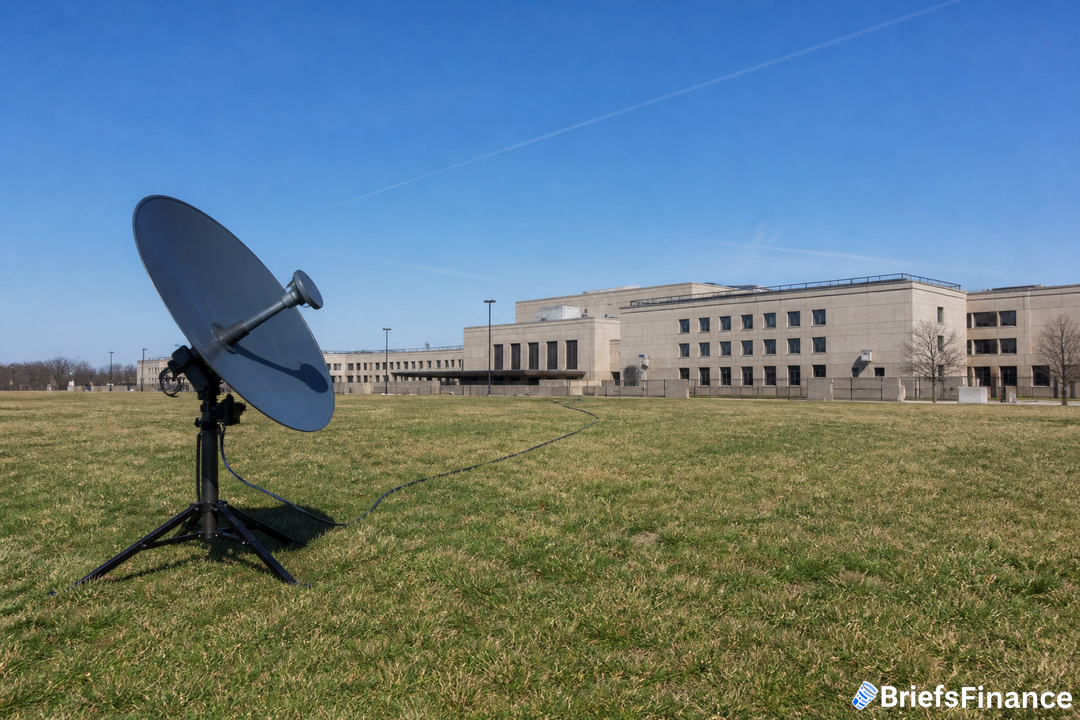
Starshield is SpaceX's national-security focused satellite network built on Starlink technology. CNBC said it had contacted SpaceX and the White House for comment.
Why the Speed Ceiling Matters
Zelenskyy said the current limitation acts like a cutoff for terminals moving faster than 161 kilometers per hour, or 100 miles per hour. He said anything above that speed disconnects, complicating intercepts of Russian jet-powered drones.
"There have already been strikes that got through because our interception systems cannot reach sufficient speeds and are unable to intercept in time."
This is the latest round in a months long fight over speeds. On Oct. 14, Ukrainian officials said SpaceX had hindered the country's defense by reducing connectivity speeds and disrupting operations. On October 24, Zelenskyy said speeds returned to prior levels.
In fast-moving markets, investors who embrace AI-driven tools often find an edge. We're hosting our first ever investor livestream on 11/17 to show you how to use ChatGPT and Claude to invest like a pro, hosted by Briefs Finance CEO Jaspreet Singh. Save your seat.
The Wall Street Journal reported that Elon Musk ordered those prior restrictions, leaving some Ukrainian strike and interceptor drones nearly unusable. The paper later said U.S. President Donald Trump asked Musk to undo the change. According to Trump, the White House did not order Starlink restrictions in Ukraine.
Musk wrote on X that "Starshield systems are owned and controlled by the US government." He later said Ukraine had breached Starlink's terms of service, which he said led the company to restrict access to high-speed satellite service. Ukrainian officials have strongly pushed back on that.
At the time, Serhii Beskrestnov, who advises Zelenskyy on defense technology, said Ukraine was unable to employ commercial Starlink for medium or long range drone operations due to the service not operating over Russian territory and the imposition of drone speed limits of 70 to 90 kilometers per hour, which had been enforced for months. He later confirmed on Thursday that "the speed of Starlink operation during movement was again limited." "We did not rejoice for long," he added, arguing that "any terms can be changed and discussed, instead of leaving our country without sky protection."
Shuttle Diplomacy Picks Up
While the tech fight reignited, diplomacy moved in parallel. Peace negotiations mediated by the U.S. concluded in Abu Dhabi on Wednesday. Earlier in the week, a three-party meeting in the United Arab Emirates involving Ukrainian, Russian, and American negotiators ended without a major breakthrough on a ceasefire or territorial deal.
On Thursday morning in Moscow, the Russian state news agency Tass said that Russian presidential envoy Kirill Dmitriev received Steve Witkoff and Jared Kushner, who were acting as U.S. special envoys, at Vnukovo Airport. The two were slated to talk about a lasting resolution to Russia's full scale invasion of Ukraine, now more than four and a half years old. Later on Thursday, Witkoff and Kushner were scheduled to meet with Zelenskyy in Ireland during a political summit, holding the discussion separately from the main proceedings.
What It Means for Your Portfolio
Satellite bandwidth is now part of the battlefield. When speeds drop, drones and air defenses can stumble. When service returns, tactics shift again. That push and pull can influence demand for defense tech, satellite services, and secure communications as governments hunt for options that hold up in combat.
The talks in Abu Dhabi and the envoy travel signal parallel pressure for a political track. If negotiations advance, some procurement could pivot toward rebuilding and communications upgrades. If not, the race for faster, more resilient links continues. The bottom line: watch who sets the service rules and access, because the hand on the switch can move defense and space names as much as any contract win.
When uncertainty rises, learning how to use AI can sharpen decisions. On 11/17, our CEO Jaspreet Singh goes live for our first ever investor livestream on how to use ChatGPT and Claude to invest like a pro. Register to join him.