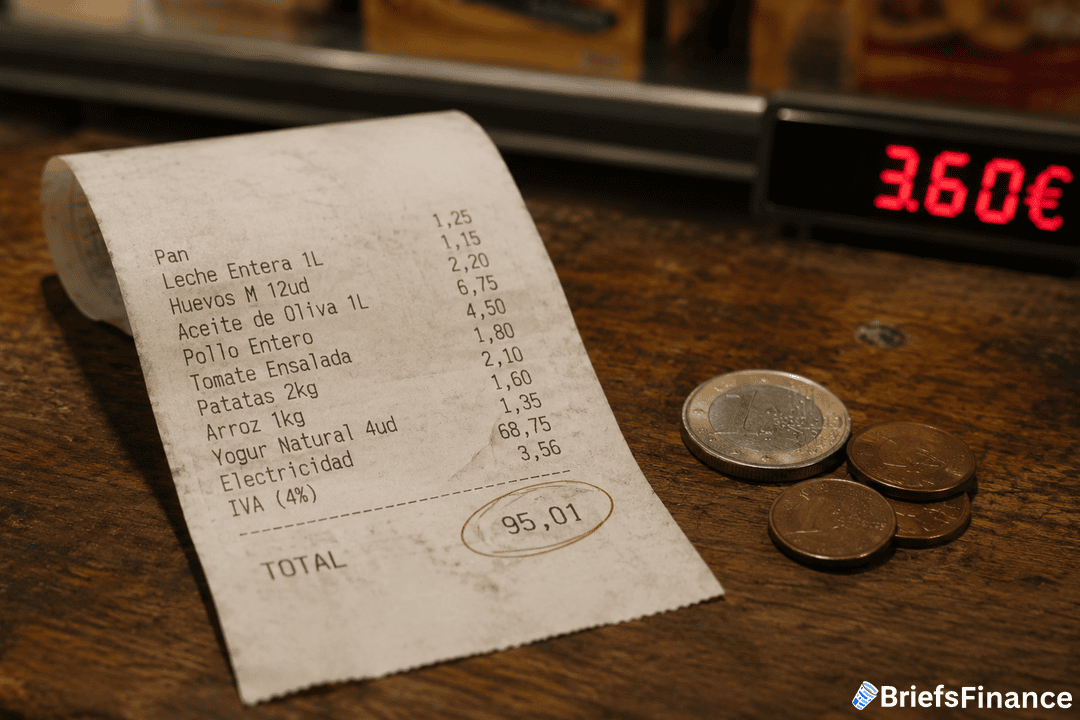
That reading is above the European Central Bank's 2% target, raising pressure on policymakers to act.
Inflation Stays Stubborn
A national gauge of underlying pressures eased to 2.9% in June. That measure excludes volatile items such as energy and fresh food.
Energy and Oil Drive Prices
Increases in electricity and natural gas prices contributed to the rise in inflation. Lower gasoline prices offered some relief, but not enough to offset the rise. Jose Luis Escriva, the governor of Spain's central bank, pointed to indirect effects.
Get your free investing masterclass bonus when you join Market Briefs, our free daily newsletter
"Aside from the increase in energy prices in all economies, and specifically in oil prices, indirect effects are becoming apparent," Escriva said.
Since the ECB's June monetary-policy meeting, conditions have changed markedly: the Strait of Hormuz has reopened and oil prices have fallen to levels not seen since before the conflict, thanks to peace efforts in the Middle East. Spain's central bank now forecasts average consumer price inflation of 3.6% for 2026. That is 0.6 percentage points above its March projection.
ECB Signals More Rate Hikes
The European Central Bank has a clear target: 2% inflation. With Spain running at 3.6%, the ECB is not done yet. Isabel Schnabel, an Executive Board member of the ECB, said "we will need to continue raising interest rates."
This Spanish data is the first major inflation update from the eurozone following the ECB's rate hike this month - its first in three years. Other large euro-area economies will report their figures on Tuesday, while the bloc's own reading comes out on Wednesday. Analysts expect a modest slowdown from 3.2% to 3%.
Financial markets are pricing in another quarter-point rate hike later this year, though traders and economists have recently reduced their bets on such a move.
Broader Economic Context
The persistent inflation above the ECB's target complicates the central bank's efforts to balance monetary policy across the currency bloc. While Spain's economy continues to expand, with the central bank projecting GDP growth of 2.3% in 2026 and 1.7% in 2027, the high cost of living erodes purchasing power. The easing of core inflation to 2.9% offers some hope that underlying price pressures are moderating, but energy costs remain a wildcard. The reopening of the Strait of Hormuz and falling oil prices may provide further relief in coming months, though indirect effects cited by Governor Escriva could keep headline inflation elevated.
Persistent inflation above 3% continues to squeeze Spanish households, particularly as food and energy costs remain elevated. While core inflation has eased, the overall price level remains a concern for policymakers balancing growth and price stability.
Subscribe to Market Briefs, our free daily newsletter, and claim your bonus investing masterclass