A Numbers Dispute at the Heart of the Market
West Texas Intermediate crude, the U.S. benchmark, closed 2.4% lower, finishing at $81.25 a barrel. Brent crude, the international benchmark, fell about 2% to $87.07.
Crude is still about 4% higher for the week because no U.S.-Iran agreement has been reached to expand traffic through the strait. But Wright's claim shifted the conversation.
He said Wednesday that the daily rate for crude moving through Hormuz has recently been near 9 million barrels, based on a seven-day average. Counting pipeline flows as well, Wright put total Gulf shipments at about 15 million bpd.
Most independent analysts put the number substantially lower. TD Securities estimates the strait is currently moving about 5 million bpd. Ryan McKay, the firm's director of commodity strategy, said in a Wednesday note that level is "nowhere near enough for the market."
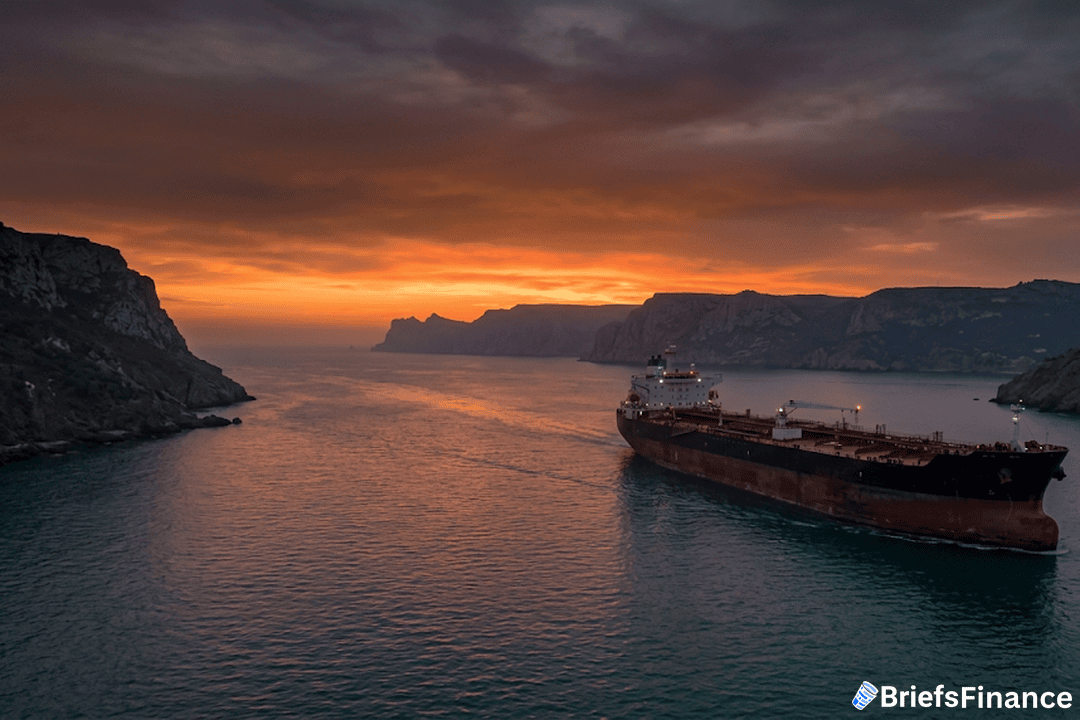
The gap matters because Hormuz is one of the world's most important oil chokepoints. Before the conflict, the strait handled roughly 20 million bpd of crude and refined products. If actual volumes are closer to Wright's number, the market has more supply than many believed.
Wright defended his data in a Wednesday social media post, saying the U.S. armed forces and Energy Department hold "the best available data related to oil and oil products leaving the Arabian gulf." He added that "many private businesses undercount the number of ships leaving the Strait of Hormuz due to ships moving covertly through the waterway."
Get the free Always Be Buying eBook and learn the simple system for building wealth on any income
The Bigger Supply Picture Is Still Tight
In addition to the Hormuz dispute, the fundamentals are getting rougher. The International Energy Agency now forecasts a 1.6 million barrel-per-day decline in global oil demand for the year, roughly 510,000 bpd above its prior projection.
The IEA said fighting in the Gulf has made it harder to raise worldwide oil supply. In July, supply was 6.3 million bpd below the year-earlier level, and Gulf producers shut in 8.3 million bpd. Those are massive gaps that new production has not yet filled.
Hormuz has long been a strategic chokepoint. Any sustained disruption there would force tankers onto longer, costlier routes, hitting global supply chains and energy prices everywhere.
The significance of the strait cannot be overstated. Historically, about 20 million barrels per day passed through, representing a substantial share of global seaborne oil trade. Even a temporary disruption would have cascading effects on shipping costs and insurance premiums, as seen in recent attacks in the Gulf of Oman and Red Sea.
Shippers still face a dangerous security environment in the Middle East. Attacks on vessels occurred this week in the Gulf of Oman and also in the Red Sea.
The risk premium is not gone, even if Thursday's price drop suggests some fear is easing. The U.S. and Iran have conflicting claims about control of Hormuz. Tehran says the strait is closed and will reopen only when its demands on Washington are met.
President Donald Trump says the U.S. has total control. Last week, the Trump administration floated a possible deal with Iran to increase traffic through the strait, but no agreement has emerged.
What This Means for Your Portfolio
Amos Hochstein, who served as energy adviser to President Joe Biden, told CNBC Thursday that investors should tune out the political noise entirely. "The one thing we know is we have to discount political statements. They're completely irrelevant to what's happening," he said. "It's all nonsense. It's just market management."
His point is that both sides have an interest in talking tough or talking calm, depending on what they want prices to do. The actual data, he suggests, is what matters.
So where does that leave you? Oil prices are still up for the week, and the range of estimates on Hormuz traffic is wide enough to make anyone dizzy. If you own energy stocks or funds that track oil, expect more swings until the gap between the official claims and the independent counts narrows.
The situation on the ground is still dangerous, and a single attack could send prices climbing again. Watch what the data says, not what the politicians post.
Download the free Always Be Buying eBook and start putting your money to work today