Why this is picking up now
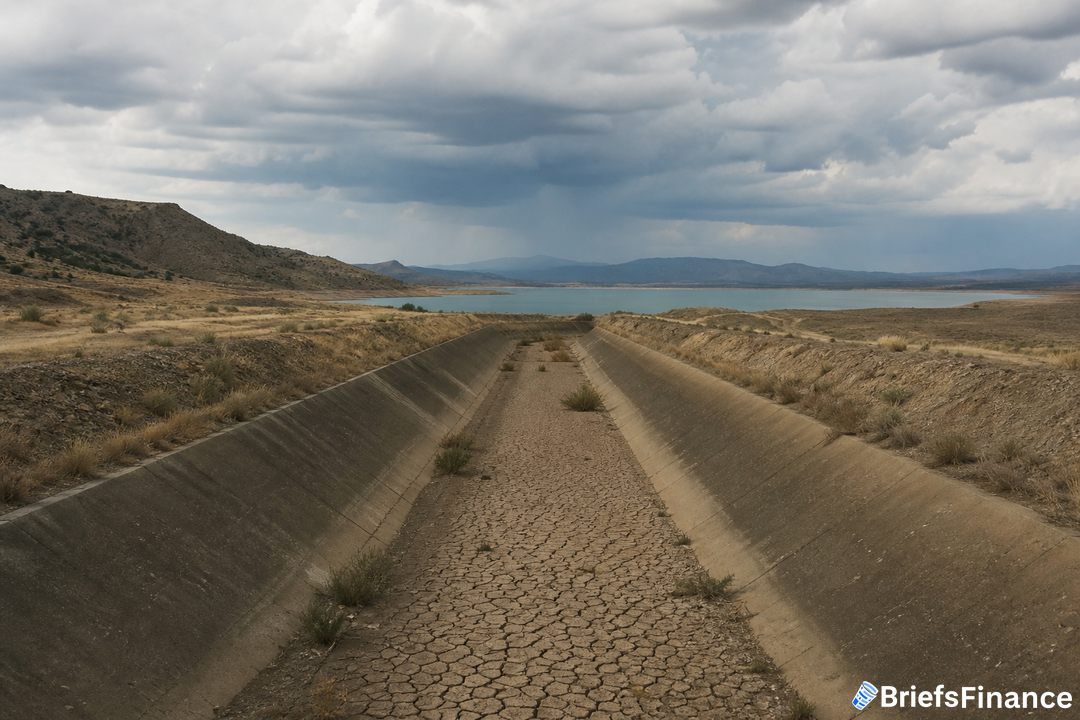
India is staring at its driest monsoon since 2009 as El Niño intensifies, with rainfall running 15% below normal. That is already biting in Maharashtra - the country's wealthiest state and home to Mumbai - which has warned of drought-like conditions as reservoirs dip. Severe climate shocks are increasingly a drag on South Asia's largest economy, and water sits at the center of that risk.
What the bank plans to back
Acting chief economist Jang Ping Thia said AIIB wants to scale up a broader pipeline of essential water projects and provide conditional financing tied to governance upgrades. India, the bank's biggest borrowing market, can also tap AIIB for "policy-based lending to reform the water sector," he told Bloomberg News in New Delhi, where AIIB leaders are attending India International Water Week. Priorities include backing for city water providers, initiatives to treat and reuse industrial effluent, and programs to replenish aquifers. The bank may also embed conservation requirements in broader infrastructure financing - for instance, the Maharashtra program of $1.1 billion that would enable automatic cutoffs for solar irrigation pumps.
The money math
Since inception, AIIB has put $13.8 billion of financing to work in India, but less than 7% of that has been in direct water lending. A report published Friday by AIIB and the Council on Energy, Environment and Water sizes the reuse of treated wastewater at roughly $35 billion and sees micro-irrigation as a potential $118 billion market. Unlocking those sums will require crowding in private investors, because roughly 85% of water spending today comes from public tax revenues.
Investing with an eye on essential infrastructure can help protect and grow your savings. Join Briefs Finance CEO Jaspreet Singh on September 29th for a FREE live investor workshop, How to Profit From A Dollar That's Losing its Value, where he shows how we're spotting investment opportunities as the dollar falls. Save your spot.
Where private capital could plug in
Thia called agriculture "decisive," noting it consumes up to 80% of India's freshwater. But the bank sees city water utilities as the most practical on-ramp for private players, because tools like smart meters and household billing already create predictable cash flows. For savers and investors, that points to a simple takeaway: as climate stress forces more money into resilient water systems, the nearer-term investable openings are likely to be in urban networks and efficiency tech, not just dams and canals.
Keeping your portfolio aligned with long term goals preserves capital and builds wealth. Our CEO Jaspreet Singh is hosting a FREE live investor workshop, How to Profit From A Dollar That's Losing its Value, on September 29th. Sign up free to join him live.