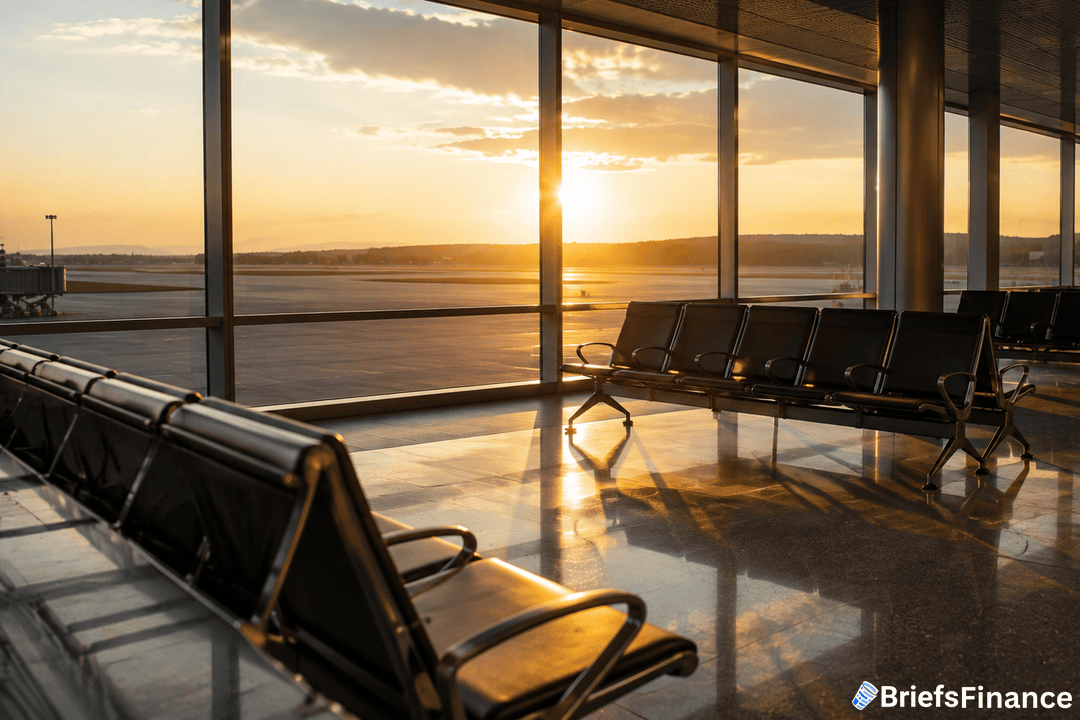
Vacations are getting expensive. Airfare, gas, hotels - the whole bill keeps climbing.
And yet, Americans are still going.
Economists call it the summer of trade-offs. Families are protecting their trips by trimming everything else, from restaurant meals to the grocery cart.
Travel Demand Isn't Collapsing, Even as Prices Rise
The numbers say demand is holding. The Bureau of Labor Statistics put June airfares 26% higher than a year earlier, and AAA had gasoline above $4 a gallon. Those are big jumps, but airlines and Airbnb both report bookings are still flowing in.
In an April PricewaterhouseCoopers survey of more than 2,000 U.S. adults, the average planned summer travel spending came in at nearly $2,900. And 71% of respondents said their summer travel budget would match or beat last year's.
Bank of America Institute data tells a similar story. In the second quarter, middle-income households increased their year-over-year spending fastest on airlines at 8%, then jewelry at around 7%, and restaurants at roughly 3%. Grocery spending growth stayed flat.
"There are some yellow caution lights out there, but we're not crossing into the red side yet," said Will Auchincloss, Americas retail sector leader at EY-Parthenon.
The Bureau of Economic Analysis shows GDP has grown in every quarter starting with the second quarter of 2025, and the U.S. has not entered a recession. So travelers are not broadly canceling trips over recession fears.
How Families Are Making the Budget Work
To keep vacations alive, people are cutting elsewhere. In the same survey, 45% said they would take shorter trips, 44% would dine out less, and 42% would stay closer to home.
Get the free Always Be Buying eBook and learn the simple system for building wealth on any income
Younger travelers, Gen Z and millennials, lean toward shorter trips. Gen X is planning fewer but more valuable ones.
Lower- and middle-income travelers are making tougher calls. Some are borrowing money or cutting grocery costs, swapping beef for chicken or switching to store brands.
"It is not easy out there, and things have gotten materially more expensive, particularly in those key categories that consumers buy frequently, and they do continue to spend," Auchincloss said.
Joe Wadford, a Bank of America Institute economist, put it plainly: "I think this is like the summer of trade-offs, especially for lower and middle-income households."
Credit Cards Are Picking Up the Tab
A lot of this travel is going on plastic. A February NerdWallet poll found 84% of summer travelers intended to charge trips to credit cards. Many are chasing points and miles, while others plan to pay later.
The same poll found 35% of travelers who charged 2025 summer trips were still paying those balances. And 23% of people planning to charge this summer expected not to pay the balance off promptly.
That is a real cost hiding inside the vacation budget. Interest charges can quietly make that trip a lot more expensive than the sticker price.
What This Means for Your Money
Travel spending is splitting along income lines. High earners are taking expensive trips, and those big-ticket vacations may be inflating the overall travel numbers. Wealthier travelers generally are not cutting groceries to fund a beach week.
The middle 40% of earners still accounted for nearly 30% of airline spending over the past year, per Bank of America Institute data. So the squeeze is real for a large chunk of travelers, even as the averages look strong.
"The folks who need to pinch pennies a little more, we are seeing that group either borrow to continue to have some of these experiences, or they're making trade-offs," Jonathan Kletzel, who leads PwC's U.S. travel, transportation and logistics practice, said.
There may be a deeper reason people keep spending. Ashley Whillans, a Harvard Business School professor, says trips build what she calls an experiential CV. They help with personal development and social connections. Americans' focus on achievement may be turning travel from a luxury into a necessity.
"We like to have this sense of experiential achievement," she said.
So the pattern is clear. Consumers have kept spending through record-high inflation, recession forecasts, and tariff uncertainty. They are reallocating, nudging their spending around, and making the budget work.
The question for your wallet is whether the trade-offs are worth it. If a vacation means shorter trips, fewer dinners out, or credit card interest that lingers for months, the real cost goes beyond the ticket price. And that is a calculation only you can make.
Download the free Always Be Buying eBook and start putting your money to work today