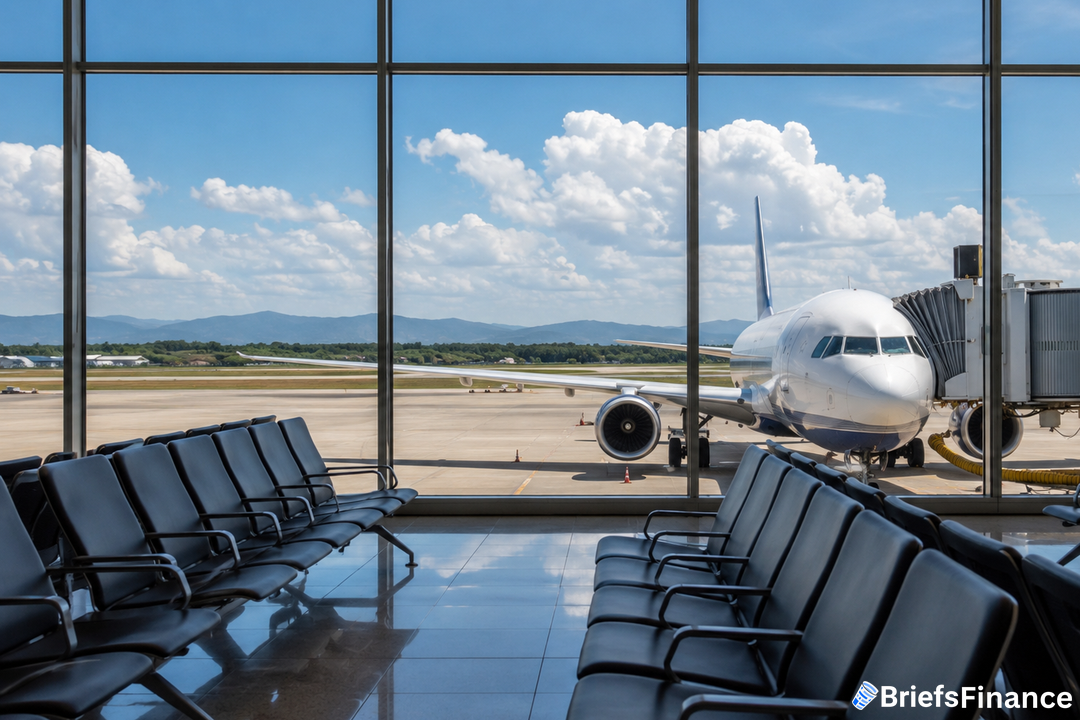
The Summer Travel Boom Just Hit a Cool Patch
For a few summers, the story was simple: Americans couldn't wait to get back on a plane. This summer, the story changed.
The burst of pent-up demand from the pandemic era has cooled. Expensive fuel, the war in Iran, and ongoing airport hassles kept many people from reserving overseas seats at the height of summer.
After several summers of rapid growth in international travel, this June's drop is a notable reversal. It suggests the post-pandemic rebound has run its course, and travelers are now responding to higher prices and geopolitical tensions.
US International Trade Administration data shows the number of Americans on outbound international flights during June fell 3.2% compared with a year earlier, marking the first such June decrease in five years.
Europe felt the pullback right away. Cirium figures show July reservations by US travelers for Europe dipped 5.7% year over year, while inbound European trips to the US dropped 7.9%, World Cup notwithstanding.
Some favorite spots took bigger hits. Cirium data shows double-digit percentage declines for US-origin bookings to Athens and Rome compared with last year, and many other big airport hubs also lost ground. CoStar found that US visits to the Middle East were down nearly 25% in Q2, while inbound Middle Eastern arrivals to the US fell 20%.
Get the market news that matters in a five-minute read with Market Briefs, our free daily newsletter
Why Travelers Pulled Back
The simplest reason is the fare.
It was not just the price. Jan Freitag, CoStar's national director of hospitality analytics, said price alone did not explain the slowdown. "The war in Iran clearly had a negative impact on general global propensity to travel, but specifically Americans' desire to go abroad," he said. "As international airfare and other travel costs rise, more Americans are staying at home."
Even though summer is traditionally the busiest travel stretch, ticket prices have climbed 26.5% year over year, leading numerous vacationers to alter their arrangements. Some are using loyalty points to decide where to go or picking low-cost "destination dupes." Others are staying nearer home or booking resorts with all-inclusive rates for predictable spending.
What People Did Instead
Marissa Strang has embraced the "art of the road trip" this summer. The 29-year-old and her husband drove from Washington, DC, to Chattanooga, Tennessee, a nine-hour trip that became a four-day escape. The couple had gone to Egypt earlier in the year, using points and travel rewards to keep round-trip tickets for both of them below $400.
Chicago resident Akylah Cox stayed close by for two "microtips" this summer, each a one-night or two-night jaunt. "Where can I go for the cheapest?" the 26-year-old said.
David Manguluti, a student at Macalester College, has been flying less this year. He chose a 17-hour Amtrak ride from New York to Chicago instead of a four-hour flight in order to save money. He also dropped a weekend visit to Washington, DC, deciding the expense would not be worth it.
"You need to be able to be truthfully honest with yourself to be like, 'will I have the joy and happiness that I need to feel okay about spending all this money?'" he said.
What This Means for Your Money
Carriers worldwide report that higher fuel expenses keep cutting into earnings, even as a few airlines insist that demand is still solid in the face of expensive tickets.
Freitag, meanwhile, thinks US hotels will benefit. With overseas flights and travel expenses climbing, more Americans are choosing to stay on home soil.
Join Market Briefs, our free daily newsletter, for a quick daily rundown of the markets