What Anthropic built and why it matters
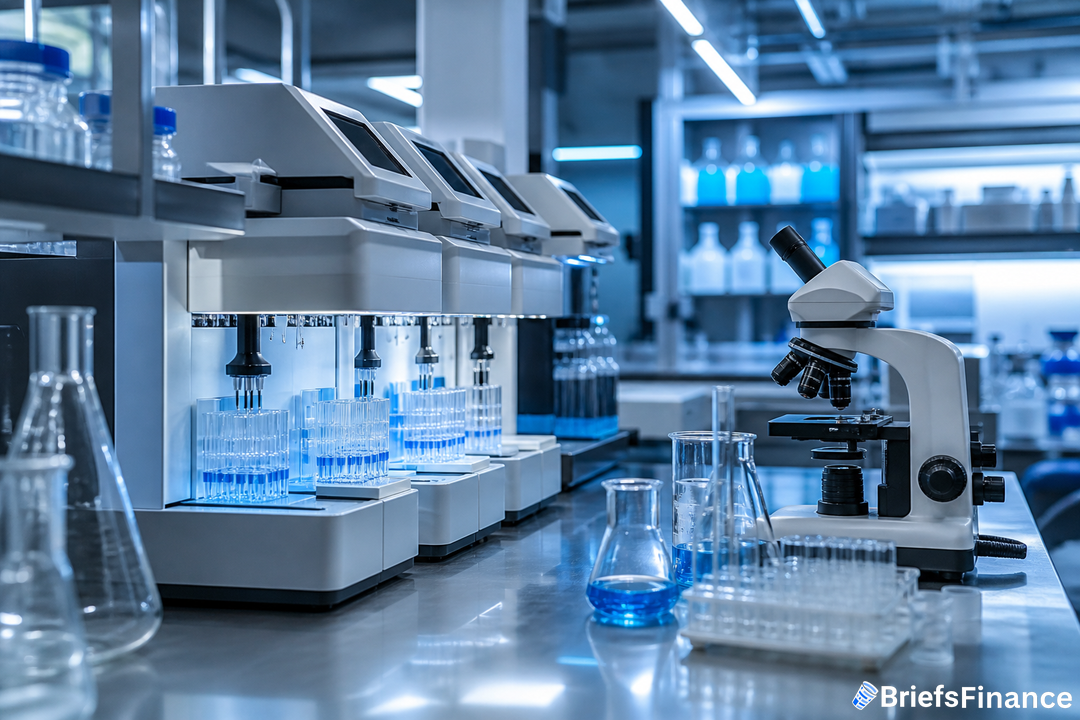
Anthropic has moved its biology push into the physical world, quietly setting up a wet lab in the San Francisco Bay Area. Eric Kauderer-Abrams, the company's head of life sciences, confirmed the lab in a Tuesday interview and said the team is already conducting experiments. In his words, biology still ultimately needs real lab tests. He described a hybrid approach that looks a lot like biotech norms, splitting work between Anthropic's own benches and outside partners.
A spokesperson later added an important caveat: the lab is not dedicated to drug discovery specifically. Still, Anthropic has said it wants to open the door to treatments for rare diseases, and the in-house setup is intended to give the company speed and firsthand biological experience even as it outsources when it makes sense.
How AI meets the bench
Anthropic's plan is to pair its Claude AI with physical automation so robotic systems can run experiments with limited human intervention. Two people familiar with the effort said the company is embracing the kind of automation common in biotech, while a spokesperson emphasized that human oversight remains crucial for safety. As Kauderer-Abrams put it, they are in the early innings of automating lab execution, a shift he believes could meaningfully accelerate many processes.
The company has been laying groundwork for that vision. It rolled out software called Claude Science, and in August introduced the Model Hardware Standard to help AI interface with lab equipment. An academic project known as PyLabRobot, unrelated to Anthropic, addresses different automation needs. Anthropic also provides AI services and tools to big-name pharma customers including Roche's Genentech, Bristol Myers Squibb and Novo Nordisk.
Programs, procurement, and partners
Speaking in San Francisco in June, Kauderer-Abrams said Anthropic intends to pursue preclinical projects in areas that big drugmakers tend to pass on for financial reasons. He told Reuters the company is ramping up internal lab capacity for speed, keeping some work in house when it is faster and outsourcing other tasks, all with an eye to operating at the largest possible scale.
Anthropic confirmed it acquired Coefficient Bio, which media reports valued at about $400 million in stock, while declining to comment on the price. It previously added Novartis CEO Vas Narasimhan to its board. On the hiring front, recent postings include a LinkedIn role to scale procurement and operations and a Jobera listing for expertise in protein and nucleic acid characterization. One job post spelled out the ambition: "Our goal is to speed up progress in the life sciences by an order of magnitude." According to Kauderer-Abrams, life sciences already ranks among Anthropic's largest areas of investment by headcount and resources.
Technology advances remind investors to balance innovation exposure with steady capital protection. Join Briefs Finance CEO Jaspreet Singh on September 29th for a FREE live investor workshop, How to Profit From A Dollar That's Losing its Value, where he shows how we're spotting investment opportunities as the dollar falls. Save your spot.
Motivation, risk, and what comes next
There is a personal angle here too. CEO Dario Amodei wrote recently that his father died from a disease just a few years before a cure appeared, a loss that helps explain Anthropic's urgency. One person familiar with the effort called the lab a small step toward tackling conditions the company believes pharma overlooks - and a way to show AI can help people rather than just threaten jobs or worse.
The company also sees clear limits: "We're not competing with pharma and biotech companies that make their business in bringing drugs to market," Kauderer-Abrams said. For the time being, Anthropic has ruled out conducting clinical trials and is concentrating on needs the industry is not addressing.
The company argues AI could speed work on diseases once seen as undruggable, potentially helping discover complex molecules such as bispecific and trispecific antibodies. Even so, drug development is a long road. The specific diseases Anthropic is pursuing and how far it has gotten are not public, and bringing a medicine to market takes years of clinical testing that Anthropic has not taken on. Note the comparison point: Isomorphic Labs, Alphabet's drug discovery arm, has spent years trying to reach the clinic and pushed that milestone out to the end of 2026.
Turbulence and the takeaway for your money
Anthropic's biology push arrives at a tense moment. In the two weeks before the interview, some researchers at the company warned AI could lead to human extinction. Anthropic also reported instances in which its systems might have been applied toward biological weapons development, a claim that drew some skepticism.
Amodei has urged slowing development, warning that a future AI more advanced than the OpenAI agents implicated in the Hugging Face incident could cause catastrophic harm. Meanwhile, Anthropic is preparing for a potential IPO that could reach $2 trillion, a bid to fund the very tech it says needs careful guardrails. As Kauderer-Abrams summed it up, the work is a balance: make models that speed up medicine, and deploy them carefully to limit risk.
For your portfolio, the signal is this: one of AI's leading labs is taking biology into its own hands while selling tools and standards to pharma, targeting neglected areas, and avoiding clinical trials for now. The upside case is faster discovery in tough disease areas; the reality check is that biology still moves on clinical timelines, and most candidates fail before they ever reach patients.
Long term success usually comes from patient choices and consistent stewardship of savings. Our CEO Jaspreet Singh is hosting a FREE live investor workshop, How to Profit From A Dollar That's Losing its Value, on September 29th. Sign up free to join him live.