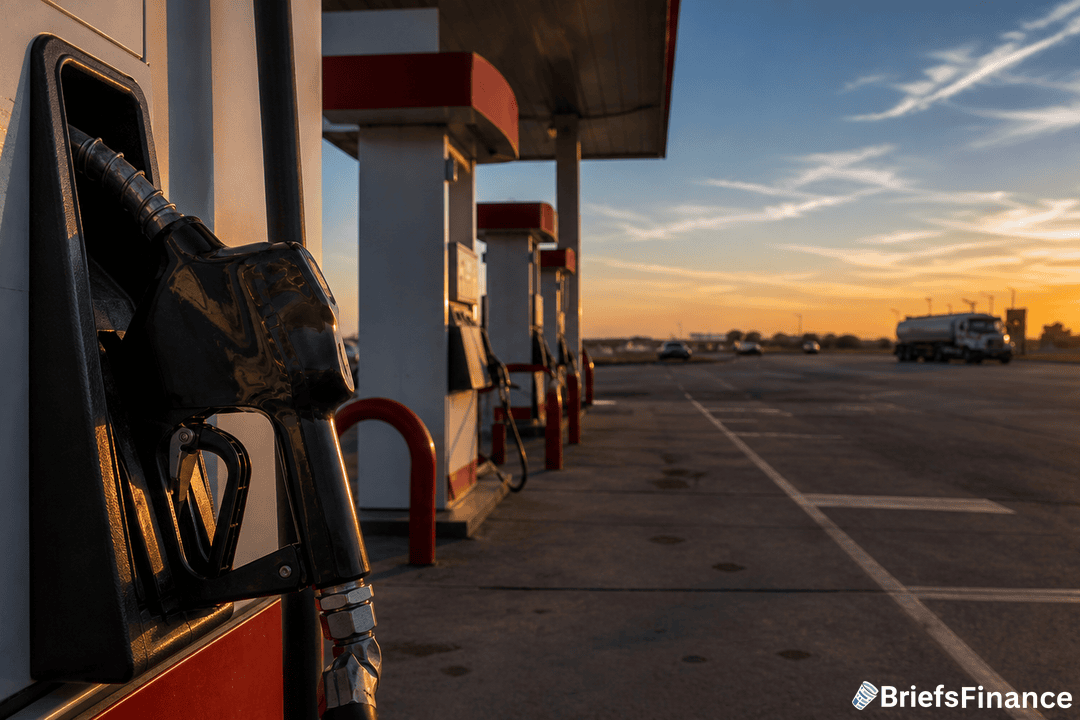
Memorial Day is still three weeks away, and gas prices are already breaking records. The U.S. national average hit $4.45 a gallon on May 2, the highest May 2 reading AAA has ever logged.
Summer travel usually adds another 30 to 50 cents to pump prices. That seasonal climb is now starting from a record base instead of a normal one.
Why Prices Are Climbing
The Iran conflict is rewriting global oil supply, with the Strait of Hormuz disrupted for weeks. That narrow waterway handles roughly a fifth of the world's seaborne oil, so any disruption pushes crude prices higher.
That pressure shows up first at the pump, and then it shows up in almost everything else. Higher fuel costs feed straight into freight rates, shipping costs, and corporate margins.
Diesel is the bigger warning sign for investors, with the national average hitting $5.64 - up $2.09 from a year ago. That's a sharper rise than gasoline saw over the same stretch.
Diesel runs freight, shipping, and farming, so when it rises, the cost of moving food and goods rises with it. Trucking companies absorb some of the increase, and the rest lands on the grocery shelf.
Why? San Francisco just crossed $8 a gallon for diesel, the first U.S. city to do it. That kind of pricing pushes long-haul delivery costs into and out of the region much higher.
The Pain Isn't Spread Evenly
California drivers are paying $6.10 a gallon, while Washington state sits at $5.67 and Illinois clocks in at $4.93. The West Coast continues to carry the heaviest pump price in the country.
The South is cheaper but still climbing - Georgia $3.85, Texas $3.92, Florida $4.34 - while the East Coast lands in the middle, with Pennsylvania at $4.52 and D.C. at $4.48.
Why does that matter for investors? Energy costs flow into company margins, shipping rates, and shopper spending across the board.
When fuel rises this fast from this base, very little of the economy stays safe from the ripple. That includes airline costs, trucking margins, and grocery and retail pricing.
The Household Budget Squeeze
A $1.28 jump at the pump is a real hit to household budgets, especially for commuters and families with more than one car. Higher fuel costs eat into extra spending and slow shopper demand.
Diesel is the deeper worry. That fuel powers the trucks moving goods to stores, the trains hauling freight, and the buses running daily transit.
Higher diesel prices flow into the cost of nearly every product on the shelf, from cereal to lumber. Investors watching companies that sell straight to shoppers should expect tighter margins through the summer.
What To Watch
Fox Business analysts forecast $5 a gallon by Memorial Day if the Strait of Hormuz disruption drags on. Diesel could climb further from there, putting more weight on freight and consumer goods.
The seasonal climb is starting from the highest May baseline on record, with no slack left in the system.