Iran Wants a Seat at the NDB
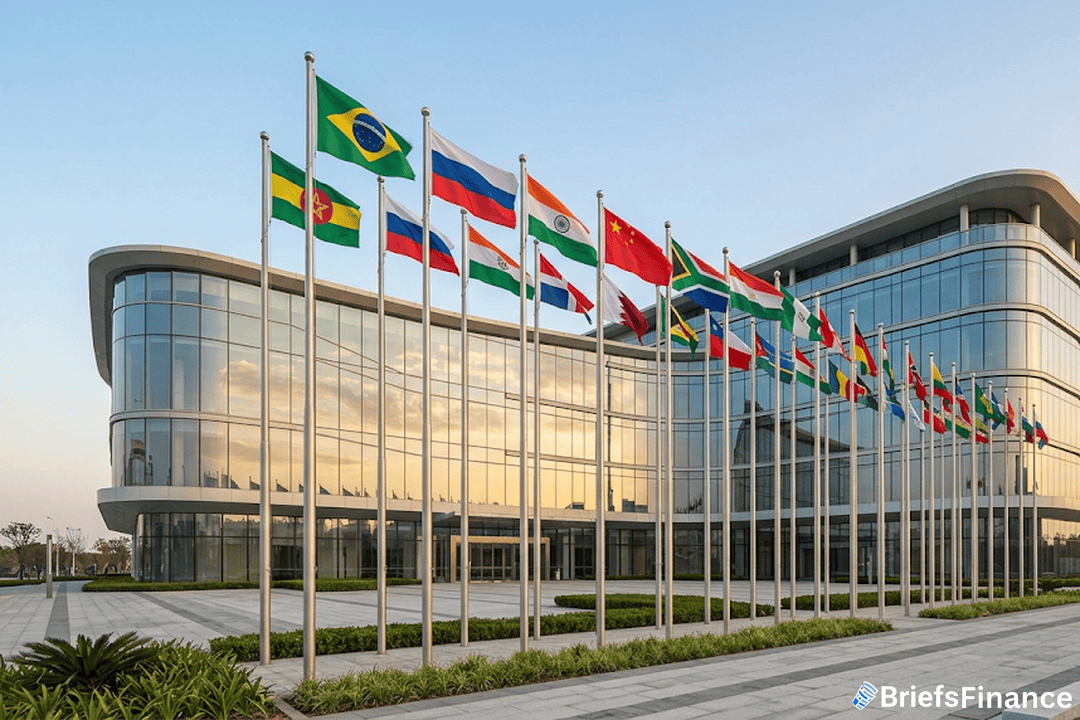
Iran is already part of BRICS, a club that Brazil, Russia, India and China started in 2006, and South Africa joined in 2010. Now it wants in on the group's bank too.
The group has grown since then. Indonesia, the United Arab Emirates, Saudi Arabia, Ethiopia, Egypt and Iran have joined, while Belarus, Cuba and Nigeria are partner countries.
The five founding BRICS countries also set up the New Development Bank, or NDB, to steer money into infrastructure and sustainable development projects across emerging and developing economies. Membership would let Iran apply for funding for things like urban development, digital infrastructure, sanitation and transport.
Central Bank of Iran Governor Abdolnasser Hemmati announced the plan Thursday while in India before next month's BRICS summit, according to the Tasnim News Agency. "We are seeking to establish bilateral and trilateral monetary cooperation with member states," he said.
That is the kind of statement that sounds technical until you remember what it means for Iran's economy.
Years of sanctions have made it very hard for the country to tap global capital, especially from Western banks and markets. A seat at the NDB would give Iran a new route to raise funds outside that system.
The Bank Is Not Confirming Anything
The NDB is not popping the champagne yet. A representative of the NDB, speaking to CNBC, said the bank cannot confirm Iran's membership, but emphasized that membership is open to all UN member states.
Get the free Always Be Buying eBook and learn the simple system for building wealth on any income
In practical terms, a country does not need to take out NDB loans to get a seat; it just needs to be a United Nations member.
Iran must still complete the NDB's formal admission steps to gain official member status. The bank's current prospective members include Zimbabwe, Angola, Ethiopia, Colombia and Uruguay, so Iran would not be the only country waiting to get in.
In the meantime, the NDB has been adding members: Uzbekistan became its tenth member, officially joining on June 5, 2026.
The timing is telling. This effort arrives about six months after Iran's conflict with the United States and Israel began, and the war has further ramped up pressure on the Iranian economy.
Inflation is soaring, growth has fallen sharply, and the currency is collapsing. President Trump has also threatened a 25% tariff on U.S. imports from any nation that buys Iranian goods or services, directly or indirectly.
That would make it expensive for other countries to keep trading with Iran, which may be part of the reason Tehran is looking for new friends and new funding routes. Trump has described BRICS policies as "anti-American."
What It Means for Your Portfolio
But it is a market story too.
Iran's biggest economic partner is China, according to World Bank data. Kpler data shows China bought more than 80% of Iran's oil exports in 2025.
Whether that trade pattern has changed since the war started is unknown, and that uncertainty is exactly the kind of thing markets have to price in. If Iran does find a way into the NDB, it will get access to development funding that could slowly ease some pressure on its economy.
That could change the risk picture for oil prices, shipping routes, and the wider Middle East, all of which have a way of showing up in your portfolio. But the admission process is not automatic, and the NDB has been careful not to confirm anything.
For now, the story is less about a bank membership card and more about how isolated economies look for exits when the usual doors close. The question for investors watching from a distance is how quickly that isolation lifts, because the answer will show up in your portfolio.
Download the free Always Be Buying eBook and start putting your money to work today