Free NewsletterPro Login

Warning: Undefined variable $stocks in /var/www/briefs.co/htdocs/wp-content/plugins/oxygen/component-framework/components/classes/code-block.class.php(133) : eval()'d code on line 448

Warning: foreach() argument must be of type array|object, null given in /var/www/briefs.co/htdocs/wp-content/plugins/oxygen/component-framework/components/classes/code-block.class.php(133) : eval()'d code on line 448

Warning: Undefined variable $funds in /var/www/briefs.co/htdocs/wp-content/plugins/oxygen/component-framework/components/classes/code-block.class.php(133) : eval()'d code on line 472

Warning: foreach() argument must be of type array|object, null given in /var/www/briefs.co/htdocs/wp-content/plugins/oxygen/component-framework/components/classes/code-block.class.php(133) : eval()'d code on line 472
/* the link was here */

Trump-Tied Firm Postpones Greenland Drilling After Permit Warning

Published Aug 13, 2026
Share:
Summary:
  • Greenland Energy Co. pushed its Jameson Land Basin drilling timeline back by more than a year, now targeting permits by winter 2027.
  • The delay follows a government warning to partner 80 Mile over equipment landed near Nerlerit Inaat Airport without a separate mineral-resources permit.
  • The licensed onshore area covers about 2 million acres and was granted before Greenland halted new licenses in 2021.

A Texas oil company with ties to people close to former President Donald Trump is pushing back its drilling plans in Greenland by more than a year.

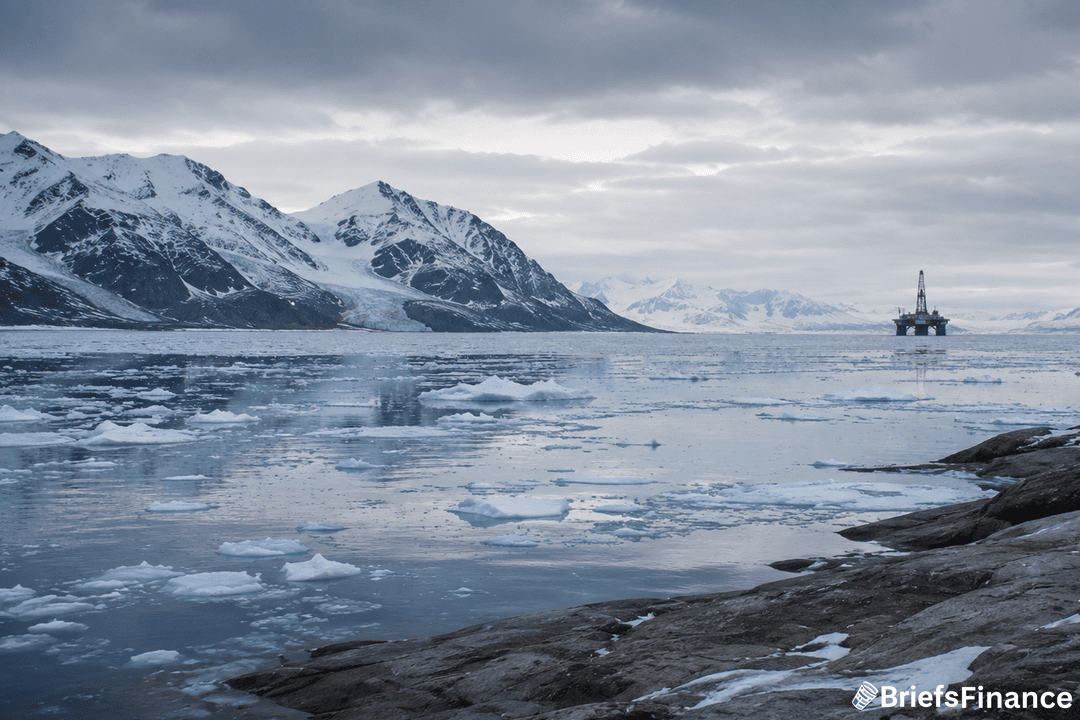
On Wednesday, Greenland Energy Co. announced a revised schedule, aiming to secure necessary permits by winter 2027 to drill in the Jameson Land Basin on Greenland's east coast. The delay comes just two weeks after Greenland's government formally warned the company's partner, London-listed 80 Mile, about bringing drilling equipment to the coast without proper approval.

The warning centered on equipment landed near Nerlerit Inaat Airport, a key entry point to northeast Greenland. The companies said they had permission and a lease for storage at an existing facility, but did not realize the mineral-resources authority also needed to issue a separate permit.

A Costly Mistake

The timing is awkward for a project with high ambitions. Greenland Energy calls the licensed onshore area a 2-million-acre stretch, among the very few highly prospective basins in the world that have never been drilled. The geology is linked to the North Sea, and the size rivals major producing regions.

But the ground is also politically sensitive. The licenses were issued before Greenland stopped granting new ones in 2021 because of the worsening climate crisis. And the drilling push comes as Trump again pushes for the U.S. to acquire Greenland.

Get the free Always Be Buying eBook and learn the simple system for building wealth on any income

The company has notable connections. Board member Carol Craig started a defense-tech business involved in a Pentagon contract effort backing Trump's Golden Dome missile defense. Chairman Larry Swets has been reported to have close ties to Trump's inner circle. The company also has a documentary agreement with Envoy Media, launched by Dr. Phil McGraw, who spoke at a 2024 Trump rally.

In June, the Guardian reported that someone at a meeting about the basin asked CEO Robert Price if Swets was connected to Trump. Price answered that he knew of no such ties.

What the Experts Say

The market reacted harshly to the news.

Wood Mackenzie analyst Lewis Lawrence gave a skeptical view of the project's odds.

"There has been exploration in Greenland in the past [and] that's all been unsuccessful," Lawrence told CNBC. "So, companies have had a look. They've come, they've drilled, they've not found anything and they've left."

He also described the basin as an extremely remote drilling location with logistical challenges, calling it "one of the hotbeds of oil and gas activity" in terms of difficulty.

However, the region's harsh Arctic conditions and lack of infrastructure have historically been a challenge.

The Permitting Hurdle

The separate permit requirement for equipment landing was an oversight that forced the delay. The companies had secured a lease for storage at an existing facility near the airport, but the mineral-resources authority's approval was not obtained in advance. This misstep illustrates the regulatory complexity of operating in Greenland, where the government has been tightening oversight since halting new licenses in 2021. For Greenland Energy, the extra time will allow it to align all necessary approvals before beginning drilling operations.

The bottom line: The delay gives Greenland Energy time to fix its permitting issues, but the fundamental math remains the same. The company holds three licenses and funds management of two exploration wells, but exploration in Greenland has all been unsuccessful. Investors are pricing in that reality.

Download the free Always Be Buying eBook and start putting your money to work today
Disclosure

Recent News

1 2 3 … 90

Get Market Briefs delivered to your inbox every morning for free!

No fluff. No noise. No politics. Just finance news you can read in 5 minutes.

Blogs

October 1, 2026
Housing Market 2026: Why Office Buildings Are Cracking Before Houses Do
  • Office buildings are selling for 80% to 95% off because their five-year loans are resetting at much higher rates while half-empty floors have gutted the income those buildings are valued on.
  • Housing is under pressure, not cracking: a $400,000 mortgage costs $975 more a month than at 3%, but six of every seven mortgages are still under 6% and those owners are staying put.
  • Whether pressure turns into cracks is a race between unaffordability and the economy, and either way Jaspreet's rule is to treat your house as a liability and buy only what you can afford.
Read More
September 30, 2026
Dividend Investing vs. Growth Investing: Why the Slower Portfolio Can End Up Bigger
  • "What stock should I buy?" is the wrong first question. Growth, income, or wealth preservation comes first, and the goal changes which stocks even make sense.
  • At $500 a month for 30 years, 13% growth builds about $1.75 million. 10% growth plus a reinvested 4% dividend builds a little more than $2.2 million and pays a little more than $80,000 a year.
  • Income investors have US dividend ETFs, REITs, and international dividend funds to study. Growth investors have the Nasdaq 100, AI and chip funds, and small caps. None of it is a recommendation.
Read More
September 29, 2026
Why Is Gold Going Down? A 5.2% Treasury Yield Just Took Its Job
  • President Trump rejected Iran's deal to reopen the Strait of Hormuz, oil prices jumped back up, and gold fell instead of rising.
  • Treasury yields hit their highest level in more than 20 years, so investors sold gold and bought Treasuries that pay interest.
  • Higher Treasury yields make the national debt, mortgages, car loans, and credit cards more expensive, with the Fed's next rate decision due October 28.
Read More
September 28, 2026
The Strategic Bitcoin Reserve: Why the Government Wants Bitcoin to Explode
  • The US government holds about 328,000 Bitcoin, worth roughly $25 billion, and since a 2025 executive order it keeps seized coins instead of selling them.
  • Washington wants a bigger pile of assets so its $40 trillion national debt looks smaller next to them, which lets it keep borrowing and spending.
  • Bitcoin's wild price swings, and a government holding a coin built to escape governments, are the two risks investors need to watch.
Read More
September 25, 2026
BRIEFS EXCLUSIVE: 43% Of Respondents Say Bills Outran Their Income Over Past Two Years
  • 43% of the 494 Market Briefs readers surveyed said their bills grew faster than their income over the past two years, even though 79% could cover a surprise $5,000 expense tomorrow.
  • Half of readers own gold or crypto, the two classic bets against a weaker dollar, and only 13% bought nothing at all in the last 12 months.
  • The median reader says it takes $150,000 a year to feel financially secure, about $62,000 above the U.S. median household income.
Read More
September 25, 2026
The Economy Is Booming. So Why Did Stocks and Bonds Fall Together?
  • S&P Global says the US economy is growing at its fastest rate since 2021, with corporate profits up 28.9% in a year, almost four times the historical average.
  • Stocks and bonds fell at the same time, which is not how the two markets normally behave, because Treasury yields above 5% now compete with stocks for investors' money.
  • Jaspreet Singh lays out three ways to invest through a shift like this: always be buying, buy the crash, or follow the money before it hits the headlines.
Read More
September 24, 2026
The 2026 Economic Reset Is Starting: Are We in a Recession, or Is the Pain Still Ahead?
  • The Federal Reserve has flipped from stimulating the economy to fighting inflation with higher interest rates, while the White House still wants growth at almost any cost.
  • The national debt tops $40 trillion, has outgrown the entire U.S. economy, and its interest payments are now the government's fastest-growing expense.
  • Higher rates bring pain for private equity, private credit, and speculative assets, but they open opportunities for investors holding cash, treasuries, and value assets.
Read More
September 23, 2026
Are We in a Recession? Without AI, America Might Already Be in One - and Washington Knows It
  • The White House attributes about three quarters of U.S. economic growth to AI, and many believe the economy would already be in a recession without it.
  • Washington has three reasons it cannot let the AI boom slow down: staying the world's superpower, outgrowing $40 trillion in national debt, and protecting a government stock portfolio worth billions.
  • Every market goes through booms and busts, and investors who understand the cycle get to buy the downturn instead of panic-selling with the crowd.
Read More
September 22, 2026
Will Interest Rates Go Down in 2026? Where the Money Moves Either Way
  • The Fed is leaning toward higher rates to fight 4% inflation, while the White House and a cracking job market push the other way.
  • If rates rise, money has tended to move toward short-term Treasuries, floating-rate loans, energy, banks and dividend payers.
  • If rates fall, it has tended to move toward gold, silver and Bitcoin, real estate, small caps, the S&P 500 and speculative bets.
Read More
September 21, 2026
How the Federal Reserve Makes Money - and Why It Just Posted Its Biggest Loss Ever
  • For 109 years the Federal Reserve created money, lent it to the U.S. government and handed the interest it collected back to Washington - almost $1 trillion in the decade starting in 2011.
  • Pandemic-era lending locked the Fed into earning about 2% on trillions of dollars while it now pays banks around 4%, producing a record loss of hundreds of billions in 2026.
  • The Fed covers its losses by creating money and the government covers its lost revenue by borrowing, and both feed the inflation that eats at the dollars in your account.
Read More
1 2 3 … 28
Share via
Copy link











