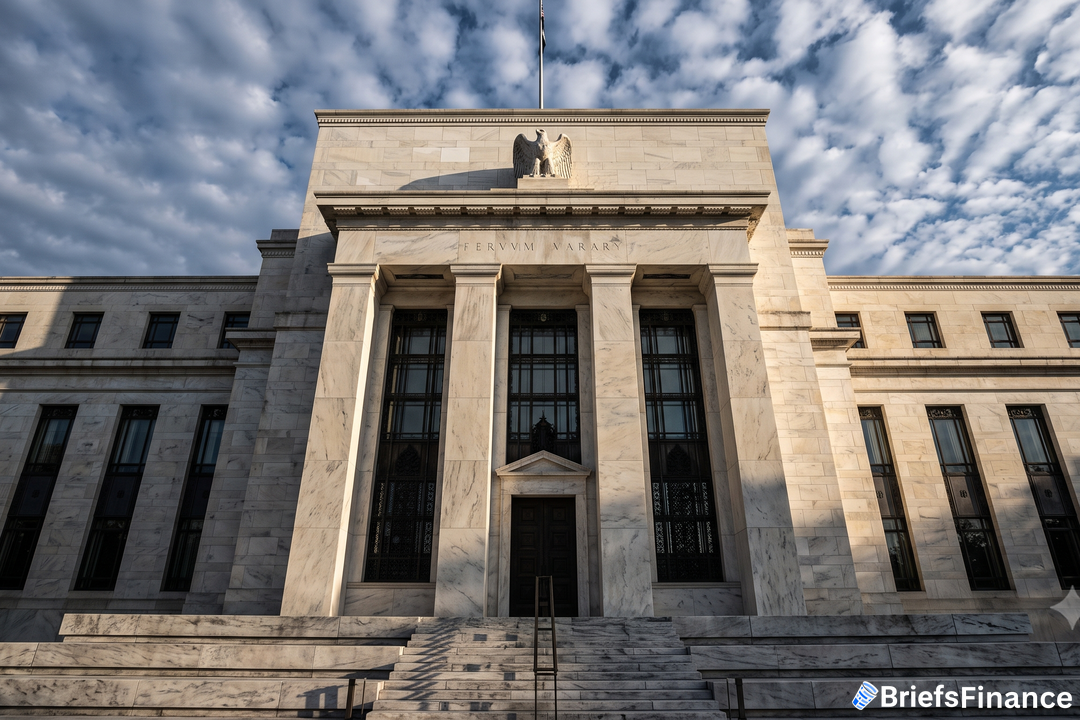
Warsh Makes His First Public Stand
Kevin Warsh spent his first day in the hot seat telling lawmakers exactly where he stands.
The new Federal Reserve chair appeared before the House Financial Services Committee on July 14 and delivered a clear message: the central bank will not tolerate persistently elevated inflation. Warsh declared that achieving correct monetary policy and bringing back price stability is the Fed's top priority.
"The Fed's number one objective is to get monetary policy right - or as near to it as we possibly can. That is our clear and constant aim, the star we steer by," he said. "And if we get policy right - and we will - the inflation surge of the last five years will be a thing of the past."
Warsh said concerns about inflation influenced that decision.
He told lawmakers that high inflation has been "an undue burden on American households and businesses."
Get the market news that matters in a five-minute read with Market Briefs, our free daily newsletter
"My colleagues and I have no tolerance for persistently elevated inflation," Warsh said. He also said the committee shares "a resolute commitment to restoring price stability."
Warsh also addressed the question of the Fed's independence. Lawmakers questioned him on his response should President Donald Trump target him or other officials to sway rate decisions. He stressed that the Federal Reserve operates independently, a status recently upheld by the Supreme Court.
"The Supreme Court said that the Federal Reserve and the conduct of monetary policy is independent. To the extent there were questions about it, the Court answered those questions," Warsh said, and further noted that if the president tried to dismiss him, he would still carry out his duties.
He proceeded to explain that his aim for the central bank is to eliminate any political influence.
"In my view, the two parts of the mandate are not in conflict. This is not an either or proposition. The more we can do to deliver low and stable prices, the more we can get it such that people aren't worried about inflation, the more employers are going to want to hire more workers," he explained.
The Fed, according to Warsh, pays close attention to both parts of its dual mandate - fostering full employment and maintaining price stability.
"You gave us a remit, we take both parts of it seriously," Warsh said. "As we look out the window now, the labor markets look to be in pretty good balance. We've got some work to do on the inflation front."
Additionally, committee members inquired about the rise of artificial intelligence, its economic effects, and potential dangers. He responded that it presents "perhaps the most significant change in our economy in my adult lifetime," and presents unique opportunities and challenges.
"It is not the job of the central bank to provide or be certain of what the consequences are over the next 12 or 24 months, but we recognize that the U.S. is likely to be a big winner. The United States is at the forefront of these technologies, both the human capital and the capital provided from investors are happening here. So the efficient frontier of these technologies are happening in the U.S.," he said.
"This is a benefit broadly to our economy, but I don't want to sound overly complacent about it," noting that AI technologies "offer threats when they find their way into adversary's hands," and observing that AI poses risks when adversaries obtain it, and that it will challenge the systems of the Fed and financial firms as malicious entities attempt to misuse the technology.
Join Market Briefs, our free daily newsletter, for a quick daily rundown of the markets