The folks who run the Bank for International Settlements, or BIS, are not exactly party poopers by nature. They are the central bank for central banks, the group that keeps an eye on the global financial system. So when they say a boom could turn into a bust, it is worth listening.
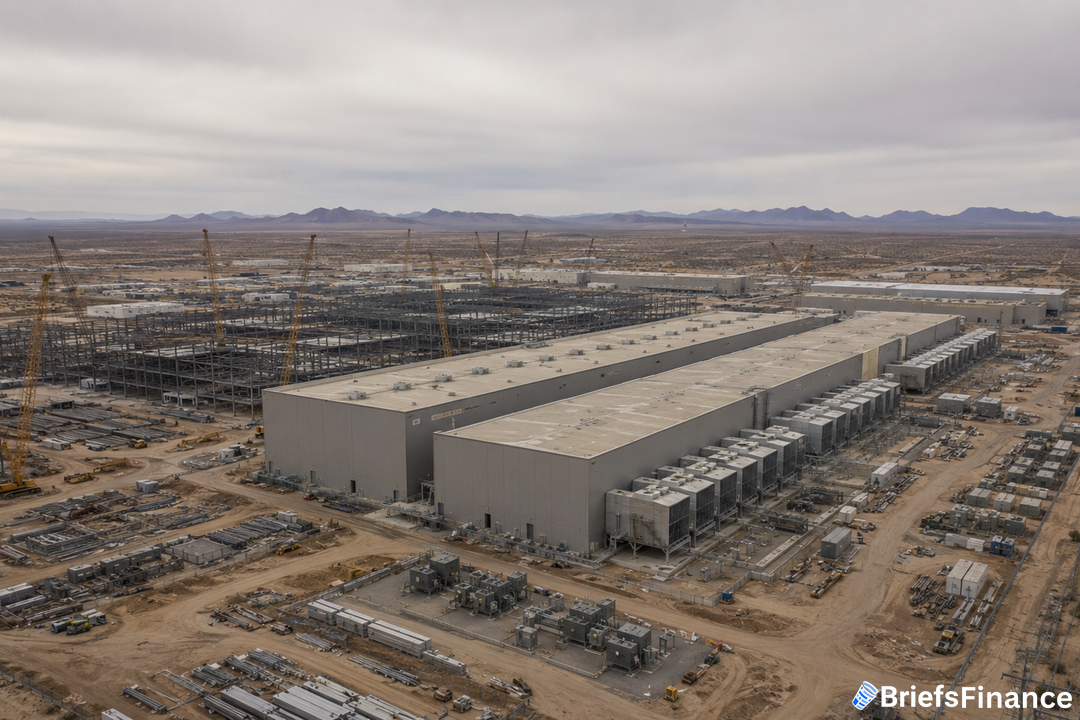
The BIS just published a study cautioning that the current AI infrastructure building spree will surpass all historical precedents - canals, railways, and the dotcom bubble - within three years.
The economist who wrote the study, Phurichai Rungcharoenkitkul, put it plainly: "The more capacity the sector builds, the higher the productivity bar it must clear to sustain the boom, so a larger boom is both more likely to disappoint and more damaging when it does."
How Debt Makes a Bad Situation Worse
The numbers here are not small. Projections from JPMorgan Chase and Goldman Sachs indicate that AI-related expenditures might reach nearly $6 trillion by 2030, largely funded through borrowing.
Get the market news that matters in a five-minute read with Market Briefs, our free daily newsletter
Here is the tricky part. In the AI industry, a market structure that favors a few dominant players means that while broad investment fuels advancement, the financial gains go mainly to a small set of winners. This situation pushes companies to overinvest, which makes the entire expansion more vulnerable.
Companies are also using complex financing. For instance, financing arrangements sometimes turn circular: firms that build cloud systems acquire equity in AI startups in return for promises to buy computing power.
The BIS study made a sharp point about this. "Rising leverage and more complex financing structures have raised questions about the financial stability risks of the current AI boom," wrote Rungcharoenkitkul. "The competition that over-builds the boom is also what selects the fragile financing that turns it into a bust."
Now, a warning from a central bank group does not mean the AI boom is over tomorrow. As Rungcharoenkitkul noted, "The potential demand for AI services is clearly vast and could justify a substantial expansion in computational power." Yet he added: "relative to its pre-boom trough, the current buildout is on track to outgrow every previous episode only three years in."
The study's author emphasized that the combination of high leverage, circular financing, and concentration of gains among a few players mirrors dynamics that preceded previous financial crises.
The BIS, as the central bankers' central bank, has historically flagged risks in rapid infrastructure booms. Its analysis draws on patterns from past bubbles - canals, railways, and the dotcom era - where heavy borrowing led to overcapacity and eventual crashes. The current AI buildout, with its reliance on debt and circular financing, echoes these earlier episodes, raising the stakes for global financial stability.
Join Market Briefs, our free daily newsletter, for a quick daily rundown of the markets