Free NewsletterPro Login

Warning: Undefined variable $stocks in /var/www/briefs.co/htdocs/wp-content/plugins/oxygen/component-framework/components/classes/code-block.class.php(133) : eval()'d code on line 448

Warning: foreach() argument must be of type array|object, null given in /var/www/briefs.co/htdocs/wp-content/plugins/oxygen/component-framework/components/classes/code-block.class.php(133) : eval()'d code on line 448

Warning: Undefined variable $funds in /var/www/briefs.co/htdocs/wp-content/plugins/oxygen/component-framework/components/classes/code-block.class.php(133) : eval()'d code on line 472

Warning: foreach() argument must be of type array|object, null given in /var/www/briefs.co/htdocs/wp-content/plugins/oxygen/component-framework/components/classes/code-block.class.php(133) : eval()'d code on line 472
/* the link was here */

Kenya Just Warned Its Citizens To Brace For Iran War Inflation

Published May 23, 2026
[tts_player]
Share:
Summary:
  • Kenya's senior cabinet minister Musalia Mudavadi warned Friday that fallout from the Iran war will fuel widespread inflation and threaten jobs.
  • Public transport fares in Kenya are already up roughly 25% after the country's energy regulator raised pump prices to record highs in April.
  • Kenya imports 100% of its refined petroleum and is in talks for a new IMF program by July to build buffers against more energy pain.

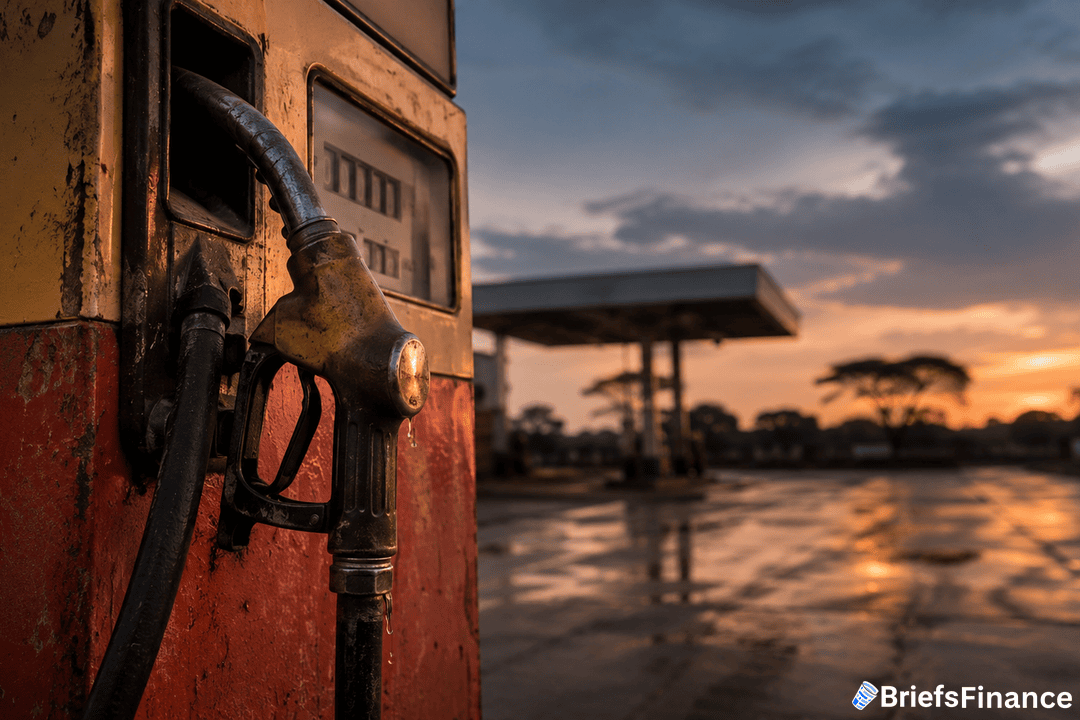
Kenya doesn't refine its own fuel. It buys all of what it burns from somewhere else, which means a war thousands of miles away ends up at every gas pump in Nairobi.

That's the setup for what Prime Cabinet Secretary Musalia Mudavadi told Kenyans on Friday. Tougher times are coming.

The Bill Is Already Showing Up

In April, Kenya's energy regulator raised fuel prices to record highs after Brent crude jumped above $100 a barrel.

Public transport operators responded the only way they could, by raising fares about 25% on commuters who rely on matatus and buses for the daily school and work runs.

Higher fares feed straight into the price of everything else - groceries, deliveries, the cost of moving goods between cities. That's how an oil shock becomes a grocery shock.

The April inflation print was already Kenya's hottest in two years, with the next one likely to come in hotter still. Mudavadi spelled out the chain - higher transport costs lead to higher factory costs, which lead to layoffs at firms that can't pass the bill on.

We unpack what shocks like this mean for your portfolio every weekday in Market Briefs - in five minutes, plus a free 45-minute investing masterclass when you sign up.

Why Kenya Is So Exposed

Kenya imports 100% of its refined petroleum, which leaves no domestic cushion when global prices jump.

The trigger this time is the US-Israeli war on Iran, which pushed Brent back above $100 and put the Strait of Hormuz under threat - the shipping lane that carries about a fifth of the world's oil.

Every dollar more on Brent makes the Kenyan shilling weaker against the dollar, since Nairobi has to send more currency out to buy the same amount of fuel.

That mix means hotter inflation, a thinner currency, and a finance minister with fewer good options than most. Kenya's debt service already eats roughly 70% of tax revenue, which leaves almost nothing in the budget for fuel subsidies that could soften the blow.

What Nairobi Is Doing About It

Mudavadi's warning came alongside a quieter pivot at the central government.

Kenya is in talks with the International Monetary Fund for a new program by July - basically a financial safety net to lean on if the energy bill keeps climbing.

Officials are now racing to lock in fresh support before more pump-price hikes drain reserves further.

The new program would likely come with the same trade-offs every IMF deal carries - cheaper foreign currency in exchange for tighter spending and higher taxes at home. That math is politically painful, but the alternative is a shilling that keeps weakening every week the war drags on.

What To Watch

The June 11 ECB meeting and any shift at the Strait of Hormuz will shape Kenya's next few months more than anything happening in Nairobi.

If oil holds above $100, Kenyan inflation isn't going back below target anytime soon, which means the IMF talks will get tougher, not easier.

The Iran war isn't a foreign news story for Kenyans anymore. It's at the pump.

Want more reads on how global news lands in your portfolio? Join 350,000+ investors getting Market Briefs and grab a free investing course as part of the deal.

Disclosure

Recent News

1 2 3 62

Get Market Briefs delivered to your inbox every morning for free!

No fluff. No noise. No politics. Just finance news you can read in 5 minutes.

Blogs

August 23, 2026
How to Get the Most From Your Guideline 401k
  • Guideline is a company that provides low-cost 401k plans, popular with small businesses and their employees.
  • A "Guideline 401k" follows the same core rules as any 401k: tax-advantaged growth, contribution limits, and often an employer match.
  • The biggest results come from capturing the full match, choosing low-cost funds, and picking Roth or traditional to fit your situation.
Read More
August 23, 2026
Principal 401k: What to Know About Your Plan
  • Principal is one of many companies that manage workplace 401k plans, so a "Principal 401k" is simply a 401k where Principal is the provider.
  • The rules of a 401k are the same no matter who runs it: pre-tax or Roth contributions, tax-advantaged growth, and often an employer match.
  • The biggest wins come from grabbing the full match, picking low-cost funds, and knowing whether Roth or traditional fits you.
Read More
August 23, 2026
What a Tariff Dividend Means for Your Money
  • A "tariff dividend" is the idea of taking money the government collects from tariffs and paying some of it back to citizens.
  • To judge the idea, you first need to know what a tariff is: a tax on imported goods, usually paid by the companies bringing them in.
  • Tariffs ripple through prices, businesses, and your investments, so the smart move is understanding those ripples, not just the headline.
Read More
August 23, 2026
No Tax on Overtime: How Overtime Pay Is Taxed
  • "No tax on overtime" refers to a tax break that lets certain workers deduct some overtime pay, lowering the income they get taxed on.
  • A deduction does not mean overtime is truly tax-free. It means part of that pay is subtracted before your tax is figured.
  • The bigger money lesson: how you earn money changes how it is taxed, and investors often get the friendliest treatment of all.
Read More
August 23, 2026
Reading the Silver Price Forecast for 2026
  • Nobody can honestly promise a specific silver price for 2026. Any exact number is a guess, so treat forecasts as opinions, not facts.
  • Silver is unusual because it is both a precious metal and an industrial metal, so its price answers to two very different forces.
  • Instead of chasing a forecast, learn the drivers - inflation, interest rates, recession fear, and industrial demand - so you can judge any prediction yourself.
Read More
August 23, 2026
What to Do When Reddit Stocks Go Viral
  • "Reddit stocks" usually means stocks getting hyped in online communities, where crowds can send a price soaring or crashing fast.
  • These tips can be entertaining and sometimes useful, but they are opinions, not research, and often come loaded with hype.
  • The safe move is to treat every online tip as a starting point, then do your own homework before risking a dollar.
Read More
August 23, 2026
Why Is Bitcoin Dropping Right Now?
  • Bitcoin drops for a mix of reasons: interest rates, big-picture money policy, regulation news, and simple shifts in how much risk investors want to take.
  • Bitcoin has a fixed supply and no earnings, so its price runs almost entirely on supply, demand, and sentiment.
  • Sharp drops are normal for bitcoin. Understanding the drivers matters more than reacting to any single day.
Read More
August 23, 2026
The Fidelity 500 Index Fund, Made Simple for Beginners
  • The Fidelity 500 Index Fund is a low-cost fund that tracks the S&P 500, an index of 500 large U.S. companies.
  • Buying it means owning a tiny slice of 500 businesses at once, which spreads your risk in a single purchase.
  • Index funds like this win over time mostly by keeping fees low and letting compounding do the work.
Read More
August 23, 2026
USA Penny Stocks: Risks and Rewards Explained
  • USA penny stocks are very low-priced shares of very small companies, often trading under $5 and sometimes under $1.
  • They dangle the dream of huge, fast gains, but carry brutal risks: low liquidity, wild swings, and high failure rates.
  • Most investors build wealth faster with quality companies and funds than by chasing cheap shares.
Read More
August 23, 2026
Finding Cheap Stocks to Buy Now Without Getting Burned
  • A low share price does not mean a stock is cheap. Real value compares the price to what the business is actually worth.
  • The best cheap stocks to buy now are quality companies trading below their true value, not the tiniest, riskiest shares on the market.
  • For most beginners, a low-cost index fund is the simplest "cheap" way to own great companies at once.
Read More
1 2 3 25
Share via
Copy link










