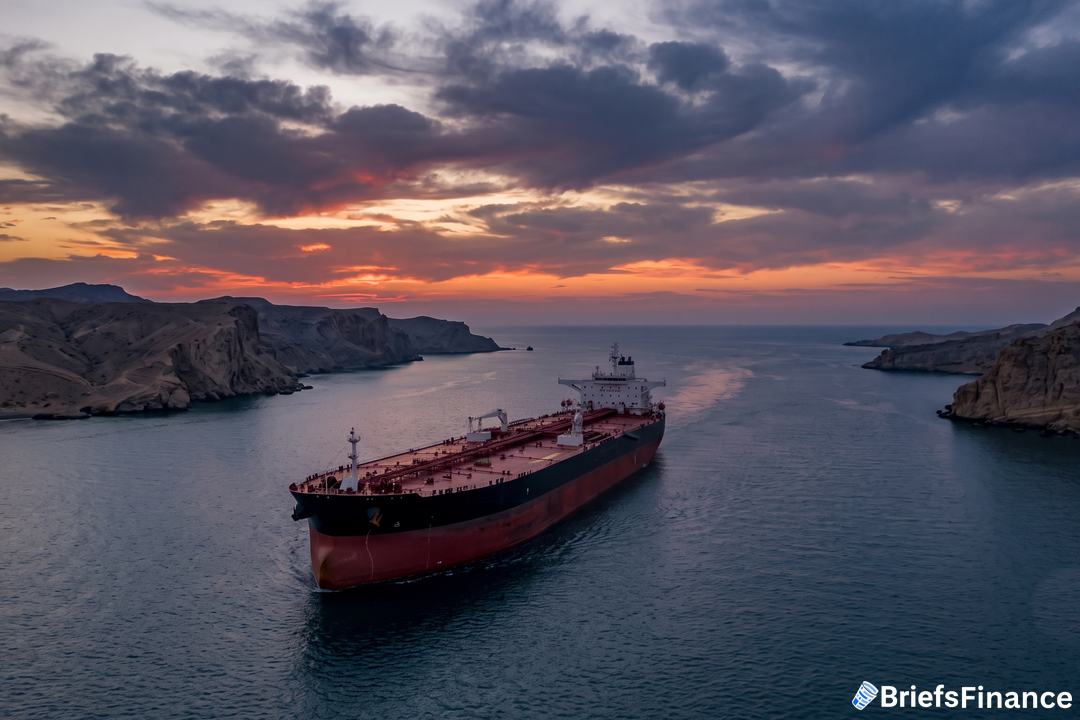
Tankers Are Stacking Up With No Place to Go
Russian crude volumes floating on tankers have returned to levels close to those reached early this year, as cargoes gather near Egypt's Mersa El-Hamra terminal and the Riau islands off Singapore.
During the week that ended July 12, 37 vessels took on 27.86 million barrels of crude from Russian terminals, down from 28.54 million on 39 ships the previous week. The daily average decreased to 3.98 million barrels from 4.08 million the prior week. However, around 1.9 million barrels daily sit on tankers without an indicated endpoint, with roughly 1.69 million barrels per day on ships leaving western Russian ports that list destinations including Port Said, Singapore, or the Suez Canal.
In June, Russia produced 8.93 million barrels daily, per data from OPEC. This output sits about 830,000 barrels per day under its OPEC+ quota.
Drone Strikes Are Forcing Oil Onto the Water
Ukrainian drone attacks have hit the Gazprom Neftekhim Salavat plant and the Afipsky facility. This barrage of attacks has driven Russian refinery throughput to its lowest point in over two decades for July. These strikes are probably pushing crude that domestic refineries cannot handle into foreign sales, raising seaborne exports even as overall output declines.
Get the market news that matters in a five-minute read with Market Briefs, our free daily newsletter
Prior to the conflict, approximately 600,000 barrels per day flowed via pipeline to European refineries, but that channel has largely disappeared, redirecting crude to tankers.
Cargoes are taking longer to clear. Off Egypt's Mediterranean shore at Mersa El-Hamra, five tankers laden with Urals crude sit at anchor. A further five vessels have stopped near the Riau islands, a known staging area for shadow fleet operations. Shipments of Sokol and Sakhalin Blend from Russia's eastern regions can languish for weeks before being transferred to deep-sea vessels, while certain ESPO cargoes remain idle near Kozmino port on the Pacific.
Prices Are Falling and Buyers Are Getting Nervous
In the four weeks through July 12, Urals crude exported from Baltic ports averaged $52.61 per barrel, a drop of roughly $7.20. Urals from the Black Sea averaged $52.13, also down about $7.20. Pacific ESPO crude fell $5.80 to an average of $67 a barrel.
In India, the delivered price declined for an 11th consecutive week, sinking $8.50 to $70.58 per barrel, the lowest since mid-March. All prices are from Argus Media.
Urals crude currently holds just over half the value it commanded in mid-April on the same metric. Nonetheless, export revenues remain above any period in the prior year.
Apparent flows to Asian buyers, counting vessels without a declared destination, increased to 4 million barrels daily in the 28 days through July 12, rising from a corrected 3.98 million in the previous period and setting a post-invasion record. Shipments heading to Chinese ports averaged 1.04 million barrels daily, down from a revised 1.1 million. Vessels bound for India carried about 1.05 million barrels per day, declining from 1.24 million. However, the tonnage on tankers without a disclosed endpoint has surged, enabling future adjustments to these trends.
Earlier in 2026, the prospect of US sanctions caused certain Indian refiners to avoid Russian crude, and this reluctance may reappear. A bipartisan Senate group claims it has struck a deal with the Trump administration to advance fresh sanctions against Russia.
Join Market Briefs, our free daily newsletter, for a quick daily rundown of the markets