Free NewsletterPro Login
S&P 500 6,287 +0.42%
DOW 44,521 -0.18%
NASDAQ 21,103 +0.71%
S&P 500 +12.4%
Briefs Finance Fund +24.8%
JOIN THE FUND →

The Fed Says Iran War Won't Cause Rate Hikes

Published Mar 30, 2026
[tts_player]
Share:
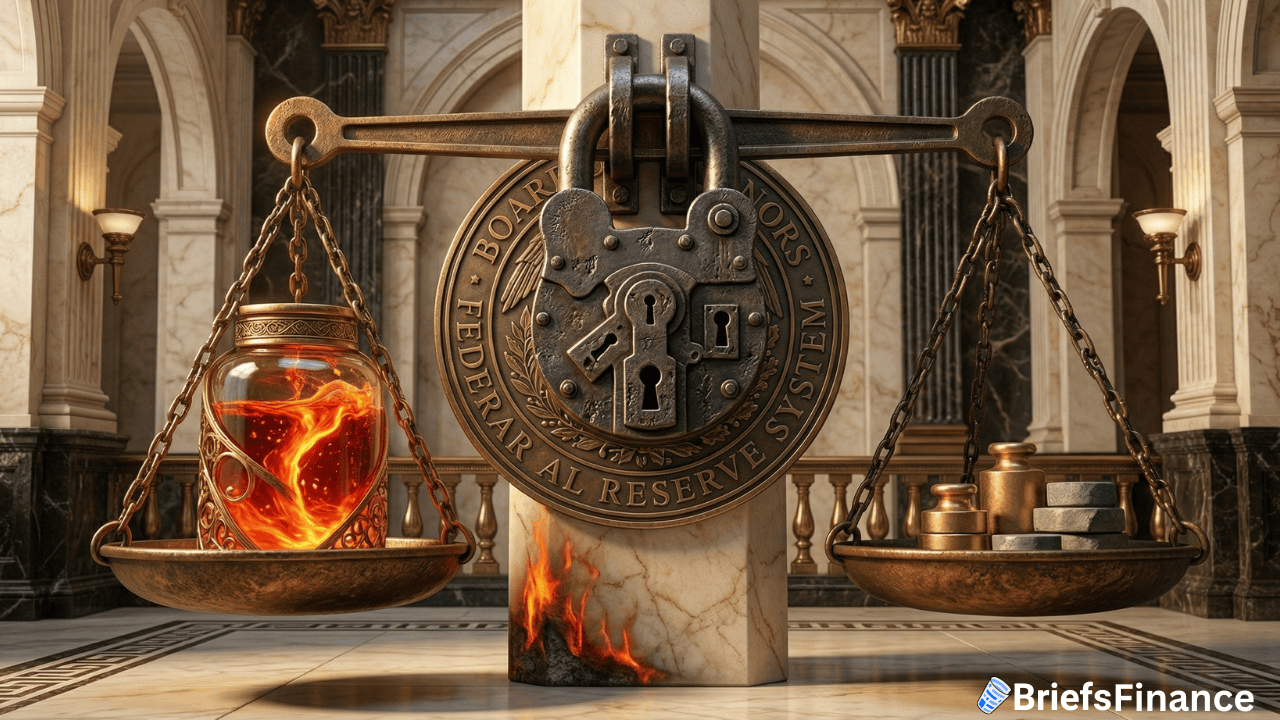
A large balance scale with a jar of swirling lava on one side and stacks of gold bars on the other, set in a grand marble hall with a Federal Reserve plaque—a dramatic scene symbolizing Fed rate hikes impacting global stability.
Summary:
  • Fed Chair Powell told a Harvard audience that inflation expectations remain steady despite surging energy costs from the Iran war.
  • Traders responded instantly: the chance of a rate increase by year-end dropped from above 50% on Friday to just 2.2% after his remarks.
  • Powell also addressed growing stress in the $3 trillion private credit market, saying the Fed sees no sign of the trouble spreading to the banking system.

Wall Street spent all last week pricing in a rate hike. By Monday afternoon, that trade was dead.

Fed Chair Jerome Powell spoke at Harvard and said what bond traders needed to hear - the central bank isn't going to chase oil prices with higher borrowing costs. The shift was instant. Treasuries jumped. Stocks climbed. And the odds of a 2026 rate increase basically vanished.

Why Powell Isn't Worried About Oil

A month into the Iran war, crude prices have spiked and fuel costs are dragging on consumers. That's the kind of thing that usually gets the Fed talking about tightening.

Powell took the opposite approach. He argued that jacking up rates now would only hurt the economy later - long after oil prices have cooled off. Rate changes take months to filter through the financial system. By the time higher rates actually bite, the energy shock could already be in the rearview mirror.

"The tendency is to look through any kind of a supply shock," he said. The Fed's current rate - sitting between 3.5% and 3.75% - gives policymakers enough room to wait and watch without rushing into action.

The Market Bought It

Before Powell's appearance, traders had put better-than-even odds on a quarter-point hike this year. That reflected real fear that oil-driven price spikes would force the Fed's hand.

Those bets collapsed in real time. By the end of the session, the probability of a December rate increase had fallen to just over 2%. Bond prices rallied - a clear sign investors believe the Fed is done tightening for now.

The bond market's own inflation gauge backs Powell up. The five-year breakeven rate - which measures what investors expect inflation to average over the next five years - was sitting near 2.56% and falling. That's not a market bracing for runaway prices.

Private Credit Gets a Warning Label

Powell also weighed in on the growing mess in private credit - the $3 trillion corner of finance where companies borrow directly from funds instead of banks.

Defaults are climbing. Some funds have frozen withdrawals. Investors are pulling cash.

Powell said the Fed is keeping a close eye on it but hasn't found the kind of links to the banking system that would turn a correction into a crisis. He was careful not to brush off the risk - but he made clear the Fed doesn't see a 2008-style chain reaction forming.

What to Watch

Powell's term wraps up in mid-May. His likely replacement, former Fed Governor Kevin Warsh, has signaled he'd prefer rates lower than where they are now. But Warsh's confirmation is stuck - held up by a Senate fight tied to an ongoing Justice Department probe into renovations at the Fed's headquarters.

Until that gets resolved, Powell stays in the chair. And his message on Monday was simple: the Fed isn't panicking over oil, it isn't raising rates, and it's keeping the private credit situation on a short leash.

For investors, that's the green light to stop worrying about a surprise rate hike - at least for now.

Disclosure

Recent News

1 2 3 30

Get Market Briefs delivered to your inbox every morning for free!

No fluff. No noise. No politics. Just finance news you can read in 5 minutes.

Blogs

June 29, 2026
Portfolio Diversification: Why Putting All Your Eggs in One Basket Destroys Wealth
  • Real diversification means spreading investments across all 11 economic sectors plus bonds, alternatives, and cash so no single bet can sink the portfolio.
  • Different sectors perform at different times, so a diversified portfolio captures upswings while smoothing the brutal drawdowns that wipe out concentrated bets.
  • Total market index funds offer the simplest path to diversification, and annual rebalancing is what keeps the structure working over time.
Read More
June 29, 2026
Non Taxable Income: What It Is and Why It Matters
  • Non taxable income is money you receive that you don't owe income tax on.
  • The tax code treats workers, investors, and business owners very differently, and investors often come out ahead.
  • Learning how income is taxed is a quiet superpower for keeping more of what you earn.
Read More
June 29, 2026
Semiconductor Stocks: A Simple Guide for Investors
  • Semiconductor stocks are companies that design and make computer chips, the brains inside nearly every modern device.
  • The AI boom has turned chips into one of the market's most important and most watched groups.
  • They offer big growth potential, but come with high valuations and a notoriously cyclical history.
Read More
June 25, 2026
How Stocks Work: A Simple Guide for Beginners
  • A stock is a slice of ownership in a company - buy one, and you own a piece of the business.
  • You make money two ways: the share price rising over time, and dividends paid to shareholders.
  • The simplest path for most beginners is buying into the whole market through a low-cost index fund.
Read More
June 25, 2026
Stop Loss vs Stop Limit: What's the Difference?
  • A stop loss order sells your stock once it hits a trigger price, prioritizing getting you out.
  • A stop limit order only sells within a price range you set, prioritizing price over a guaranteed exit.
  • The trade-off: a stop loss almost always executes; a stop limit might not if the price moves too fast.
Read More
June 25, 2026
Energy Stocks: A Simple Guide for Investors
  • Energy stocks are companies that produce and supply the power the world runs on, from oil and gas to newer sources.
  • They make up one of the 11 sectors of the market and tend to move with energy prices and big-picture shifts.
  • Like any sector, the key is diversification and understanding the forces driving demand.
Read More
June 18, 2026
What Is a Stop Loss Order? A Simple Guide
  • A stop loss order automatically sells a stock once it falls to a price you set.
  • It's a tool to cap losses or lock in gains without watching the market all day.
  • It works best for active strategies, and can backfire if used carelessly on long-term holdings.
Read More
June 18, 2026
Best S&P 500 Index Fund: How to Choose One
  • The best S&P 500 index fund for most investors is simply the cheapest, most established one that tracks the index well.
  • Funds like VOO, IVV, and SPY all hold the same 500 companies, so the biggest difference is the fee.
  • Pick one, automate your buys, and let time do the heavy lifting.
Read More
June 17, 2026
What Are Penny Stocks? Risks and Rewards Explained
  • Penny stocks are very low-priced shares of very small companies, often trading for just a few dollars or less.
  • They promise huge gains but carry huge risks: low liquidity, high failure rates, and wild price swings.
  • Most investors are better served by quality companies and funds than by chasing cheap shares.
Read More
June 17, 2026
Best Stocks for Beginners With Little Money
  • The best stocks for beginners with little money usually aren't individual stocks at all - they're low-cost index funds.
  • You can start with $100 or less and use small, regular investments to build wealth over time.
  • Focus on diversification and consistency, not on picking the next big winner.
Read More
1 2 3 24
Share via
Copy link










