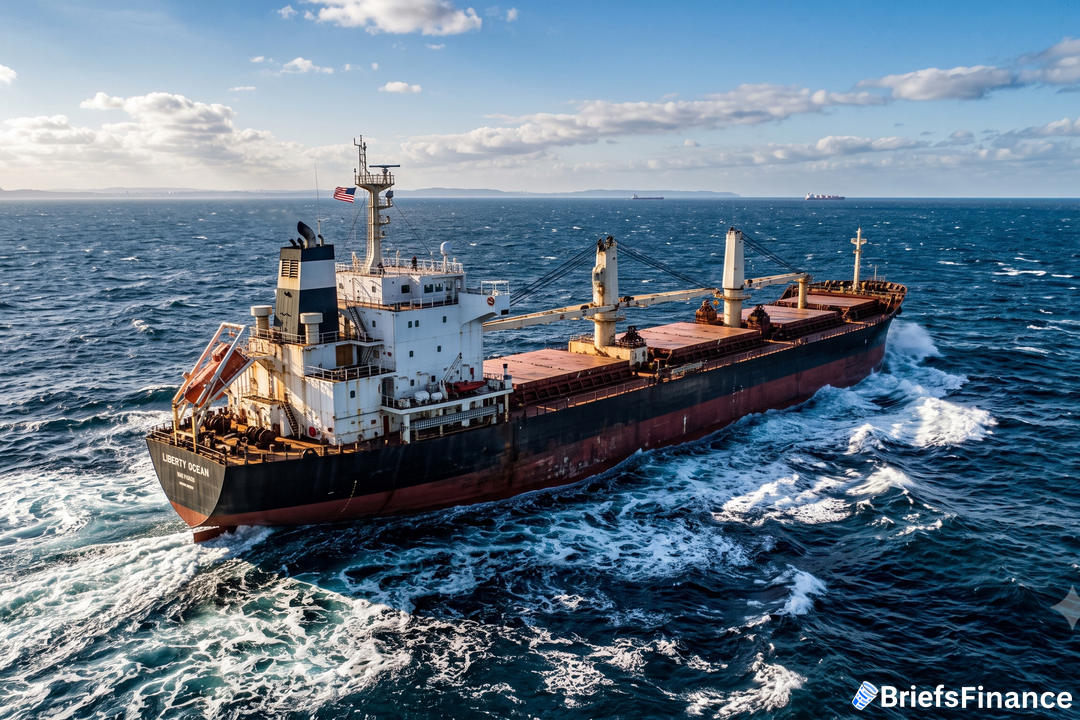
A US official said, "The increase since President Donald Trump signed an interim peace agreement/) with Iran represents a big jump in traffic since the war paralyzed flows."
The jump happened because US forces stepped in. An interim peace agreement signed by Trump with Iran ended the war that had paralyzed traffic.
Prior to the conflict, the strait carried about 20% of global oil and LNG, averaging 20 million barrels daily. Currently, 10 million barrels pass through each day along with another 5 million via alternate paths, bringing total flow near pre-war levels.
Get your free investing masterclass bonus when you join Market Briefs, our free daily newsletter
The unexpected volume of shipments has surprised Iranian leaders, highlighting their diminished capacity to disrupt the waterway. That has helped spark recent attacks around the strait, the US official said. The increase also saps Iran's oil leverage, as reflected in the headline of the Bloomberg report: "US Sees 10 Million Barrels Via Hormuz Sapping Iran Oil Leverage".
Iran is not giving up quietly. Iranian chief negotiator Mohammed Bagher Ghalibaf stated on state television, "Sovereignty over the corridor belongs to Iran and Oman." That claim clashes with the reality of expanded traffic. President Trump and Secretary of State Marco Rubio have stated, "Both tolls and maritime service fees would be unacceptable in a final deal."
This week, US envoy Steve Witkoff and Jared Kushner are participating in indirect negotiations in Qatar. Talks center on Iran's nuclear program and its influence over Hormuz traffic. Washington is urging Tehran to adhere to the maritime terms of the memorandum and to negotiate a permanent accord ensuring unrestricted commercial passage. The memorandum allows toll-free movement during the 60-day negotiation window, with future arrangements still open for debate.
Tehran has yet to agree publicly to Washington's conditions regarding the strait. Analysts caution that Iran may prolong negotiations due to economic and political factors, which could weaken Trump's ability to secure critical concessions.
The increased flow of oil through Hormuz gives the US and its allies a stronger hand. An anonymous US official said the shipping surge is sapping Iran's ability to threaten the waterway. Trump likened the circumstances to those faced by Herbert Hoover, the president in office when the 1929 crash set off the Great Depression. Bloomberg reporter Jennifer A Dlouhy covered the story.
Last week, Iran violated US measures by launching a drone strike against a Singapore-flagged container vessel, which damaged its bridge but resulted in no injuries. That attack triggered a series of retaliatory actions. Trump canceled additional strikes and allowed talks to continue, indicating his reluctance to invite further economic hardship.
Ships kept moving through the strait even after the strikes, reflecting greater faith in US defenses and Iran's constrained capabilities.
Subscribe to Market Briefs, our free daily newsletter, and claim your bonus investing masterclass