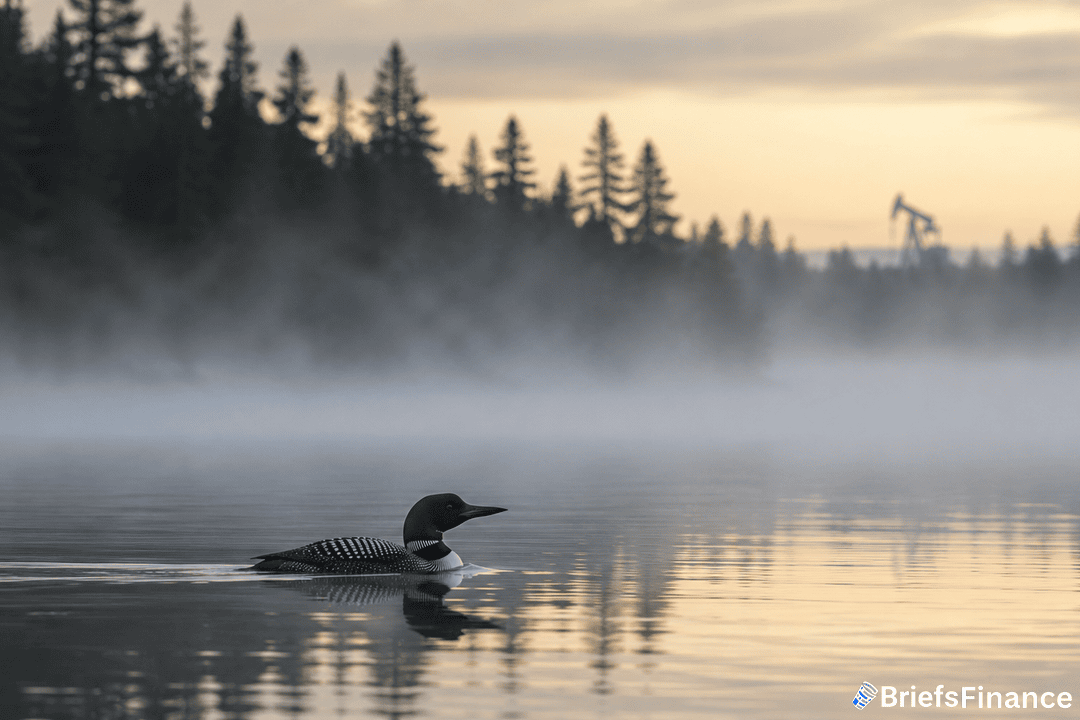
The loonie is the nickname for Canada's dollar, and right now it is falling fast against the greenback.
When money drops like this, the usual fix is to raise rates and make it worth more. But Bank of America thinks Canada will skip that step and let the loonie keep sliding into 2027.
What BofA Expects
Canada's central bank has held its main rate at 2.25%, a level it reached last year. It has done that for five meetings in a row, most recently on June 10.
The bank has pointed to high energy prices and snarled supply chains. It has also flagged the conflict in the Middle East.
BofA thinks the rate stays near there through most of 2027, even as prices stay high and growth stays soft. The bigger call, though, is on the loonie itself.
BofA expects Canada to simply let it weaken. That holds true even if the US starts raising its own rates.
We make sense of moves like this - rates, currencies, and your money - every morning in Market Briefs, and you get a free investing masterclass when you sign up.
Why The Loonie Is Falling
Two things are weighing on the loonie right now. The US dollar is climbing fast, and oil prices keep softening.
Oil matters a lot here, because Canada sells a great deal of it abroad. When crude gets cheaper, fewer dollars flow in, and the loonie drops along with it.
Add it all up, and the loonie hit about C$1.417 per US dollar this week. That is its weakest mark since April 2025.
Traders are also betting the US Fed will start raising rates soon. They are betting too that the new US-Iran peace deal holds, which has lifted the US dollar.
What A Weak Loonie Means
A cheap loonie is not all bad news for the country. It makes Canadian exports cheaper for buyers abroad.
But it makes imports cost more at home, from food to gas. Pricier imports can also feed inflation over time.
It can sting Canadians who travel or shop in US dollars, too. Their money simply does not stretch as far.
For investors, a falling currency can quietly eat into returns on holdings priced in other money. So the loonie's slide is worth watching, even from outside Canada.
What To Watch
The next Bank of Canada call lands July 15, its next big decision. That is the moment to see if BofA's read holds up.
Canadians will feel this in everyday ways, from grocery runs to summer trips south. A weaker loonie makes all of it pricier.
The gap between US and Canadian interest rates is the real driver here. The wider that gap grows, the more pressure builds on the loonie to fall.
BofA's bet is simple, that Canada can live with a weak loonie for two more years.
Curious how a weaker dollar could hit your portfolio? Sign up for Market Briefs and get a 45-minute investing course thrown in.