Free NewsletterPro Login
S&P 500 6,287 +0.42%
DOW 44,521 -0.18%
NASDAQ 21,103 +0.71%
S&P 500 +12.4%
Briefs Finance Fund +24.8%
JOIN THE FUND →

Regulations Now Add $132,000 To Every New Home

Published Jun 18, 2026
Share:
Summary:
  • The NAHB puts the regulatory cost baked into a typical new single-family home at $131,734, equal to 26.4% of the average sale price.
  • That figure has risen 40% since 2021, outpacing home prices, wages, and most other construction costs over the same period.
  • Builder sentiment sits at 35 in June, the 14th straight month below 40, as 35% of builders cut prices and 62% offered incentives last month.

35% of builders cut prices last month and 62% tossed in incentives - the heaviest discounting since the post-pandemic slowdown began. Sales are still soft, and the problem isn't what builders control - it's a $131,734 regulatory cost baked into every home before the first nail goes in.

The $132,000 Floor Under Every New Home

The National Association of Home Builders ran the numbers and landed on $131,734. That's the amount federal, state, and local rules add to a typical new single-family home - 26.4% of the final price tag.

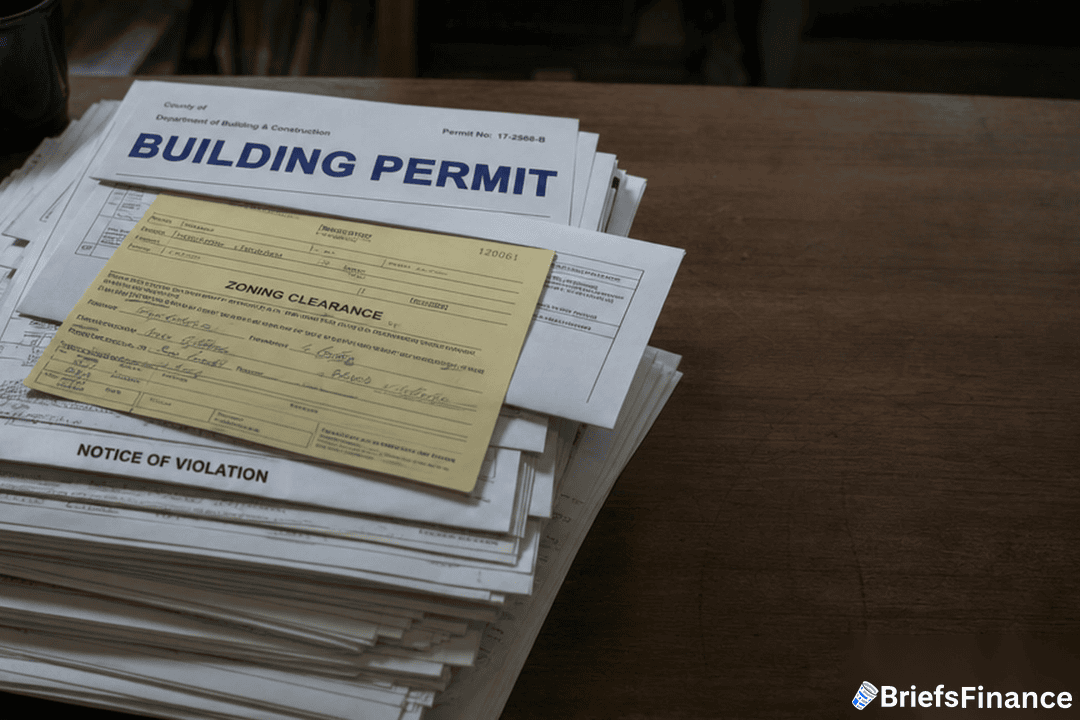
For context, the average new home sold for $499,500 in January, per Census Bureau data. More than a quarter of that price goes toward zoning approvals, permit fees, building code requirements, environmental and traffic studies, and the delays tied to all of it.

To put $131,734 in plain terms: it's more than the entire 20% down payment on the average new home. The rules now add more to the price than the cash most buyers need at closing - all before they ever pick paint colors.

Want to know which housing names are positioned to gain when supply finally loosens? Market Briefs breaks it down in five minutes every morning - and you get a free investing masterclass when you join.

Up 40% In Five Years

The same regulatory cost stood at $93,870 in 2021. That's a 40% jump in five years - faster than home prices, faster than wages, and faster than most other construction costs.

Building code changes alone account for $40,288 of the total over the past decade. Those rising standards show up clearly in builder behavior, where 94% of developers said the rules cause project delays - delays that pile on cost as labor sits idle and financing meters keep running.

Another 88% said they're being pushed to build to standards beyond what they'd otherwise choose. That pressure helps explain why NAHB Chairman Bill Owens puts the national housing shortage at 1.2 million homes.

That gap sets the floor for everything downstream, from resale prices to rents. Each regulatory dollar in that gap rolls into the down payment, the mortgage size, and the monthly payment buyers carry long after closing day.

What To Watch

Builder sentiment sits at 35 in June, marking the 14th straight month below 40. With confidence that low, builders are leaning on the only tools they have - price cuts, incentives, and hope that buyers bite.

The catch: discounting has a floor, and the $132,000 in regulatory cost is one builders can't drop below.

Pulling it down requires action from the governments that built it in the first place, and five years of 40% growth suggests that floor isn't shrinking anytime soon.

Until then, builders will keep working the only lever they have, and buyers will keep paying prices set as much by paperwork as by lumber and labor.

If you want this kind of read on the housing market every morning, join 350,000+ investors reading Market Briefs - a 45-minute investing course is thrown in as a bonus.

Disclosure

Get Market Briefs delivered to your inbox every morning for free!

No fluff. No noise. No politics. Just finance news you can read in 5 minutes.

Blogs

June 18, 2026
What Is a Stop Loss Order? A Simple Guide
  • A stop loss order automatically sells a stock once it falls to a price you set.
  • It's a tool to cap losses or lock in gains without watching the market all day.
  • It works best for active strategies, and can backfire if used carelessly on long-term holdings.
Read More
June 18, 2026
Best S&P 500 Index Fund: How to Choose One
  • The best S&P 500 index fund for most investors is simply the cheapest, most established one that tracks the index well.
  • Funds like VOO, IVV, and SPY all hold the same 500 companies, so the biggest difference is the fee.
  • Pick one, automate your buys, and let time do the heavy lifting.
Read More
June 17, 2026
What Are Penny Stocks? Risks and Rewards Explained
  • Penny stocks are very low-priced shares of very small companies, often trading for just a few dollars or less.
  • They promise huge gains but carry huge risks: low liquidity, high failure rates, and wild price swings.
  • Most investors are better served by quality companies and funds than by chasing cheap shares.
Read More
June 17, 2026
Best Stocks for Beginners With Little Money
  • The best stocks for beginners with little money usually aren't individual stocks at all - they're low-cost index funds.
  • You can start with $100 or less and use small, regular investments to build wealth over time.
  • Focus on diversification and consistency, not on picking the next big winner.
Read More
June 16, 2026
Tech Stocks: A Simple Guide for New Investors
  • Tech stocks are companies in the information technology and related sectors, from software to chips to the internet giants.
  • They've driven much of the market's growth, but they can be volatile and richly valued.
  • The smart approach is to understand what you own and not let one sector run your whole portfolio.
Read More
June 16, 2026
What Is a Joint Stock Company? A Simple Guide
  • A joint stock company is a business owned by many people, each holding shares of stock that represent a slice of ownership.
  • It's the basic idea behind every public company you can buy on the stock market today.
  • Owning a share makes you a part-owner, entitled to a piece of the profits and growth.
Read More
June 16, 2026
Capital Gains Tax in California: A Simple Guide
  • Capital gains tax is what you owe when you sell an investment for more than you paid for it.
  • How long you held it matters: long-term gains are taxed more gently than short-term gains at the federal level.
  • Smart investors lower the bill with tools like tax-loss harvesting and holding for the long run.
Read More
June 15, 2026
Top Covered Call ETFs: How to Compare Them
  • Top covered call ETFs are income funds that own stocks and sell call options against them to generate steady cash.
  • The best one for you is the fund whose income, holdings, and fees fit your goals, not simply the one with the flashiest yield.
  • They all share one trade-off: more income today, less upside in a big rally.
Read More
June 15, 2026
What Are Stock Options? A Plain-English Guide
  • Stock options are contracts that give you the right, but not the obligation, to buy or sell a stock at a set price by a set date.
  • There are two kinds: calls (the right to buy) and puts (the right to sell).
  • Options can multiply gains or wipe out your money fast, so they suit investors who already know the basics.
Read More
June 15, 2026
EBITDA Margin: What It Is and How to Calculate It
  • EBITDA margin measures how much core profit a company keeps from each dollar of sales, before interest, taxes, and accounting deductions.
  • The formula is EBITDA divided by revenue, shown as a percent.
  • A higher, steadier EBITDA margin usually signals a more efficient, more durable business.
Read More
1 2 3 23
Share via
Copy link











