Free NewsletterPro Login
S&P 500 6,287 +0.42%
DOW 44,521 -0.18%
NASDAQ 21,103 +0.71%

Warning: Undefined variable $funds in /var/www/briefs.co/htdocs/wp-content/plugins/oxygen/component-framework/components/classes/code-block.class.php(133) : eval()'d code on line 491

Warning: foreach() argument must be of type array|object, null given in /var/www/briefs.co/htdocs/wp-content/plugins/oxygen/component-framework/components/classes/code-block.class.php(133) : eval()'d code on line 491
/* the link was here */

Pipeline Boom Puts Canada's Condensate Supply Under the Spotlight

Published Aug 4, 2026
[tts_player]
Share:
canada condensate pipeline boom
Summary:
  • Alberta's planned 1-million-bpd pipeline to the BC coast could support around 2 million bpd of extra heavy-oil output over the next decade.
  • Whitecap's CEO says new oil growth could need half a million bpd of added condensate, about double Canada's current production.
  • Canada already imports about a third of its condensate from the US, and that reliance is expected to grow.

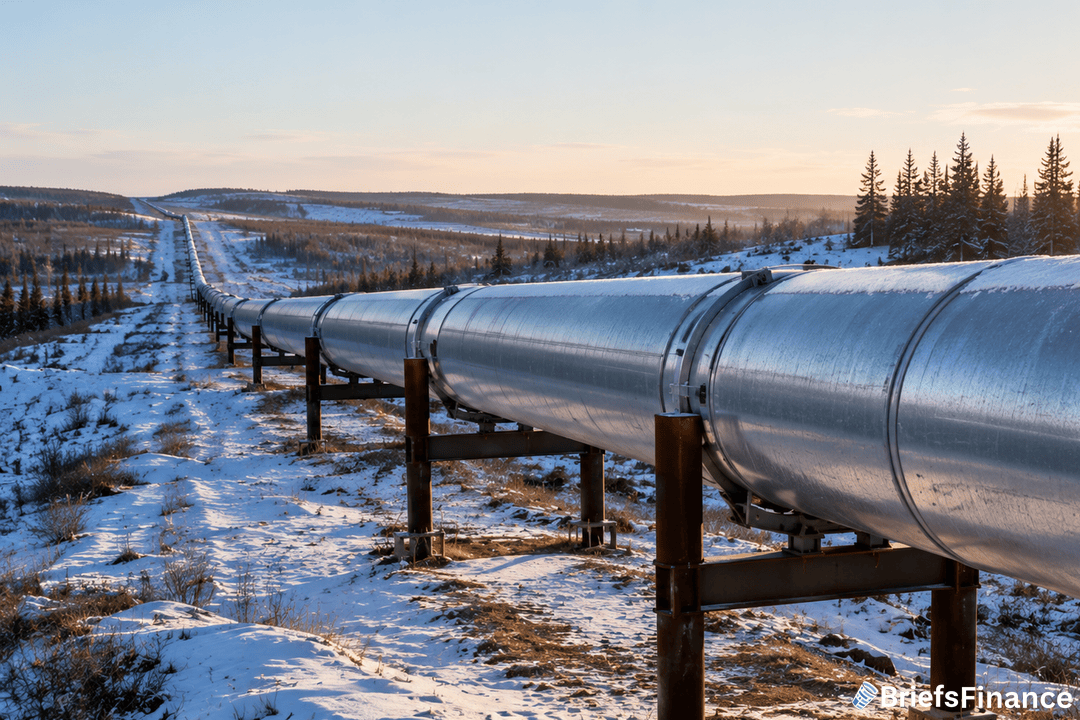
Canada is getting ready to move a lot more oil. The catch is the oil needs a secret ingredient to flow, and the country does not make nearly enough of it.

That ingredient is condensate, an ultralight oil used to thin out heavy bitumen so it can flow through pipelines. Without it, the heavy stuff from Alberta's oil sands basically refuses to move.

The Quiet Ingredient Behind a Big Oil Bet

The oil sands in Western Canada are massive.

So when Canada expands its pipeline capacity, it needs more than just oil. It needs condensate, and a lot of it.

The growth would be welcome news for producers, but it creates a problem: the stuff that makes the oil flow.

Grant Fagerheim, CEO of Whitecap Resources, put it plainly to analysts last week. "There needs to be much more condensate if we're going to grow our heavy oil volumes by 1 million to 2 million barrels a day."

Who's Rushing to Fill the Gap

Homegrown supply is mostly tied to shale-gas zones such as the Montney and Duvernay formations along the Alberta-B.C. border. Large producers there include Whitecap, Tourmaline Oil, Cenovus Energy, and Canadian Natural Resources.

Get the free Always Be Buying eBook and learn the simple system for building wealth on any income

Whitecap is already the country's fourth-largest condensate producer, and it sees room to grow. Fagerheim estimated the company's output could eventually rise by up to 50,000 barrels a day from today's 60,000. His colleague, Whitecap president Joey Wong, added that about 70% of its unconventional properties are capable of producing condensate.

Enbridge's president of liquid pipelines, Colin Gruending, told investors on a Friday earnings call that the math does not work without outside help. "Domestic supply condensate will be insufficient and we'll need to import more," he said.

Pembina is taking its own approach, expanding in northeast British Columbia. CEO Scott Burrows said condensate has "fairly significant running room" to grow.

Prices Are Already Moving

Condensate in Alberta has traded about $1.71 below the monthly average price of West Texas Intermediate, the US benchmark. But in March, when Middle East supplies were disrupted, condensate spiked to a $10-per-barrel premium to WTI.

That is a direct hit to the pocketbooks of oil-sands producers who suddenly had to pay much more for the stuff they need to move their product.

That volatility is shaping how companies behave. Tourmaline has actually postponed some gas output and development because gas prices are weak. But CEO Michael Rose sees the condensate side of the business getting better. "We're seeing much more potential for strength in condensate pricing with the build-out of the oil sands projects and the attention to oil pipelines," he said. He called it a "meaningful cash flow driver."

Cenovus sees the same dynamic from the buyer's side. Jeff Lawson, the company's corporate development chief, said disciplined oil-sands growth would push condensate prices higher to attract more supply. Cenovus CEO Jon McKenzie said the company uses roughly 12 times as much condensate as it produces, which gives you a sense of how dependent the whole system is on this one ingredient.

What It Means for Your Portfolio

For everyday investors, the story here is about where the money will flow over the next several years. The pipeline buildout is not a maybe.

That creates two big investment themes. The first is the oil producers themselves, because a wider pipeline means they can sell more product and pay for it with condensate. The second is the condensate suppliers, who are about to become a lot more important in a system that cannot grow without them.

As these new pipelines fill up, watch the companies that make the heavy oil flow. They are not the most obvious names in the energy world, but they are becoming the ones that matter.

Download the free Always Be Buying eBook and start putting your money to work today
Disclosure

Recent News

1 2 3 48

Get Market Briefs delivered to your inbox every morning for free!

No fluff. No noise. No politics. Just finance news you can read in 5 minutes.

Blogs

June 29, 2026
Portfolio Diversification: Why Putting All Your Eggs in One Basket Destroys Wealth
  • Real diversification means spreading investments across all 11 economic sectors plus bonds, alternatives, and cash so no single bet can sink the portfolio.
  • Different sectors perform at different times, so a diversified portfolio captures upswings while smoothing the brutal drawdowns that wipe out concentrated bets.
  • Total market index funds offer the simplest path to diversification, and annual rebalancing is what keeps the structure working over time.
Read More
June 29, 2026
Non Taxable Income: What It Is and Why It Matters
  • Non taxable income is money you receive that you don't owe income tax on.
  • The tax code treats workers, investors, and business owners very differently, and investors often come out ahead.
  • Learning how income is taxed is a quiet superpower for keeping more of what you earn.
Read More
June 29, 2026
Semiconductor Stocks: A Simple Guide for Investors
  • Semiconductor stocks are companies that design and make computer chips, the brains inside nearly every modern device.
  • The AI boom has turned chips into one of the market's most important and most watched groups.
  • They offer big growth potential, but come with high valuations and a notoriously cyclical history.
Read More
June 25, 2026
How Stocks Work: A Simple Guide for Beginners
  • A stock is a slice of ownership in a company - buy one, and you own a piece of the business.
  • You make money two ways: the share price rising over time, and dividends paid to shareholders.
  • The simplest path for most beginners is buying into the whole market through a low-cost index fund.
Read More
June 25, 2026
Stop Loss vs Stop Limit: What's the Difference?
  • A stop loss order sells your stock once it hits a trigger price, prioritizing getting you out.
  • A stop limit order only sells within a price range you set, prioritizing price over a guaranteed exit.
  • The trade-off: a stop loss almost always executes; a stop limit might not if the price moves too fast.
Read More
June 25, 2026
Energy Stocks: A Simple Guide for Investors
  • Energy stocks are companies that produce and supply the power the world runs on, from oil and gas to newer sources.
  • They make up one of the 11 sectors of the market and tend to move with energy prices and big-picture shifts.
  • Like any sector, the key is diversification and understanding the forces driving demand.
Read More
June 18, 2026
What Is a Stop Loss Order? A Simple Guide
  • A stop loss order automatically sells a stock once it falls to a price you set.
  • It's a tool to cap losses or lock in gains without watching the market all day.
  • It works best for active strategies, and can backfire if used carelessly on long-term holdings.
Read More
June 18, 2026
Best S&P 500 Index Fund: How to Choose One
  • The best S&P 500 index fund for most investors is simply the cheapest, most established one that tracks the index well.
  • Funds like VOO, IVV, and SPY all hold the same 500 companies, so the biggest difference is the fee.
  • Pick one, automate your buys, and let time do the heavy lifting.
Read More
June 17, 2026
What Are Penny Stocks? Risks and Rewards Explained
  • Penny stocks are very low-priced shares of very small companies, often trading for just a few dollars or less.
  • They promise huge gains but carry huge risks: low liquidity, high failure rates, and wild price swings.
  • Most investors are better served by quality companies and funds than by chasing cheap shares.
Read More
June 17, 2026
Best Stocks for Beginners With Little Money
  • The best stocks for beginners with little money usually aren't individual stocks at all - they're low-cost index funds.
  • You can start with $100 or less and use small, regular investments to build wealth over time.
  • Focus on diversification and consistency, not on picking the next big winner.
Read More
1 2 3 24
Share via
Copy link











