Free NewsletterPro Login

Warning: Undefined variable $stocks in /var/www/briefs.co/htdocs/wp-content/plugins/oxygen/component-framework/components/classes/code-block.class.php(133) : eval()'d code on line 448

Warning: foreach() argument must be of type array|object, null given in /var/www/briefs.co/htdocs/wp-content/plugins/oxygen/component-framework/components/classes/code-block.class.php(133) : eval()'d code on line 448

Warning: Undefined variable $funds in /var/www/briefs.co/htdocs/wp-content/plugins/oxygen/component-framework/components/classes/code-block.class.php(133) : eval()'d code on line 472

Warning: foreach() argument must be of type array|object, null given in /var/www/briefs.co/htdocs/wp-content/plugins/oxygen/component-framework/components/classes/code-block.class.php(133) : eval()'d code on line 472
/* the link was here */

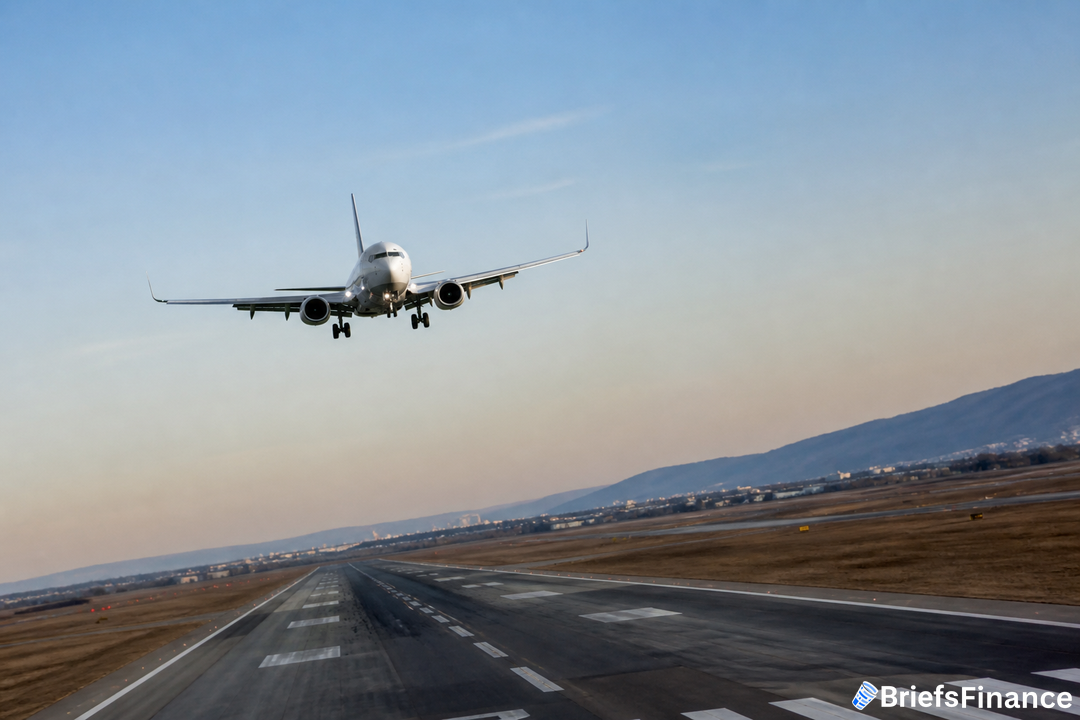
FlyDubai 737 Max plunged in a near-vertical dive and still landed safely. Here is what we know

Published Oct 3, 2026
Share:
Summary:
  • After a cockpit attack on Sept. 30, Flight 1073 dove, surged upward, then plunged again before landing in Tabuk, Saudi Arabia.
  • Preliminary FlightRadar24 data shows a peak descent rate above 32,000 feet per minute and a top speed near 690 mph, with flight-path visuals also published by FlightAware.
  • A test pilot's insights and the jet's design suggest multiple backup layers and a dose of luck helped spare the more than 170 people onboard, while US President Donald Trump applauded Boeing's design online.

Inside the chaos on Flight 1073

What started as a shocking fight on the flight deck turned into a full-blown emergency. Early indications are that the co-pilot assaulted the captain, the jet pitched downward, then climbed sharply, and then dropped again as control of the cockpit swung back and forth.

People seated up front sprinted to the cabin door and helped subdue the attacker, easing the rapid fall. Israeli Prime Minister Benjamin Netanyahu said the captain, after being stabbed, managed to unlock the cockpit door from the inside to call for help. Passengers stepped in, and off-duty pilots who were on the flight then assumed control.

In a video posted by Netanyahu's office, a passenger who says he was first into the cockpit, identified as Yaniv Hayun, recounts pulling the assailant away from the captain and hauling back on the controls to slow the dive. He said he knew to try that because he watches the National Geographic series Air Crash Investigation.

From his hospital bed, FlyDubai Captain Smit Machchhar spoke by phone with Indian Prime Minister Narendra Modi. "I've been a pilot for 17 years, I've been a captain for the past 11 years, I know what's happening in a flight even with my eyes closed," he said, adding, "When I was on the ground, I realized that the aircraft is going down. And I told myself, 'This is the last push, Smit. The door is right there.'"

The jet's extreme dive and reported damage

FlightRadar24's initial data indicate the 737 Max pitched into an exceptionally steep descent, with its downward rate surpassing 32,000 feet per minute. The tracker also showed the aircraft peaking around 690 mph during the drop, a speed nearing the local sound barrier at that height.

When the aircraft later landed in Tabuk, unverified images on social media appeared to show part of the rudder missing. Any hit to a control surface like the rudder can dramatically alter how a plane flies and can put everyone on board at risk.

Former US Federal Aviation Administration pilot Bob Stoney ran flight testing for several Boeing programs, including the 737-900ER, and later oversaw the Max family's return to airline operations following two fatal crashes in the previous decade. He said certification requires demonstrating controllability for a jammed rudder, but not for a section that has broken away. Aerodynamically, he said, a jam and a loss of the surface can be similar for pilots because both scenarios demand flying as if the rudder is gone. He also noted the rudder's importance grows during landing, and attempting to land without it in strong crosswinds is especially difficult, while losing a wing or a tail flap would be even more challenging in any phase of flight.

Aviation safety stories move airline stocks, insurers, and manufacturers within hours. Market Briefs connects those dots free every morning.

Why the airplane stayed in one piece

Investigators are still piecing together the full picture. However, discussions with a test pilot alongside an examination of the 737 Max's design suggest that multiple layers of redundancy - and likely a bit of luck - were crucial in allowing the aircraft, and everyone on it, to reach the ground safely.

When manufacturers certify a new jet, they fly it in conditions well outside normal operations to show it can withstand the unexpected. There are also brutal ground tests, like bending wings until they fail. As Stoney put it: "Why do you test out there? The answer is because of the potential for inadvertent exceedances of those limits."

Federal rules require big passenger planes to be proven at speeds above their published normal maximum operating limit. For a 737 Max 8, that limit is about 630 miles, or 1,000 kilometers, per hour, though it varies with altitude and weather, according to the FAA. The punishing pullout from a dive like Flight 1073's likely subjected passengers to intense g-forces more commonly felt by fighter pilots and astronauts.

The jet itself is the newest, more efficient version of a single-aisle workhorse first green-lit in the 1960s, updated with modern engines and avionics. Its cockpit uses two horn-style yokes at the center for control inputs. By contrast, Airbus's A320 family is flown with side-mounted sticks, which might be less intuitive to a layperson in a crisis.

US President Donald Trump chimed in online with praise for Boeing's design after the plane's safe landing.

Echoes from past close calls, and what to watch next

Aviation has plenty of stories where overlapping safety systems prevented disaster - and others where chance made the difference. The best known is 2009's "Miracle on the Hudson," when a US Airways A320 glided into the river after both engines failed from bird strikes, and all 155 people survived. The US National Transportation Safety Board wrote in its final report, "Consequently, this accident has been portrayed as a 'successful' ditching." It added that success "mostly resulted from a series of fortuitous circumstances," including the captain's nearly 20,000 hours of flight time, extra slides and life rafts onboard, and a landing spot close to large boats that arrived quickly. The board also cautioned, "The investigation revealed several areas where safety improvements are needed."

For Flight 1073, authorities are still confirming the sequence of events and the full extent of any structural damage. Tracking sites including FlightAware and FlightRadar24 have shared path and performance visuals with timestamps tied to local time in Saudi Arabia. The through-line for your wallet is straightforward: official findings on how the jet handled those extreme loads, what failed and what held, and how crews and passengers responded will shape future safety steps and reputational fallout for airlines and manufacturers.

The plane endured a violent cockpit attack, extraordinary forces in flight, reported rudder damage, and still landed in Tabuk with more than 170 people aboard. Now comes the hard part: the detailed investigation.

Incidents like this ripple through Boeing, carriers, and the insurers behind them. Get the free Market Briefs daily newsletter and see the full picture.

Disclosure

Recent News

1 2 3 … 92

Get Market Briefs delivered to your inbox every morning for free!

No fluff. No noise. No politics. Just finance news you can read in 5 minutes.

Blogs

October 2, 2026
Fed Interest Rates May Rise Again in 2026 - and the Newest Culprit Is AI
  • Fed Governor Barr told a meeting our head of investing research attended that higher rates are likely in 2026, lower inflation may not come soon, and AI is now pushing prices up.
  • The same week, President Trump asked the biggest AI companies to police themselves under an accord that's morally but not legally binding, because the White House sees AI as a race with China.
  • Higher rates put downward pressure on asset prices and squeeze borrowers, but the way through hasn't changed: own investments, buy on a schedule, and treat downturns as discounts.
Read More
October 1, 2026
Housing Market 2026: Why Office Buildings Are Cracking Before Houses Do
  • Office buildings are selling for 80% to 95% off because their five-year loans are resetting at much higher rates while half-empty floors have gutted the income those buildings are valued on.
  • Housing is under pressure, not cracking: a $400,000 mortgage costs $975 more a month than at 3%, but six of every seven mortgages are still under 6% and those owners are staying put.
  • Whether pressure turns into cracks is a race between unaffordability and the economy, and either way Jaspreet's rule is to treat your house as a liability and buy only what you can afford.
Read More
September 30, 2026
Dividend Investing vs. Growth Investing: Why the Slower Portfolio Can End Up Bigger
  • "What stock should I buy?" is the wrong first question. Growth, income, or wealth preservation comes first, and the goal changes which stocks even make sense.
  • At $500 a month for 30 years, 13% growth builds about $1.75 million. 10% growth plus a reinvested 4% dividend builds a little more than $2.2 million and pays a little more than $80,000 a year.
  • Income investors have US dividend ETFs, REITs, and international dividend funds to study. Growth investors have the Nasdaq 100, AI and chip funds, and small caps. None of it is a recommendation.
Read More
September 29, 2026
Why Is Gold Going Down? A 5.2% Treasury Yield Just Took Its Job
  • President Trump rejected Iran's deal to reopen the Strait of Hormuz, oil prices jumped back up, and gold fell instead of rising.
  • Treasury yields hit their highest level in more than 20 years, so investors sold gold and bought Treasuries that pay interest.
  • Higher Treasury yields make the national debt, mortgages, car loans, and credit cards more expensive, with the Fed's next rate decision due October 28.
Read More
September 28, 2026
The Strategic Bitcoin Reserve: Why the Government Wants Bitcoin to Explode
  • The US government holds about 328,000 Bitcoin, worth roughly $25 billion, and since a 2025 executive order it keeps seized coins instead of selling them.
  • Washington wants a bigger pile of assets so its $40 trillion national debt looks smaller next to them, which lets it keep borrowing and spending.
  • Bitcoin's wild price swings, and a government holding a coin built to escape governments, are the two risks investors need to watch.
Read More
September 25, 2026
BRIEFS EXCLUSIVE: 43% Of Respondents Say Bills Outran Their Income Over Past Two Years
  • 43% of the 494 Market Briefs readers surveyed said their bills grew faster than their income over the past two years, even though 79% could cover a surprise $5,000 expense tomorrow.
  • Half of readers own gold or crypto, the two classic bets against a weaker dollar, and only 13% bought nothing at all in the last 12 months.
  • The median reader says it takes $150,000 a year to feel financially secure, about $62,000 above the U.S. median household income.
Read More
September 25, 2026
The Economy Is Booming. So Why Did Stocks and Bonds Fall Together?
  • S&P Global says the US economy is growing at its fastest rate since 2021, with corporate profits up 28.9% in a year, almost four times the historical average.
  • Stocks and bonds fell at the same time, which is not how the two markets normally behave, because Treasury yields above 5% now compete with stocks for investors' money.
  • Jaspreet Singh lays out three ways to invest through a shift like this: always be buying, buy the crash, or follow the money before it hits the headlines.
Read More
September 24, 2026
The 2026 Economic Reset Is Starting: Are We in a Recession, or Is the Pain Still Ahead?
  • The Federal Reserve has flipped from stimulating the economy to fighting inflation with higher interest rates, while the White House still wants growth at almost any cost.
  • The national debt tops $40 trillion, has outgrown the entire U.S. economy, and its interest payments are now the government's fastest-growing expense.
  • Higher rates bring pain for private equity, private credit, and speculative assets, but they open opportunities for investors holding cash, treasuries, and value assets.
Read More
September 23, 2026
Are We in a Recession? Without AI, America Might Already Be in One - and Washington Knows It
  • The White House attributes about three quarters of U.S. economic growth to AI, and many believe the economy would already be in a recession without it.
  • Washington has three reasons it cannot let the AI boom slow down: staying the world's superpower, outgrowing $40 trillion in national debt, and protecting a government stock portfolio worth billions.
  • Every market goes through booms and busts, and investors who understand the cycle get to buy the downturn instead of panic-selling with the crowd.
Read More
September 22, 2026
Will Interest Rates Go Down in 2026? Where the Money Moves Either Way
  • The Fed is leaning toward higher rates to fight 4% inflation, while the White House and a cracking job market push the other way.
  • If rates rise, money has tended to move toward short-term Treasuries, floating-rate loans, energy, banks and dividend payers.
  • If rates fall, it has tended to move toward gold, silver and Bitcoin, real estate, small caps, the S&P 500 and speculative bets.
Read More
1 2 3 … 28
Share via
Copy link










