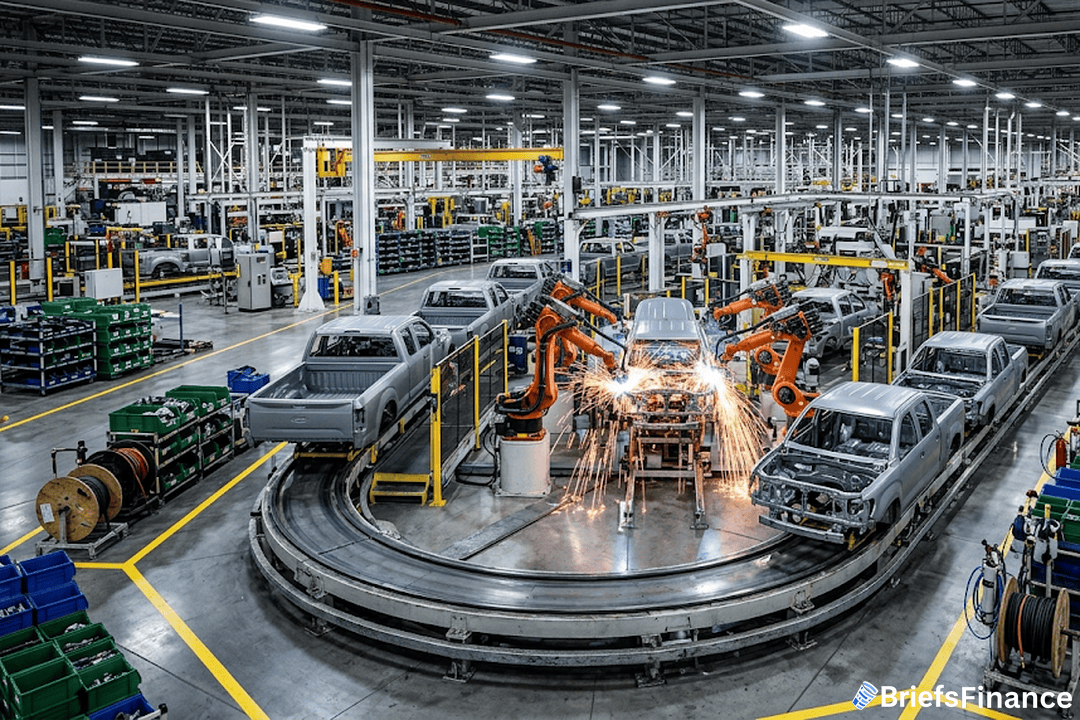
A Deliberate Sales Drop
Ford laid out the news on Tuesday, Aug 4, 2026: Ford's U.S. sales in July were 10.2% lower than in July 2025. That would be a rough month for most automakers, but Ford says it is exactly what it wanted.
Rob Kaffl, Ford's U.S. sales director, called July "a good sales month" and said the decline was "by design."
In an emailed statement, Kaffl said the company is "sunsetting" select models, which is car-speak for phasing them out, and stepping away from daily rental fleet sales where the profit per car is thin.
He added that the results reflect "a strategy that is working exactly as planned" and said the moves are meant to make room for "an onslaught of new-product introductions" by the end of the decade.
The Strategy Behind the Drop
The two vehicles Ford phased out are the Ford Escape and the Lincoln Corsair. Ford also reduced its daily rental fleet sales by 96% compared with July 2025.
Daily rental fleets are the cars rental companies buy for customers.
A cut that deep means Ford is selling almost none to that channel anymore.
Get the free Always Be Buying eBook and learn the simple system for building wealth on any income
Ford is choosing to let that business shrink. When a company intentionally stops chasing low-margin sales, the monthly numbers can look bad even as the business gets healthier.
The company says those two moves explain most of the decline. Without them, Ford contends July sales would have been down less than 1%, which is close to flat.
The entire industry was estimated to be down 2% for the month. That means Ford's underlying demand, the sales it kept, held up better than the market's.
F-Series and the Bigger Sales Picture
Beyond the model retirements, Ford is focused on pickup trucks. It is pushing F-Series sales through dealers while working to recover output after two fires at an important aluminum supplier in the prior year.
Pickup trucks are where Ford makes a lot of its money, so production problems there hit the whole year. The July decline extends a rough sales year that has also included weaker all-electric vehicle sales.
The numbers show the strain. Ford's cumulative U.S. sales for January through July 2026 are 9.7% below the same period in 2025.
As of June 30, the year-to-date gap was already 9.6%. In other words, July's deliberate cuts did not make the overall decline much steeper.
What It Means for Investors
Ford is not the only one facing a slowdown, and monthly sales reports have a lot of noise. Ford's July report is a good example: the 10.2% drop is mostly a story about choices, not a sudden loss of demand.
Cox Automotive's Kelley Blue Book estimates industry-wide U.S. sales in the first half fell 2.4%. That is a much smaller drop than Ford's first-half decline, which shows how much of Ford's sales gap is company-specific.
Cox and other forecasters expect full-year 2026 industry sales of 15.8 million vehicles.
That would be about 3% lower than 2025. High prices and consumer economic concerns are the reason.
When people feel squeezed, they delay big purchases, and a new car is one of the biggest purchases around.
The bigger question for your portfolio is whether Ford's trade-off actually works. The company is giving up sales today to protect profit per car and get a fresh lineup ready.
If the plan pays off, these weaker headlines could look like a smart reset. If it does not, Ford will be going through an industry slowdown with less volume to lean on.
Download the free Always Be Buying eBook and start putting your money to work today