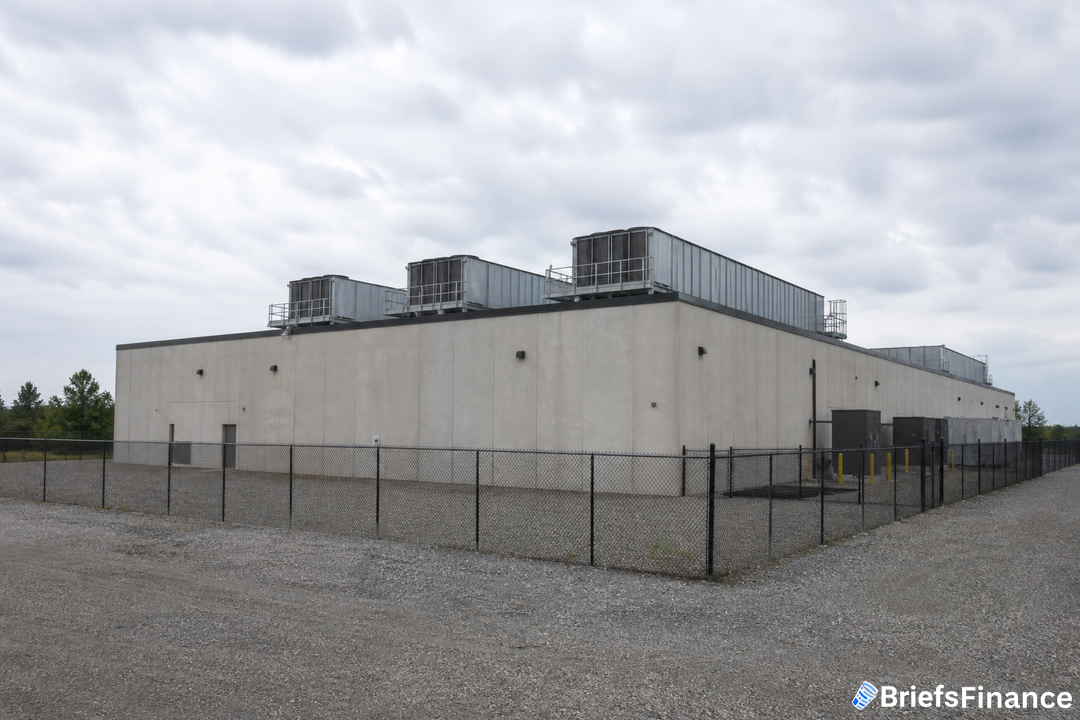
Why size could matter for Equinix
Equinix's Asia-Pacific president Cyrus Adaggra said the company's facilities generally fall in the 30 to 60 megawatt range, well under the approximate 100 megawatt mark that U.S. proposals tend to target. On CNBC's Squawk Box Asia he said, "We will invest in markets where we see customer demand, and because we have a footprint that is typically less than 100 megawatts, we tend not to fall and be caught by the legislation or the regulation, which is typically at about 100 megawatts in the U.S."
His remarks land as U.S. midterm election results have stoked worries that fresh limits on data center development could slow projects and push up construction costs. BMI, a Fitch Solutions company, calculates that roughly 53% of the expected expansion in the U.S. hyperscaler pipeline is located in states where newly elected governors might impose restrictions. The firm expects any effects to show up more clearly from 2028, because the majority of projects slated for 2027 have already been locked in.
Demand is driving the spend
Adaggra said rising customer needs have prompted the company to lift capital outlays to $7 billion, up from roughly $2 billion a few years back. "The number one determinant of our capex spend and build is customer demand," he said.
That demand is showing up in sales metrics. In the third quarter, annualized gross bookings surpassed $500 million for the first time, a 35% jump from a year earlier. He attributed the momentum to large enterprises, including Fortune 500 companies, investing in hybrid and multi-cloud architectures, along with connectivity and broader digital infrastructure. He added that Equinix works with about 60% of Fortune 500 companies.
Smarter tools and timely insights can quietly improve how investors find opportunity. We're hosting our first ever investor livestream on 11/17 to show you how to use ChatGPT and Claude to invest like a pro, hosted by Briefs Finance CEO Jaspreet Singh. Save your seat.
Policy ripple effects and Asia's pull
Russell Investments said potential U.S. restrictions on data center development could push up costs throughout the AI infrastructure supply chain. The firm also noted that a deceleration in U.S. data center building could dampen demand for semiconductors and other infrastructure gear, including orders from suppliers across Asia.
Asia is gaining steam. "After the U.S., we expect actually most data center investments and activity to happen in Asia," said Sjoerd Leenart, CEO of JPMorgan's banking business in Asia Pacific, in a podcast released Friday. He said global hyperscalers are hunting for Asian locations with enough land, power and grid capacity.
Mirae Asset Securities said some of that money could be distributed across several markets, highlighting South Korea as a potential hub where operators that lock in electricity, land and long-term customer agreements are better positioned to grow. WTW cautioned that power availability, grid hookups and equipment lead times remain major hurdles. Leenart also pointed to regulators pushing back in Thailand and Australia, with authorities pausing some projects to examine how data center energy demand impacts other industries and consumers.
What this means for your portfolio
If sub-100 megawatt campuses avoid coming U.S. rules, operators with smaller footprints could have a relative advantage, while Asian markets that can deliver land, power and grid room may attract more buildout. The flip side: a U.S. buildout that slows into 2028 could affect costs and the timing of demand for chips and other data center equipment across the supply chain.
Learning new approaches to markets helps investors gain a thoughtful, lasting edge. On 11/17, our CEO Jaspreet Singh goes live for our first ever investor livestream on how to use ChatGPT and Claude to invest like a pro. Register to join him.