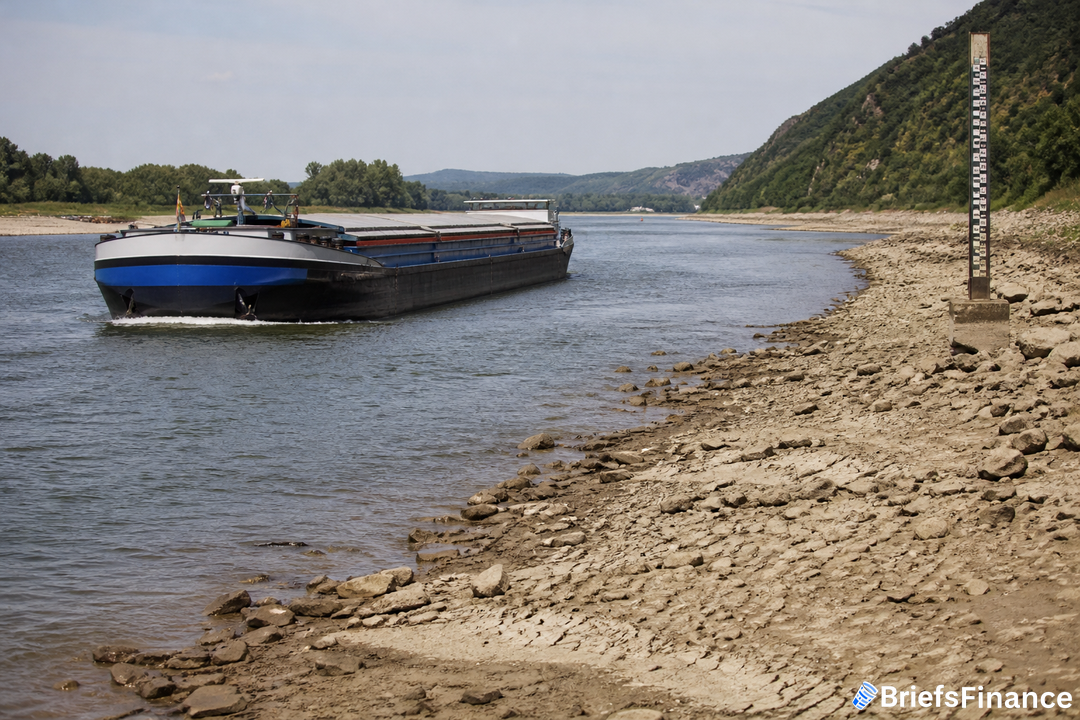
What is happening on the Rhine
After a year marked by drought and heat waves, the Rhine has sunk to record lows. Germany's WSV expects the clearance at Kaub - the key shallow point between Rotterdam and Switzerland - to fall through Nov. 9 to 5 centimeters, versus a typical reading above 150 centimeters for that date. "Kaub remains difficult, with standard barges no longer able to pass that point," said Sebastiaan Kosman, who heads Spotbarge. He added that only vessels built for very low water can still get through.
The river spans several hundred miles from Switzerland to the North Sea, linking European factories to global trade. It hauls everything from oil products and iron ore to coal and grain, and its banks host clusters of chemical makers, refineries and steel plants.
How transport and industry are being affected
Freight conditions eased briefly in October as levels ticked up, but that window shut fast. Rates to ship diesel to Basel from the Rotterdam area are hovering near a record and have risen again so far in November. Switzerland also tapped additional jet fuel from strategic reserves this week, citing both the Rhine's constraints and rail service interruptions.
The logjam has lasted longer than the severe dry spell in 2022. Shifting loads to rail has not been an easy workaround either, with maintenance on parts of the network near the river. Production has taken a hit too: Ineos Group said this week low water forced a cut to this year's petrochemicals production at its Cologne site, and Shell Plc as well as generator Steag GmbH reported output impacts.
Market disruptions often open subtle opportunities for investors who use smarter tools. We're hosting our first ever investor livestream on 11/17 to show you how to use ChatGPT and Claude to invest like a pro, hosted by Briefs Finance CEO Jaspreet Singh. Save your seat.
Why it matters for your portfolio
When a main artery clogs, costs climb. The Rhine's pinch is still slowing flows to and from Rotterdam and pushing up transport prices for fuels headed to Switzerland. Bern's move to release more jet fuel underscores how fragile supply lines remain. The bottom line: elevated barge rates, periodic industrial cutbacks and rail snags can ripple into energy, chemicals and metals exposures in your portfolio, so keep an eye on how water levels and freight capacity evolve this month.
Tuning into new signals can give patient investors a clearer perspective on risk. On 11/17, our CEO Jaspreet Singh goes live for our first ever investor livestream on how to use ChatGPT and Claude to invest like a pro. Register to join him.